France exempts ITER tokamak vessel from pressure-equipment rules
France just moved ITER’s tokamak vessel out of pressure-vessel rules, a cut that could speed welding and inspection while testing how far fusion regulation can bend.
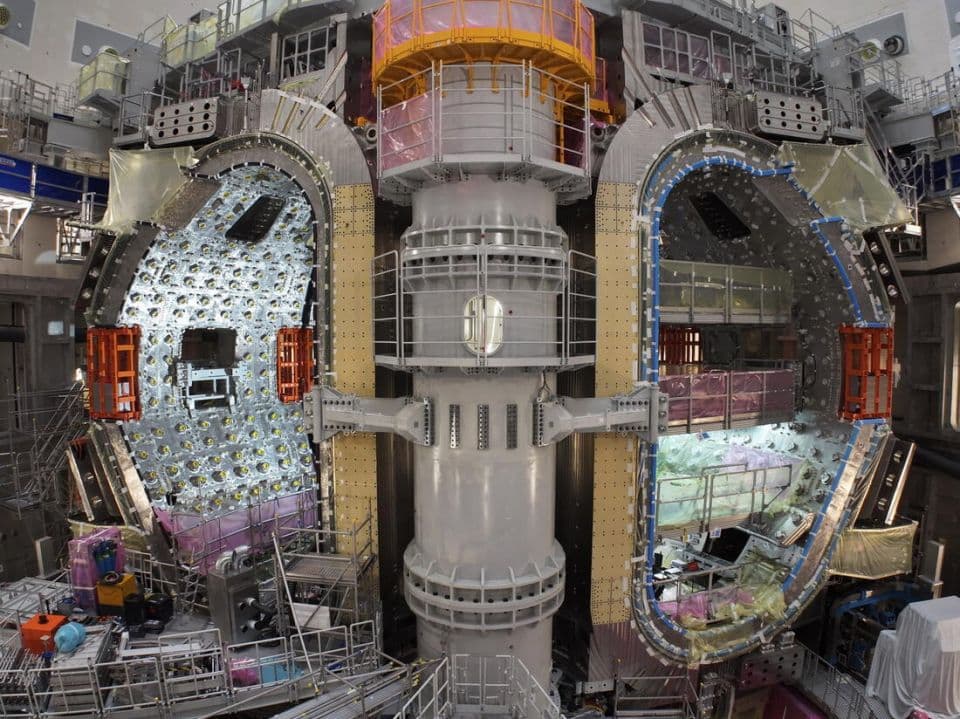
France’s nuclear safety regulator has given ITER a meaningful regulatory break, but not a blank check. By excluding the tokamak vacuum vessel from the most burdensome pressure-equipment rules under decision 2026-DC-042, the French Authority for Nuclear Safety and Radiation Protection has acknowledged that ITER’s giant vessel is not a conventional pressure component and should not be judged as if pressure were its main hazard.
That distinction matters on the factory floor and in the tokamak pit at Cadarache. The vacuum vessel is a hermetically sealed, double-walled steel container that forms the first safety containment barrier, holds the plasma under high vacuum, and supports major in-vessel hardware such as the blanket and divertor. Cooling water runs through its double walls, but the load case that drives the design is electromagnetic force from the surrounding superconducting magnets, not internal pressure. In other words, France has accepted a fit-for-purpose framework for fusion hardware instead of forcing a fission-era pressure code onto equipment whose engineering reality is fundamentally different.
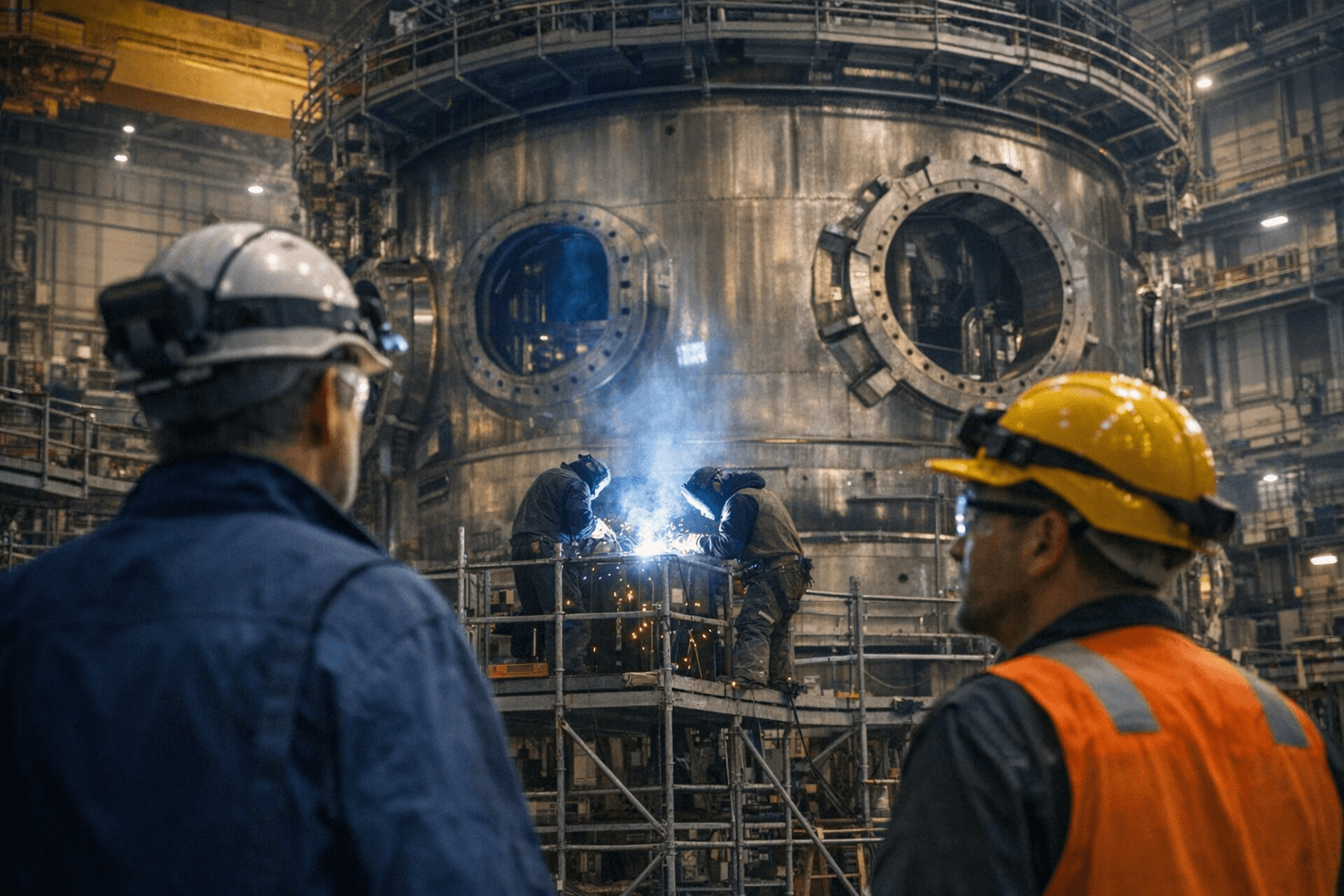
The practical effect is likely to show up in fabrication, welding, and inspection. Exempting the vessel from the pressure-equipment regime should reduce the need to fit every sector, weld, and defect tolerance into rules built for pressure vessels in ordinary industrial service. It also gives ITER and its suppliers more room to define requirements under the nuclear-installation rules that still apply to ITER’s installation nucléaire de base No. 174. Pietro Barabaschi has said the move should help the project advance more quickly and support common technical standards for tokamak magnetic-confinement devices, including guidance on allowable defect sizes during fabrication and welding.
The vessel’s scale explains why the ruling is more than bureaucratic housekeeping. ITER’s nine-sector vacuum vessel is about 19.4 meters across and 11.4 meters high. As assembled, it weighs roughly 5,200 tonnes before the blanket and divertor are added, and about 8,500 tonnes once those systems are installed. That makes the welding campaign one of the project’s hardest industrial tasks, and ITER already has a contract with Westinghouse for vacuum-vessel welding in the tokamak pit and for welding process qualification.
The regulator’s decision was dated 14 April 2026, after a public consultation from 25 March to 8 April. The immediate win is narrow: ITER avoids a pressure-code mismatch that could have created delay risk and technical friction. The bigger signal is that Europe is starting to build a separate regulatory identity for fusion, one that treats tokamaks as first-of-a-kind machines rather than awkward variants of fission plants. That does not make commercial fusion suddenly close, but it does remove one of the clearest ways the old rulebook could have slowed the road to the next machine.
This article was produced by Prism’s automated news system from verified source data, official records, and press releases, then run through automated quality and moderation checks before publishing. The system is built and supervised by the people who set the standards it runs under. Read our full AI policy.
Did this article answer your question?