NRC to restructure around new reactors, inspections, and materials
The NRC wants a new reactor front door by mid-summer, with OAR and CNRI built to move advanced applications and plant oversight faster.
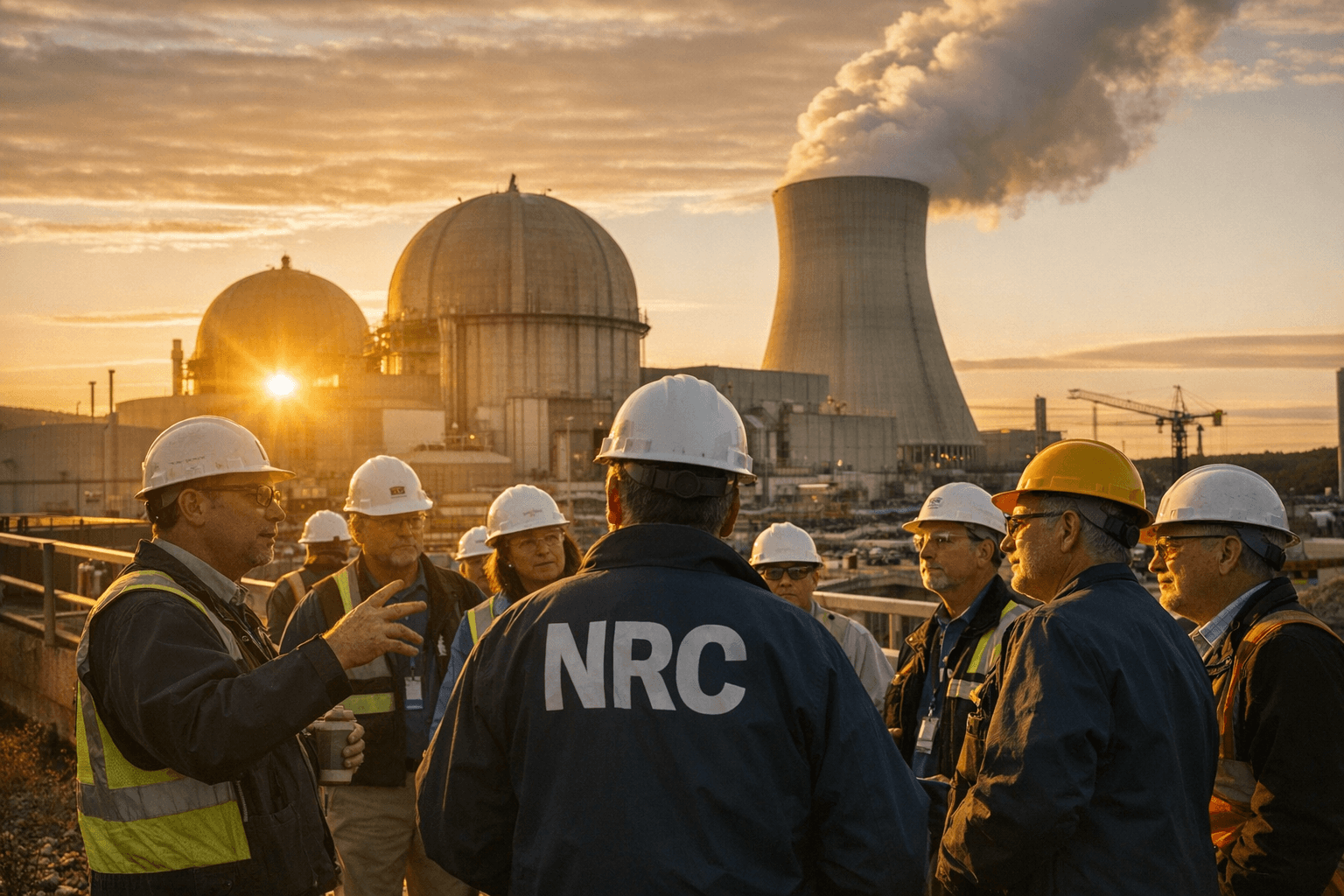
The Nuclear Regulatory Commission is betting that a cleaner org chart can do what years of industry complaints have not: shorten the path from application to approval. On April 21, the agency said it aimed to have its reorganization in place by mid-summer, with new reactors, operating reactors, and nuclear materials and waste set up as the three core business lines.
At the center of that shift is the Office of Advanced Reactors, which the NRC said will be built to promote the expeditious review of advanced reactor applications and help deploy innovative technology. The agency is also creating the Office of the Chief Nuclear Reactor Inspector to pull operating-reactor safety and security inspection staff, plus operator licensing staff, together from headquarters and all four regional offices. The commission has described the effort as a “significant organizational modernization effort,” and that is not just inside-baseball language. It is a licensing-capacity move.
The new structure is meant to give each business line a single point of accountability. Materials licensing and inspection staff will move under the Office of Nuclear Materials Safety and Safeguards, while programmatic functions for Nuclear Security and Incident Response will shift into the Office of Nuclear Reactor Regulation. Technical training programs will move into the Office of Nuclear Regulatory Research, and corporate support functions are set to be consolidated as well. In practice, that should matter most for applicants trying to navigate where a new reactor application lands, who owns the review, and how many desks a question has to pass before it gets answered.
The leadership changes show where the NRC wants the pressure relieved first. Jeremy S. Bowen was tapped to lead the new Office of Advanced Reactors, with that office slated for completion in September 2026. Anna Bradford is set to take over the Office of Nuclear Reactor Regulation in May 2026, where she will oversee operating reactor license renewals and amendments, along with the non-power reactor licensing program. Jeremy Groom is serving as acting director of both NRR and the new CNRI until the transition is complete.
That split could help both sides of the pipeline. Advanced reactor developers have long argued that the bottleneck is the regulatory structure, not the reactor design, and OAR is clearly intended to answer that complaint. Operating plants may also gain from CNRI’s tighter grip on inspection consistency, especially since the NRC says regional administrators’ span of control will be narrowed so routine reactor oversight can stay regional while higher-level calls go to CNRI. The agency also says about 70 percent of the Office of Investigations’ efforts are in the reactor program, which helps explain why it is reorganizing around reactor work instead of treating it as just another line item.
The timing is tied to President Donald J. Trump’s Executive Order 14300, signed on May 23, 2025, which pushed the NRC to produce proposed rulemakings within nine months and final rules and guidance within 18 months. The commission says it has updated its mission statement under the ADVANCE Act to emphasize enabling the safe and secure use and deployment of civilian nuclear energy technologies and radioactive materials through efficient and reliable licensing, oversight, and regulation. The Nuclear Energy Institute says the agency is making or revising more than 25 rules in the coming months, and it has praised the updated inspection approach, which reduces direct inspection hours by about 40 percent while still leaving more than 1,200 hours a year.
The reorganization may not erase every delay, especially while offices are still moving and reporting lines are still shifting. But if the NRC actually delivers a single reactor front door, clearer inspection ownership, and fewer handoffs between offices, it would be the strongest sign yet that the agency is trying to remove itself as the choke point in the next wave of nuclear deployment.
This article was produced by Prism’s automated news system from verified source data, official records, and press releases, then run through automated quality and moderation checks before publishing. The system is built and supervised by the people who set the standards it runs under. Read our full AI policy.
Did this article answer your question?


