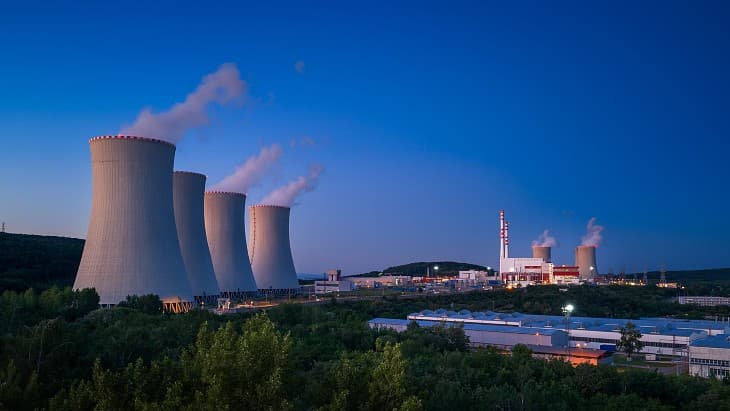
From Rutherford to Fermi, how nuclear reactions became engineered
Rutherford exposed the nucleus, and Fermi proved it could be driven to criticality. The route from discovery science to controlled reaction runs through neutrons, slow neutrons, and Chicago Pile-1.
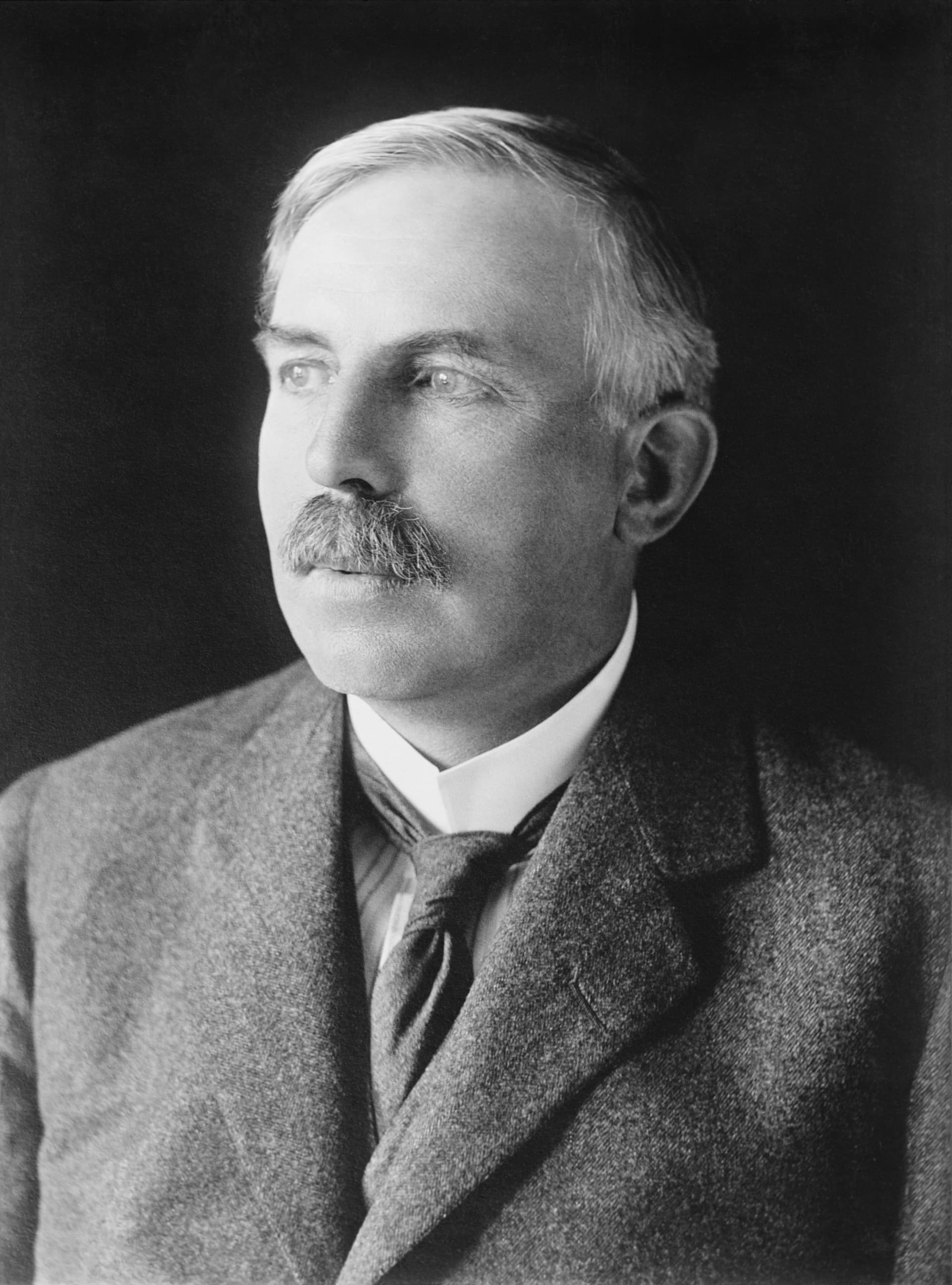
In 1901, Ernest Rutherford and Frederick Soddy showed that one radioactive element can decay into another. Rutherford later made the nucleus a real physical target, and Enrico Fermi showed how to drive that target with neutrons and hold a chain reaction in a controlled state.
Rutherford makes the nucleus visible
Ernest Rutherford’s breakthrough was not a reactor or a weapon. It was the recognition that the atom had an inner core that could be studied, struck, and changed.
That line of work earned Rutherford the 1908 Nobel Prize in Chemistry for investigations into the disintegration of the elements and the chemistry of radioactive substances. By the time he moved to Manchester in 1907, he had access to modern laboratories that let him push the problem further, and in 1911 he and his collaborators Hans Geiger and Ernest Marsden carried out the gold-foil experiments that overturned the old Thomson model. The result was decisive: atoms contain a tiny, dense, positively charged nucleus. Rutherford discovered the nucleus of the atom in 1911.
Once the nucleus was understood as a distinct object, nuclear science could move beyond noticing radioactive change and toward asking how to cause it on purpose.
From radioactive decay to controlled bombardment
Discovered in 1932, the neutron became a powerful tool for studying atoms because it could enter nuclei without being repelled by electric charge, making nuclear transformation much easier to provoke and study.
Enrico Fermi seized on that tool in 1934. He showed that nuclear transformation occurs in almost every element subjected to neutron bombardment, and that this work led to the discovery of slow neutrons. His 1938 Nobel Prize in Physics recognized his demonstrations of new radioactive elements produced by neutron irradiation and his related discovery of nuclear reactions brought about by slow neutrons.
Fermi’s career then shifted across the Atlantic. He emigrated to the United States in 1938, immediately after receiving the Nobel Prize, partly to escape Mussolini’s fascist dictatorship. In 1939 he was appointed professor of physics at Columbia University, and his work later moved to Chicago, where the problem of directing nuclear reactions became urgent rather than theoretical.
Fermi turns the nucleus into an engineering problem
By 1939, after the discovery of fission, Fermi immediately recognized the possibility of a chain reaction. That was the pivot from nuclear reactions as isolated events to nuclear reactions as systems that could be multiplied, managed, and sustained. The question was no longer simply whether a nucleus could change, but whether enough of those changes could be arranged to feed one another in a stable sequence.
Arthur Compton made that question operational in January 1942 when he centralized pile research at the University of Chicago’s Metallurgical Laboratory. The Manhattan Project needed a sustained chain reaction as a crucial step toward making an atomic bomb, but the same engineering challenge also pointed toward civilian nuclear power. The science had to work in practice, not just on paper.
The theory of chain-reacting piles was still poorly understood, and the people working on it were trying to build a device that had never existed before. Their goal was not just to observe fission, but to show that it could be initiated, controlled, and stopped.
Chicago Pile-1 makes criticality real
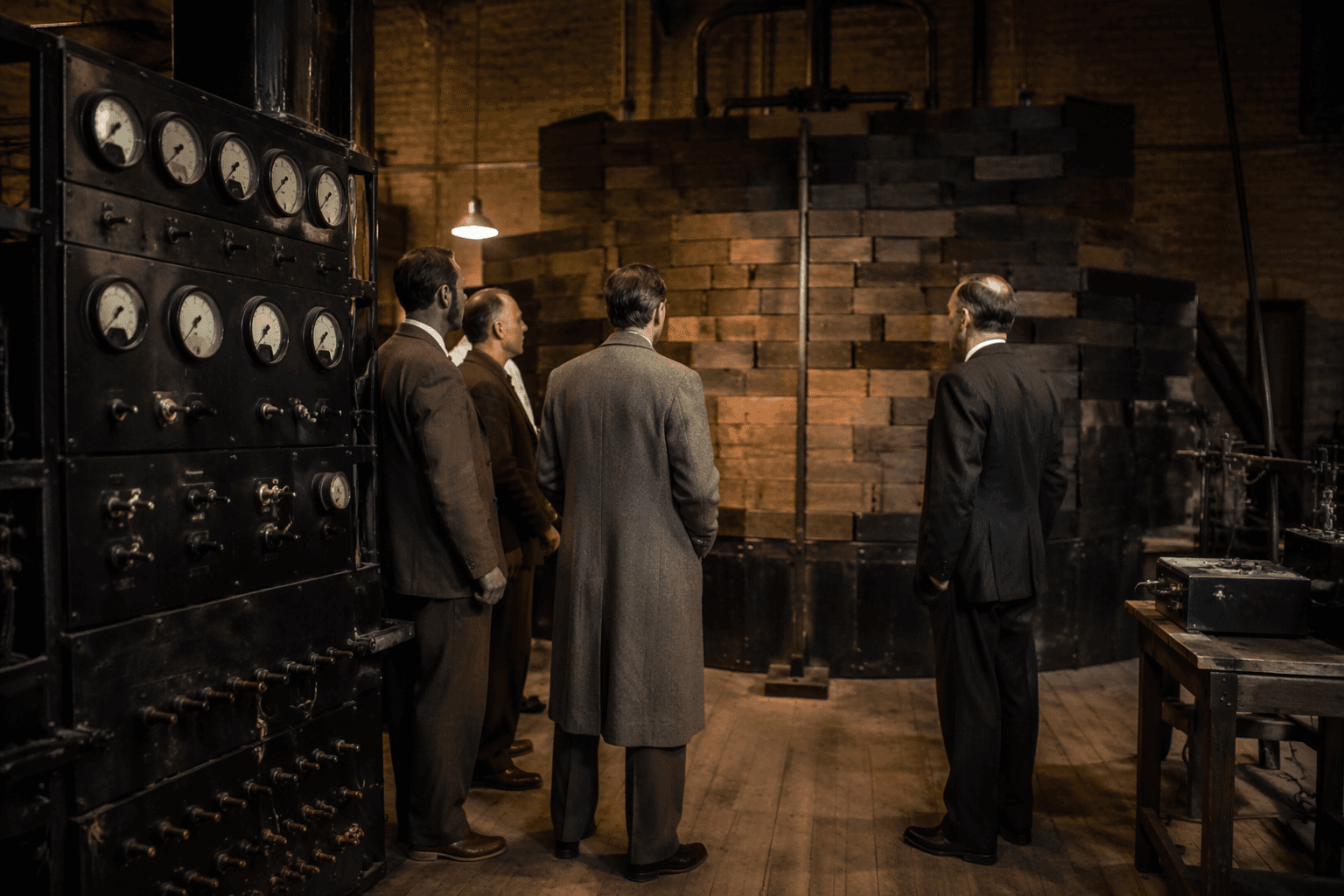
Chicago Pile-1 achieved that proof on December 2, 1942. Built under the west viewing stands of Stagg Field at the University of Chicago, in an abandoned squash court, it was the world’s first reactor to go critical and the first self-sustaining fission chain reaction ever achieved by humans.
It showed that a chain reaction could be held at the threshold of self-sustaining operation, with the output of one fission event helping drive the next without running away uncontrollably.
Leslie Groves later called CP-1’s first criticality the single most important scientific event in the development of atomic power.
This article was produced by Prism’s automated news system from verified source data, official records, and press releases, then run through automated quality and moderation checks before publishing. The system is built and supervised by the people who set the standards it runs under. Read our full AI policy.
Did this article answer your question?