Fuel supply and financing take center stage at nuclear expansion meeting
Fuel supply, restart timelines, and financing now matter more than slogans, as Monaco’s nuclear meeting exposed the bottlenecks that will decide real buildout.
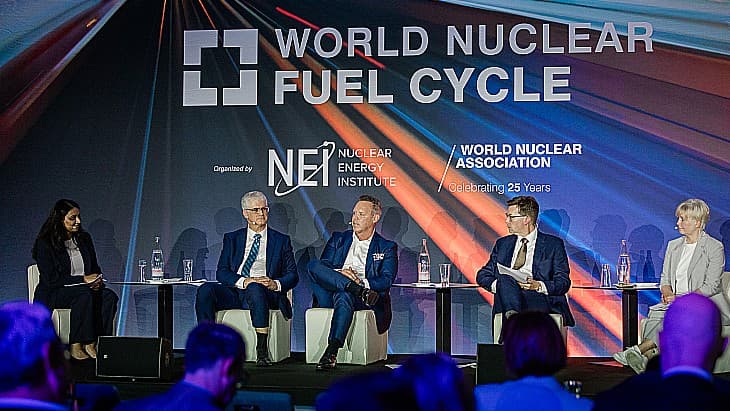
The race to add nuclear capacity is being decided upstream now, in fuel supply, restart schedules, standardized designs, and the question of who is willing to pay to expand them. At the World Nuclear Fuel Cycle 2026 meeting in Monaco, the conversation was shaped by volatile geopolitics, sharper energy-security concerns, and the growing number of countries trying to use nuclear power to meet both economic and clean-energy goals.
The scale of the moment is hard to ignore. The International Atomic Energy Agency says the world ended 2024 with 653 operating reactors and roughly 20,200 reactor-years of operating experience, a base that gives the sector depth but also shows how much of the fleet is already mature. Against that backdrop, nuclear capacity is widely expected to more than double by 2050, which makes the fuel cycle less of a back-end detail and more of a gatekeeper for deployment itself.
Existing fleets are the quickest lever
If the meeting had one practical refrain, it was that the fastest route to more nuclear generation is not always a new build. Johnathan Chavers of Southern Nuclear said rising electricity demand from manufacturing, data centers, and households is creating unprecedented opportunity, and that existing fleet performance is the quickest lever available. That is the kind of language utilities use when the bottleneck is not ideology but deliverability: how much power can be added, and how fast, with the assets already on the books.
Southern Company’s own planning numbers reinforce that urgency. The company says electric sales are projected to grow 8 percent annually through 2029, driven by data centers, advanced manufacturing, and residential expansion across its footprint. It is also investing USD81 billion in energy infrastructure through 2030, with nuclear still part of the strategy because the fleet can respond quickly if the groundwork is there. Southern Nuclear’s materials describe the company as having more than 40 years of nuclear operating experience, and as operating nuclear plants for Alabama Power and Georgia Power, which is exactly the kind of operating base that can be extended, standardized, and squeezed for more output before anyone pours concrete for the next wave.
Japan shows what exposure looks like
Japan remains the clearest case study in how fuel supply, policy, and public acceptance combine into a deployment bottleneck. Shuji Yoneda of the Federation of Electric Power Companies of Japan’s Washington office said Japan has restarted 15 of its 36 reactors and expects more restarts. He also said the government is now projecting electricity demand growth for the first time in 20 years and aiming for nuclear to provide about 20 percent of generation by 2040.
That target is not symbolic. It would require about 5.5 GWe of new capacity, alongside lifetime extensions and faster restart work. The IAEA’s Japan country profile says reactor restarts depend on passing Nuclear Regulation Authority reviews and securing local community understanding, which means the timeline is as much social and regulatory as it is technical. Japan’s latest Basic Energy Plan, approved on February 18, 2025, calls for the country to “make maximum use of nuclear power,” a sharp turn from earlier language that focused on reducing dependence.
The scale of the shift becomes clearer when you look back. Before Fukushima, Japan had 54 reactors and nuclear power once supplied around 30 percent of the country’s electricity. After the 2011 accident, the fleet stalled. That history is why Japan sits so close to the center of any conversation about fuel-cycle resilience: every restart, extension, and new unit carries the weight of restoring a system that was once among the world’s most significant.
Standardization is now a financing strategy
The meeting also made clear that standardization is not just an engineering preference. Christian Di Lizia of EDF argued that standardization and replication improve speed, cost, quality, and bankability, which is exactly what lenders want to hear when nuclear projects are being judged against long lead times and volatile supply chains. In related World Nuclear News coverage, EDF has pushed the same message through discussions of partnerships, modularisation, and diversification, all framed as ways to deliver on time and on cost.
That is where the fuel cycle becomes a financing story. Istvan Szabo of the European Investment Bank said regulatory frameworks and capital flow are essential whether a country is building new plants or preserving its supply chains. That point matters because the pressure is not just on reactors themselves. It is on the ecosystem around them, from the front end of the fuel cycle to the infrastructure that keeps existing plants operating.
The European Investment Bank’s own track record shows how that broad view works in practice. It has financed nuclear-related infrastructure, including a €145 million loan to Romania’s Nuclearelectrica for a tritium removal facility at Cernavoda. That kind of spending does not grab headlines like a reactor launch, but it can be just as decisive: it preserves operating capability, reduces bottlenecks, and supports the facilities that already produce electricity.
Where the pressure lands next
The clearest takeaway from Monaco is that the industry’s next phase will be won by whoever can expand the most boring parts of the system first. That means more standardized builds, faster restart pathways, life extensions where they are possible, and fuel-cycle infrastructure that keeps plants supplied and financeable. It also means countries like Japan, which need both new capacity and a repaired restart pipeline, are exposed in a way that newcomer markets and maritime applications will feel sooner rather than later.
The meeting began with geopolitics and energy security, but it kept returning to a simpler question: what actually has to exist before nuclear growth can happen? The answer was not another slogan about expansion. It was fuel supply, standardization, and the money to build the systems that make the next reactor worth financing in the first place.
This article was produced by Prism’s automated news system from verified source data, official records, and press releases, then run through automated quality and moderation checks before publishing. The system is built and supervised by the people who set the standards it runs under. Read our full AI policy.
Did this article answer your question?