How Commercial Nuclear Reactors Work, From Chain Reactions to Containment
The NRC just cleared Diablo Canyon's two Westinghouse PWRs for 20 more years - here's the physics that makes a reactor safe enough to relicense.
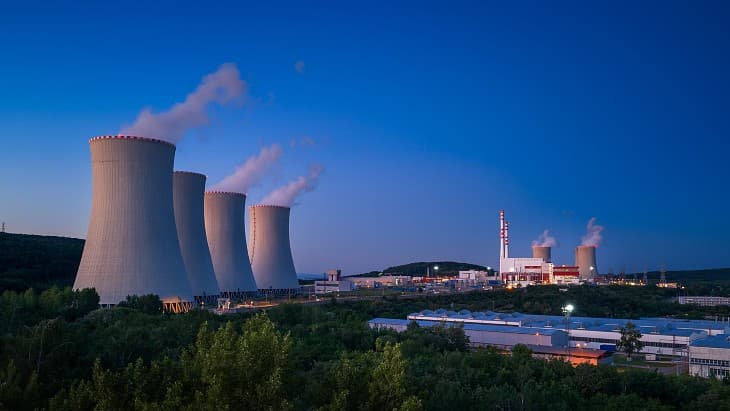
Two days ago, on April 2, 2026, the U.S. Nuclear Regulatory Commission signed off on PG&E's 20-year license renewal for Diablo Canyon Power Plant near Avila Beach, California, keeping California's only operating nuclear station alive through at least 2030. PG&E submitted its license renewal application to the NRC in November 2023, and the Central Coast Regional Water Quality Control Board approved the final state permits on February 26, 2026, clearing the last remaining hurdle before the NRC could act. Diablo Canyon provides safe, reliable, affordable and clean electricity to about four million Californians and makes up nearly 20% of California's clean energy. That approval, three years in the making, is also a physics story: what does the NRC actually certify when it says a reactor can keep running for two more decades? The answer runs from subatomic neutrons to reinforced concrete containment domes, and it's worth understanding every step.
The Chain Reaction: One Neutron at a Time
At the core of any commercial reactor is a controlled nuclear chain reaction. A fissile nucleus, most commonly uranium-235 in a light-water reactor like Diablo Canyon's two Westinghouse pressurized water units, absorbs a thermal neutron and splits, releasing a burst of energy and two or three additional neutrons. The critical question is what happens to those new neutrons. If exactly one of them goes on to trigger another fission, the chain reaction is critical and power holds steady. If more than one causes fission, the reactor is supercritical and power climbs; if fewer than one does, it is subcritical and power falls. Reactor designers express this balance as the effective neutron multiplication factor, k_eff. For steady electricity generation, operators tune every variable in the system so k_eff sits as close to 1.0 as possible. Getting that number right and keeping it right across 18 to 24 months of continuous operation is the central engineering challenge of reactor design.
Slowing Neutrons Down: The Moderator's Job
Nine Mile Point Clean Energy Center in New York operates under a regulatory framework where U.S. nuclear energy facilities are initially licensed to operate for 40 years, and an NRC rule allows licensees to apply for initial and subsequent license renewals of up to 20 years each after the initial 40-year term. That longevity depends on a simple but essential piece of physics: fast neutrons released by fission are not very efficient at triggering more fissions in U-235. A moderator, the material surrounding the fuel in light-water reactors, slows those fast neutrons down to thermal energies where the probability of fission in U-235 is dramatically higher. In pressurized water reactors like Diablo Canyon's, ordinary (light) water serves double duty as both moderator and primary coolant. In boiling-water reactors like Nine Mile Point's two GE-designed units in Oswego, New York, water plays the same role but at different thermodynamic conditions. The choice of moderator material is not arbitrary: scattering cross-sections, neutron absorption rates, temperature feedback behavior, and water chemistry all shape what engineers call the neutron economy, the careful accounting of every neutron born and lost in the core.
Control Rods and Chemical Shim: Tuning the Reaction
Knowing k_eff is near 1.0 is one thing; actively controlling it is another. Reactors use two primary tools. The first is control rods, bundles of neutron-absorbing material such as boron, cadmium, or hafnium, that insert into the core to soak up neutrons and reduce reactivity, or withdraw to allow reactivity to climb. The second, used in pressurized water reactors, is chemical shim: boric acid dissolved directly into the primary coolant. Operators raise or lower boron concentration to manage reactivity shifts over the long term as fuel depletes. Modern reactor control systems combine these movable rods, soluble absorbers, and automated plant control logic to hold stable power output and, crucially, to provide fast shutdown capability, a fully subcritical, safe state achieved by inserting all rods within seconds. This is the condition called SCRAM, and it is the reactor's most fundamental safety response.
A Built-In Safety Feature Reactors Cannot Override
Here is the myth that license renewals force regulators to address head-on: a commercial power reactor cannot explode like a nuclear weapon. Physically, it cannot. Weapons require highly enriched uranium or plutonium in a precisely engineered supercritical geometry that assembles faster than the chain reaction can blow the assembly apart. Reactor fuel is enriched to only 3-5% U-235, roughly fifty times below weapons grade, and the geometry of a reactor core cannot achieve weapons-grade supercriticality. What reactors can do is overheat if cooling is lost. That is the actual risk the safety architecture is designed against, and it is the risk the NRC scrutinizes in every license renewal safety case.
How Heat Gets Out: Coolant Systems and the PWR vs. BWR Divide
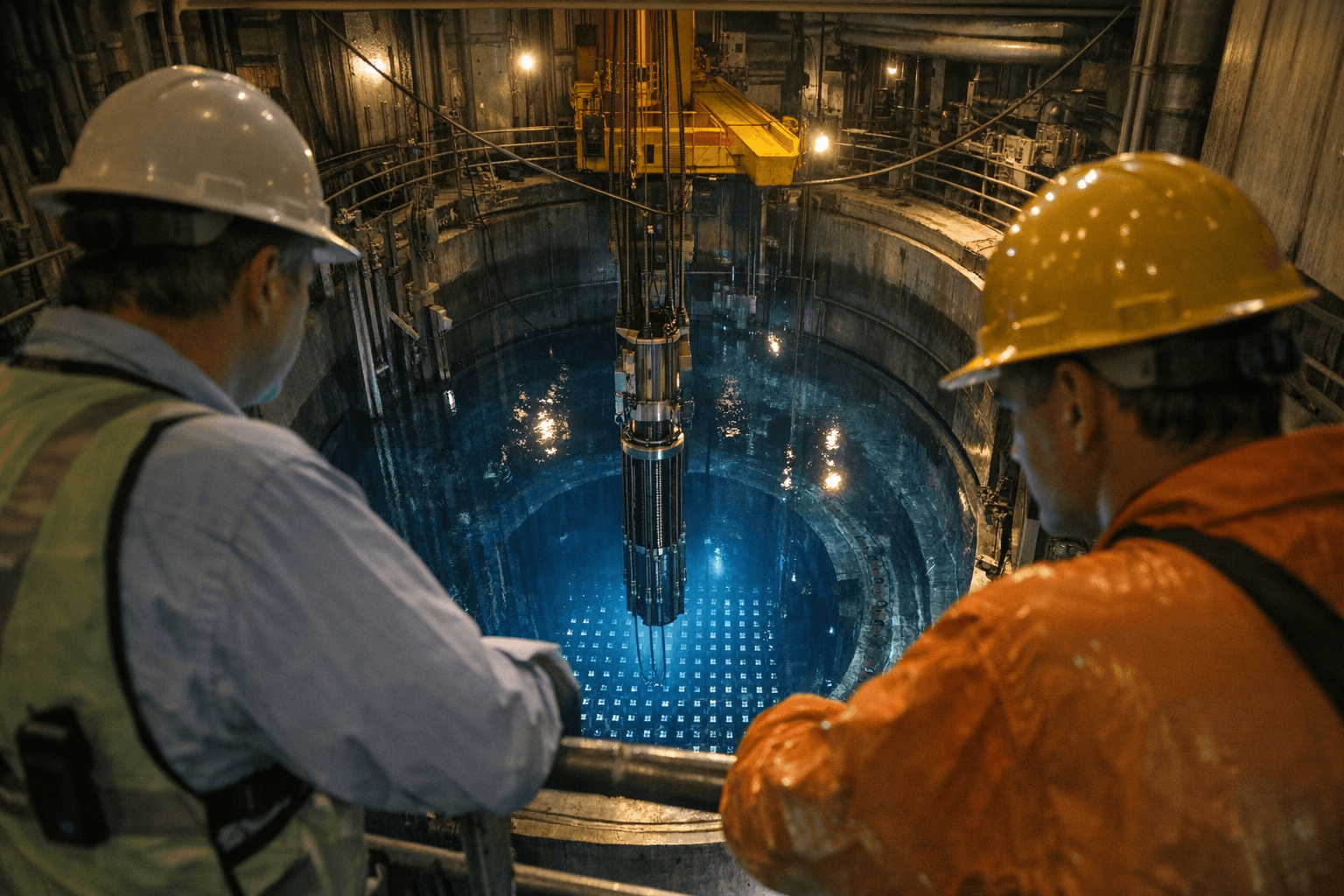
The reactor coolant is what converts fission energy into electricity, and its design defines the reactor type. In a pressurized water reactor, the primary coolant loop is held at roughly 155 atmospheres of pressure, high enough that water at around 315°C (600°F) never boils. That superheated water flows through steam generators, where it transfers heat to a separate secondary loop. The secondary loop boils, drives a turbine, and is condensed and returned, never directly contacting the radioactive primary coolant. In a boiling-water reactor, there is no steam generator intermediary: water boils directly in the reactor vessel, and steam goes straight to the turbine. Both designs accomplish the same mission, removing heat from the core fast enough to prevent fuel damage, but through different thermodynamic paths. The NRC's safety case for Diablo Canyon's PWRs, or Nine Mile Point's BWRs, requires demonstrating that multiple, redundant cooling paths remain intact and functional across the license term.
The Reactor Logic Map
Think of safe reactor operation as a four-link chain, and any break in the chain is what engineers design against:
- Reactivity (k_eff near 1.0, controlled by rods and chemical shim) drives
- Power (heat generated in the fuel, measured by neutron detectors and thermocouples) which must be removed by
- Cooling (primary and secondary loops, plus emergency core cooling systems) before heat reaches
- Containment (the reinforced concrete and steel structure surrounding the reactor vessel, the final barrier against any radioactive release to the environment)
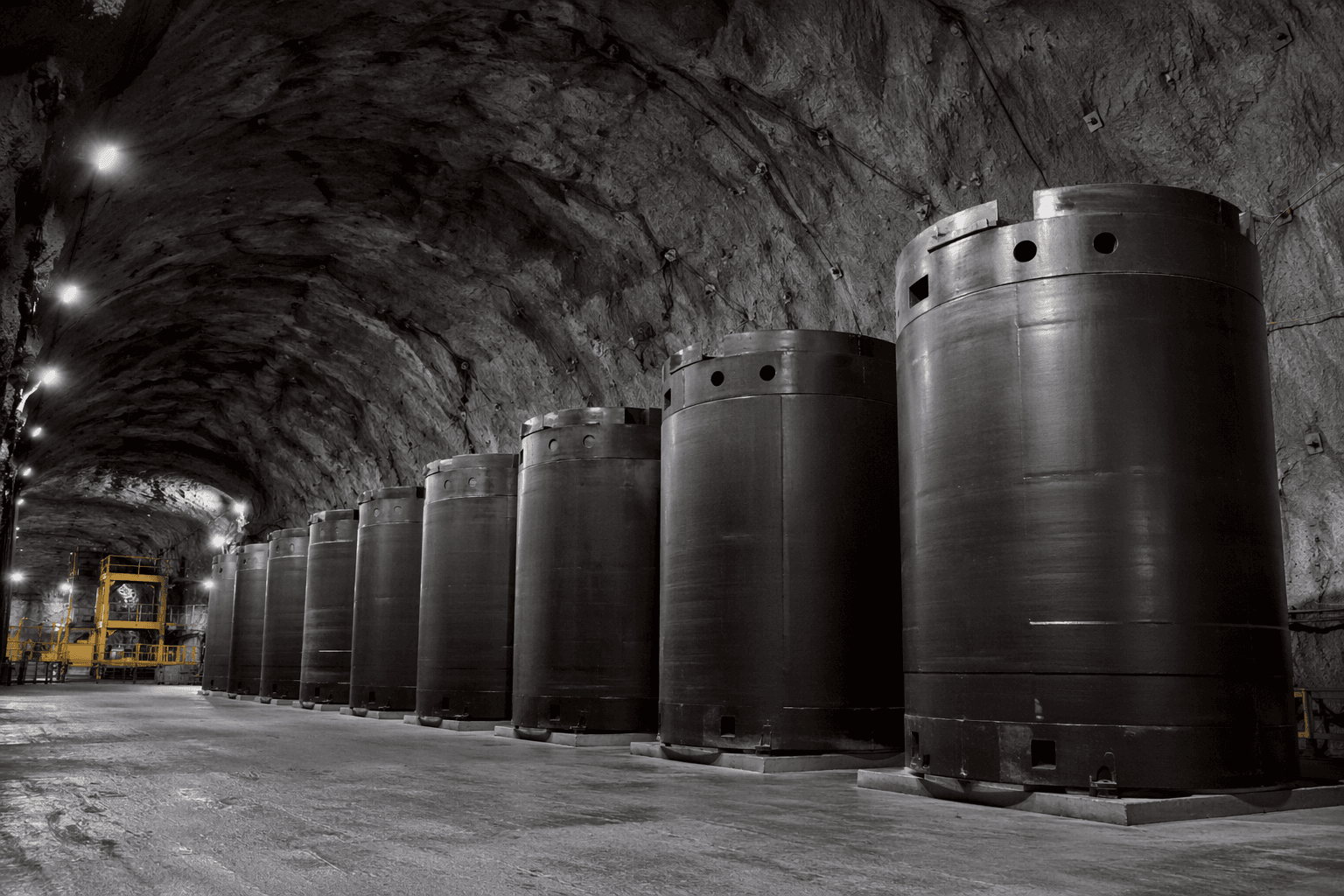
Each layer must function independently. Safety systems are designed in depth: redundant, diverse, and often passive features that can bring the core to a safe condition even during complete power or component failures. Containment is the last line, a robust, leak-tight structure whose integrity the NRC verifies, structurally and radiologically, as a core element of every license renewal safety analysis.
Instrumentation: The Nervous System of a Licensed Reactor
None of these physical safeguards are useful without real-time information. Modern reactors rely on networks of neutron detectors spanning the core's full height, thermocouples embedded throughout the fuel assemblies, pressure sensors on every major loop, and digital control systems that integrate thousands of data streams and flag deviations in milliseconds. For Diablo Canyon's renewal, the NRC's approval follows a transparent and public process through which the agency determined that Diablo Canyon is safe and environmentally sound to operate for another 20 years. That determination was not a rubber stamp: the three-year license renewal process included approvals from state and regional agencies including the California Public Utilities Commission, the State Lands Commission, the California Coastal Commission, and the Central Coast Regional Water Quality Control Board. The instrumentation suite is part of what those agencies reviewed: aging management programs must demonstrate that sensors, cables, and digital systems will remain reliable through the extended license term.
What a License Renewal Actually Proves
Constellation's license renewal application for Nine Mile Point was approved by the NRC on October 31, 2006. With renewal complete, Nine Mile Point Unit 1 is licensed through 2029 and Unit 2 is licensed through 2046. That two-decade gap between units illustrates something important: each reactor earns its license renewal individually, on the strength of its own safety case, its own aging management programs, its own environmental review. The NRC does not grant renewals based on a plant's historical reputation or its operator's portfolio. It grants them because independent safety analysis, supplemented by public engagement and regulatory review, confirms that the specific engineered barriers, from the fuel cladding to the containment dome, can perform their design functions for another 20 years.
Diablo Canyon's freshly approved renewal is a working demonstration of exactly this process. Two Westinghouse four-loop PWRs, each producing around 1,100 megawatts of electricity, together supplying roughly 18,000 gigawatt-hours of carbon-free power annually, just passed the most rigorous technical scrutiny the U.S. regulatory system applies to civilian infrastructure. The physics that makes that possible, neutrons slowing in water, absorbers trimming reactivity, coolant carrying heat away, concrete holding any release in check, has not changed since those units came online in 1985. What the NRC confirmed is that the hardware still matches the physics, and will for another 20 years.
This article was produced by Prism’s automated news system from verified source data, official records, and press releases, then run through automated quality and moderation checks before publishing. The system is built and supervised by the people who set the standards it runs under. Read our full AI policy.
Did this article answer your question?