How Small Modular Reactors Move From Concept to Construction in the U.S.
Six chokepoints separate an SMR press release from a poured foundation — here's the paperwork-and-money roadmap to track them all.
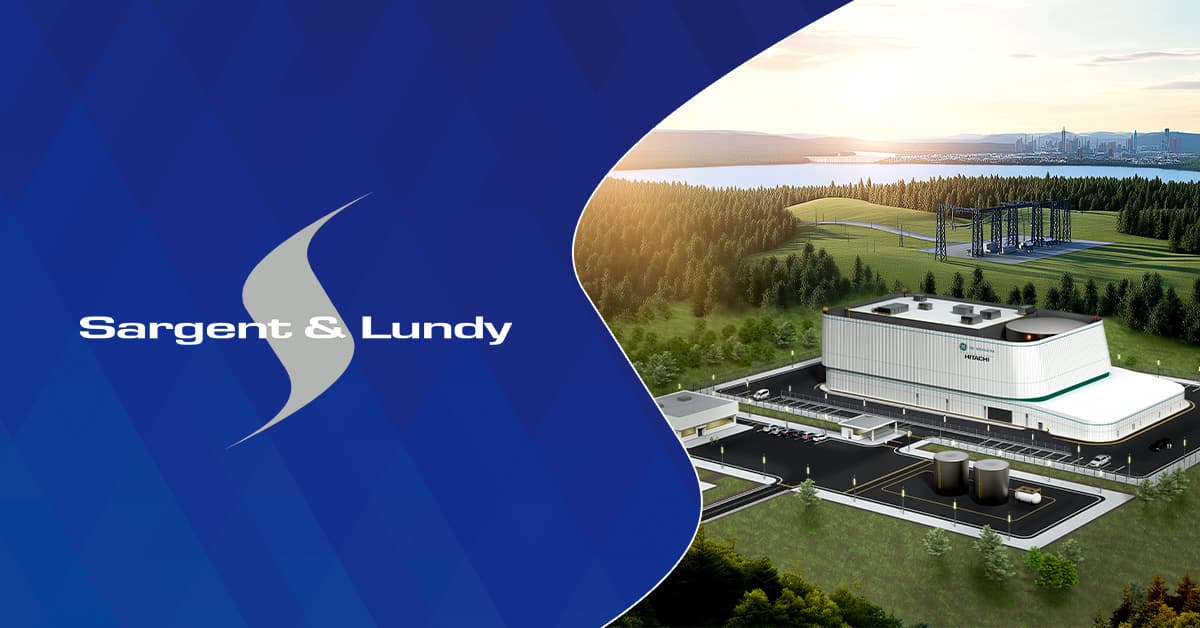
The Tennessee Valley Authority's construction permit application to the NRC for a GE Vernova Hitachi BWRX-300 at Clinch River, Oak Ridge, Tennessee, backed by a $400 million DOE grant, is the closest any U.S. utility has ever gotten to actually breaking ground on a small modular reactor. The NRC accepted that application for review in July 2025 and set a December 2026 target for completing its safety analysis. Every SMR announcement you've seen since then, whether it's an $8 million seed round or a governors' joint statement, fits somewhere on the same six-stage roadmap that TVA is now navigating. Here's how to read the map.
Stage 1: Design and Technical Documentation
Before a single regulator sees a filing, developers spend years producing the technical substrate that everything else depends on: reactor physics calculations, materials qualification data, fuel design specifications, and accident analysis. Light-water designs like the BWRX-300 can leverage decades of operating data from existing fleet reactors, which compresses this phase considerably. Non-light-water designs, such as high-temperature gas reactors or lead-cooled fast reactors, require more original materials and safety work, and typically involve national laboratory partnerships to resolve open physics and fuel questions before engaging the NRC. The practical signal to watch here is published technical collaboration agreements between developers and DOE national labs; those agreements indicate a design has enough credibility to attract federal research investment.
Stage 2: The NRC Licensing Chokepoint
The NRC is the gating institution for every commercial civilian reactor in the United States, and its review timelines have historically stretched well past initial estimates. Two regulatory pathways matter right now. The traditional route under 10 CFR Part 50 involves either a construction permit application followed by an operating license, which is the path TVA chose for Clinch River, or a combined license that packages both steps. The newer framework, 10 CFR Part 53, was finalized in March 2026 and is specifically designed for advanced reactor technologies, providing what NRC Chairman Ho Nieh described as "a comprehensive new approach to license advanced reactors, including non-light-water reactors, across their life cycles." Part 53 allows designers more flexibility in demonstrating safety through risk-informed, performance-based methods rather than prescriptive rules written for 1970s light-water technology.
What to watch: the NRC's public docket for formal pre-application correspondence from named developers, construction permit application submissions, and any notices of hearing or environmental impact statement (EIS) comment periods. The NRC published a draft supplemental EIS for TVA's Clinch River site in November 2025 with a December 22 public comment deadline, and the DOE has been testing AI-accelerated licensing workflows specifically to compress review timelines that have historically cost developers years and hundreds of millions of dollars.
Stage 3: Federal Funding and Project Finance
No SMR project in the United States has moved to construction without substantial federal co-investment. DOE has provided more than $575 million to support NuScale's SMR design and licensing alone, and in March 2025 the department issued a $900 million solicitation to de-risk commercial deployment of Generation III+ SMRs, selecting TVA and Holtec as recipients. Those dollar figures matter not just as subsidy amounts but as market signals: when DOE announces a named award with a specific figure, it triggers matching private investment and utility board interest that rarely materializes from MOUs alone.
Early-stage developers tell a different funding story. Applied Atomics, a Los Angeles-based company building 100 MW to 1 GW light-water plants designed for co-location with large industrial campuses, raised $8.3 million in March 2026. The company's pitch, delivering electricity under long-term power purchase agreements at predictable pricing over multi-decade operating lives, illustrates the investor thesis that cost uncertainty in nuclear stems more from fragmented delivery models than from reactor physics. Watch for: named DOE Office of Nuclear Energy grant awards, loan guarantee announcements from the DOE Loan Programs Office, and state-level incentive decisions from public utility commissions.
Stage 4: Offtake Contracts and Anchor Customers
A reactor without a power buyer is a stranded asset, and for SMRs, the anchor customer question is often the longest pole in the tent. Utilities signing letters of intent or power purchase agreements give lenders the revenue certainty needed to close project financing. Holtec's approach to this problem is instructive: the company has positioned itself as a one-stop shop by combining the roles of technology vendor, supply chain vendor, constructor (in partnership with Hyundai Engineering and Construction), plant operator, and electricity merchant selling power directly to nearby utilities and end users. Applied Atomics is pursuing a similar vertical integration strategy, planning to own and operate its plants rather than hand them off. The deal terms to track are contract duration, the $/MWh price floor, and whether the offtaker is a regulated utility (more creditworthy from a lender's perspective) or an industrial buyer.
Stage 5: Supply Chain and Fuel Qualification
Factory fabrication is the core economic argument for SMRs, but the factory has to exist first. Domestic production of large forgings, turbomachinery, steam generators, and fuel fabrication capacity is frequently the item that slips deployment schedules when developers are already in late-stage licensing. Supply chain MOUs and fabricator announcements are early signals worth tracking, but the meaningful milestone is a signed manufacturing contract with capacity reserved and lead times committed. Fuel is its own sub-chokepoint: designs that require high-assay low-enriched uranium (HALEU) face an additional supply bottleneck because commercial HALEU production capacity in the United States is still being established. Light-water designs like the BWRX-300 use conventional enriched uranium fuel, which sidesteps that constraint entirely, a practical advantage that partly explains why that design attracted the first CPA filing.
Stage 6: Siting, Community Consent, and Environmental Review
Even a fully licensed design needs a specific piece of ground, a willing community, and a completed National Environmental Policy Act (NEPA) review before construction can start. TVA held an early site permit for Clinch River, the first and only such permit ever issued for an SMR in the U.S., years before it filed its construction permit application. That sequencing reflects a lesson from earlier large nuclear projects: community engagement and environmental baseline work take time that cannot be compressed by money alone.
At the regional policy level, the New England governors' joint statement committing to explore advanced nuclear energy directed state energy agencies to evaluate financing mechanisms, community engagement processes, and regulatory design options. That kind of multi-state political signal is worth noting because it often precedes RFP processes and utility commission proceedings where the real siting decisions get made.
Reading Headlines Like a Practitioner
The gap between a press release and a poured foundation is almost always measured in years, sometimes a decade. Here is a quick triage framework:
- Pre-application engagement letters and design familiarization meetings with the NRC: early signal, no construction risk retired yet
- Construction permit application docketed by NRC: meaningful milestone; the agency is now formally on the clock
- DOE grant award with named dollar figure and named recipient: significant de-risking, watch for matching private commitments
- Signed offtake agreement or power purchase agreement: the project now has a revenue model; financing is possible
- Supply chain fabrication contract with committed capacity: the critical path is now visible
- Environmental impact statement comment period open: siting is real; public participation window is live
The NRC's December 2026 target for completing TVA's Clinch River safety review will be the most watched nuclear regulatory deadline in the United States this year. If it holds, it would mark the first time a U.S. utility has cleared that hurdle for a new reactor design in a generation, and every other SMR developer's timeline will be recalibrated against it the moment the decision drops.
This article was produced by Prism’s automated news system from verified source data, official records, and press releases, then run through automated quality and moderation checks before publishing. The system is built and supervised by the people who set the standards it runs under. Read our full AI policy.
Did this article answer your question?