IAEA Chief Urges U.S., Iran to Resume Nuclear Diplomacy as Access Limits Persist
Grossi warned Iran's enriched uranium stockpile has reached near-weapons-grade levels while blocking IAEA inspectors — and called diplomacy the only fix.

Rafael Mariano Grossi pressed the United States and Iran to return to the negotiating table on March 18, telling reporters in Washington that the concerns surrounding Tehran's nuclear program cannot be resolved through any other means. "To achieve the long-term assurance that Iran will not acquire nuclear weapons and for maintaining the continued effectiveness of the global non-proliferation regime, we must return to diplomacy and negotiations," the IAEA director general said.
The appeal came against a backdrop of active military hostilities. The United States and Israel launched strikes on Iran, with Iran retaliating against targets across the region. Countries hit included the United Arab Emirates, which operates four nuclear power reactors, and Jordan and Syria, both of which run research reactors. Bahrain, Iraq, Kuwait, Oman, Qatar and Saudi Arabia also came under attack. Grossi was explicit about what that list means for nuclear safety: "These countries all use nuclear applications of some sort or the other. We therefore urge utmost restraint in all military operations."
Grossi had delivered an earlier statement to the IAEA Board of Governors following a press conference in Vienna on March 2, two days before the Middle East Monitor reported his remarks. In those comments, he acknowledged that Iran holds a large stockpile of enriched uranium that has reached levels close to weapons-grade, but he was equally direct that the agency has found no proof Tehran is actively building a bomb. "There is no evidence that Iran is currently building a nuclear bomb," he said, while adding that unresolved issues surrounding the program remain a "serious concern."
The harder edge of Grossi's message involved inspector access. Iran's refusal to grant full access to international inspectors has, in his words, "heightened concerns within the agency." He warned that without cooperation from Tehran in addressing outstanding questions, the IAEA "would not be able to provide assurances that Iran's nuclear programme is entirely peaceful." That formulation matters in nonproliferation terms: the IAEA's ability to certify peaceful intent depends entirely on verification, and verification requires the access Tehran has withheld.
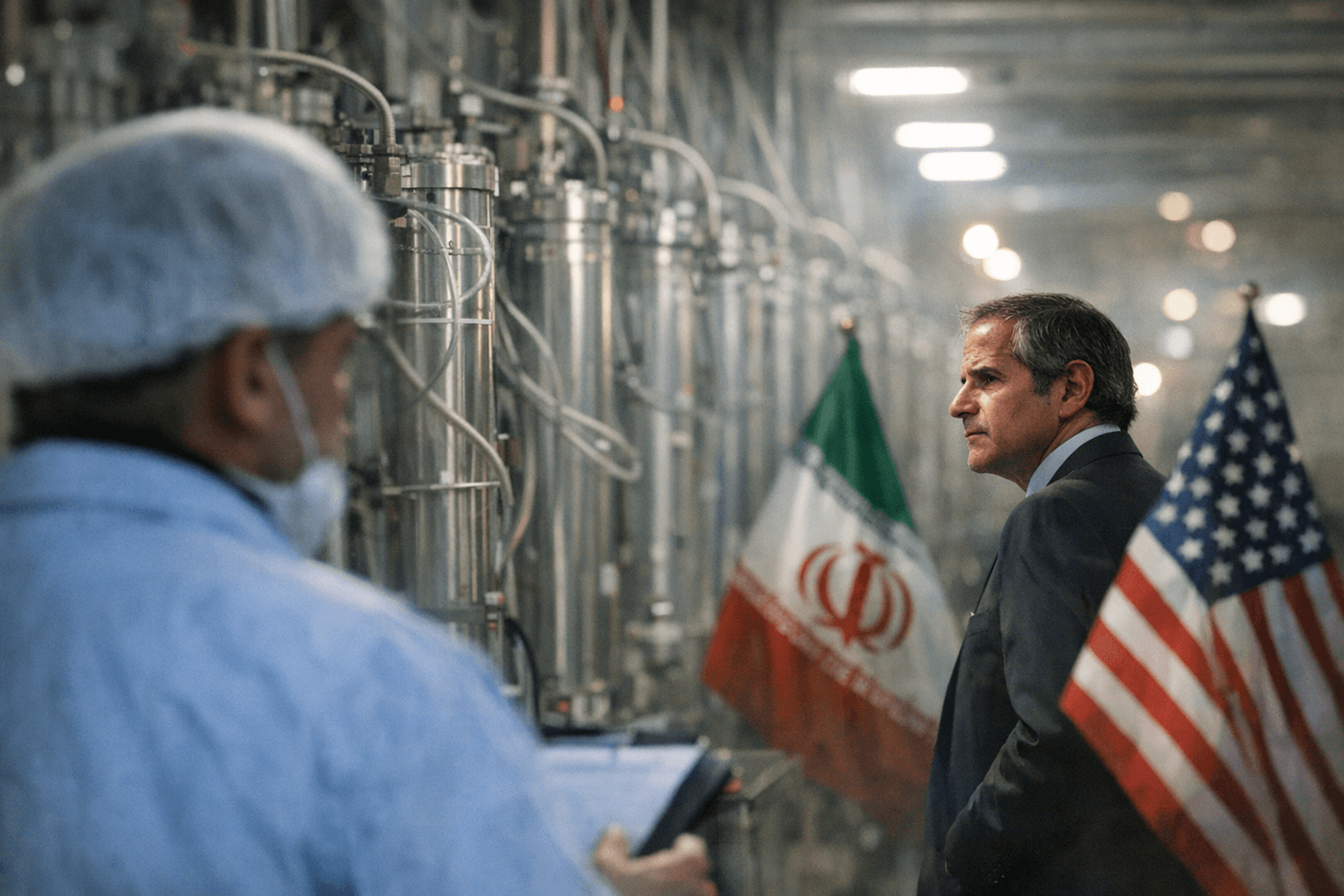
The agency said it is collecting information and assessing the situation across a region that hosts multiple nuclear sites. It claims extensive knowledge of the location and nature of nuclear and radiological material throughout the area, along with clear guidance for responding to any radiological release and the capacity to provide hands-on assistance if needed.
Russia's Rosatom is watching the situation from a particularly direct vantage point. The state nuclear corporation is currently building two new units at the Bushehr plant in Iran. Director General Alexei Likhachev confirmed the company has been monitoring closely and that 94 people, including children of employees, had already been evacuated from the country.
Grossi's public posture across multiple settings this month, Vienna on March 2, then Washington on March 18, has remained consistent: the technical picture is alarming enough, and the diplomatic window narrow enough, that the agency's headline from the Board of Governors meeting captures the stakes plainly. Nuclear diplomacy, the IAEA argued, is hard. It insisted, however, that it is never impossible.
Know something we missed? Have a correction or additional information?
Submit a Tip

