India approves major equipment installation at Kudankulam units 5 and 6
AERB cleared Kudankulam 5 and 6 for heavy equipment erection, unlocking reactor pressure vessels, steam generators and coolant pumps. The two-unit build has moved from paper to plant hardware.
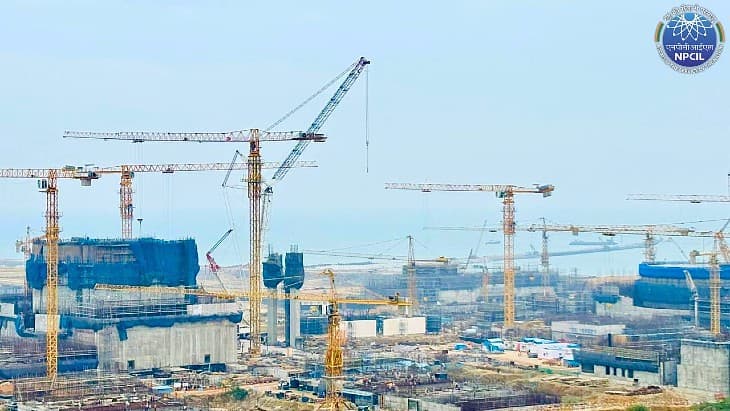
The Atomic Energy Regulatory Board has moved Kudankulam units 5 and 6 into the part of the build where the big pieces finally come off the drawings. Its Major Equipment Erection permission, issued on April 30, 2026, clears the way for reactor pressure vessels, steam generators and coolant pumps to be installed in the two 1,000 MW VVER units at the Kudankulam Nuclear Power Project in Tirunelveli district, Tamil Nadu.
That matters because equipment erection is the bridge between civil construction and the reactor island taking shape. AERB’s consenting system is stage-wise, covering siting, construction, commissioning, operation and decommissioning, and it grants each step only after safety requirements are met. In this case, the regulator said the approval followed a multi-tier safety review of the units’ design and a review of civil progress under the earlier first-pour-of-concrete consent issued on May 12, 2021. That earlier consent noted that excavation of the main plant area had been completed, along with geotechnical investigation, consolidation grouting and levelling course work.
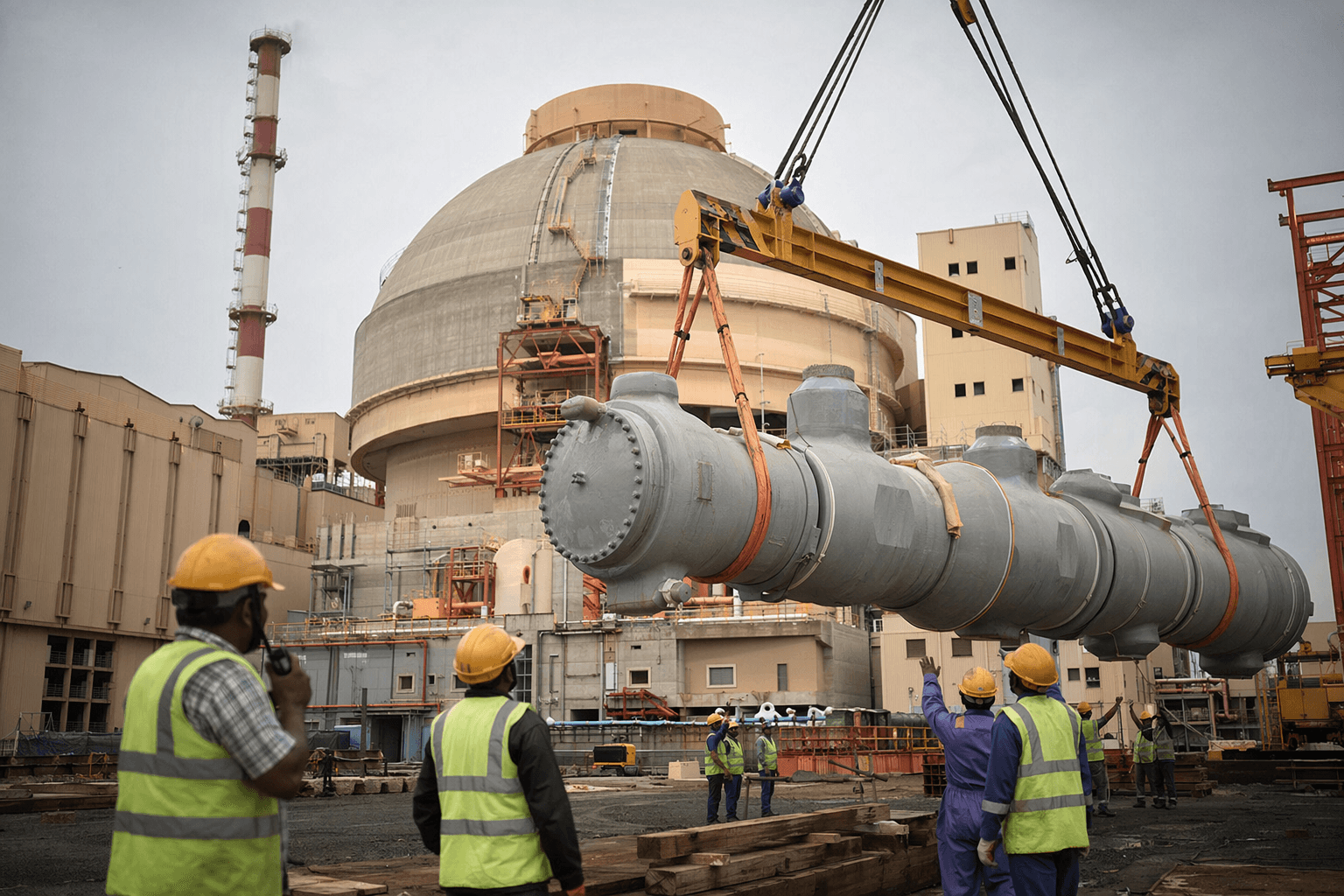
For NPCIL, units 5 and 6 are part of a 2x1000 MW light water reactor project being implemented with technical cooperation from the Russian Federation under the India-Russia inter-governmental agreement. Kudankulam is already a multi-unit site with two operating reactors that entered commercial service in 2014 and 2017. Units 3 and 4 began construction in 2017, while units 5 and 6 started in 2021. NPCIL has also proposed units 7 and 8 as a fourth phase, underscoring how the site could eventually become one of India’s largest nuclear power hubs.
The new permission does not put fresh megawatts on the grid today, but it does change the shape of the schedule. It moves units 5 and 6 from regulatory paperwork into visible hardware installation, where the project’s pace becomes easier to measure in steel, not file folders. That is a meaningful advance for a fleet build of this size, even if the path to commercial power still runs through more erection, testing and commissioning.
The site’s long arc also explains why this milestone carries so much weight. AERB’s historical account says Kudankulam’s VVER design was a major regulatory challenge because it was the first high-capacity light water reactor design the board had to review, and early cooperation with Russia’s GAN regulator was essential to licensing. That legacy still hangs over every step at the plant. At the same time, fuel logistics are advancing elsewhere on the site: the first nuclear fuel for unit 3 was delivered in December under a 2024 contract covering the lifetime fuel supply for units 3 and 4. At full buildout, Kudankulam’s eight-unit plan would amount to 8,000 MW on India’s southern grid.
This article was produced by Prism’s automated news system from verified source data, official records, and press releases, then run through automated quality and moderation checks before publishing. The system is built and supervised by the people who set the standards it runs under. Read our full AI policy.
Did this article answer your question?