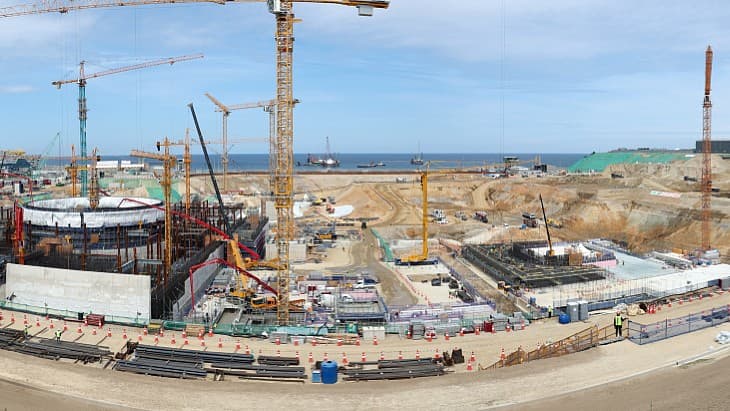
ITER cold test facility begins operation after first magnet coil reaches 4 K
ITER’s first 330-tonne toroidal field coil has hit 4 K in Cadarache, turning the magnet cold test hall into a live proving ground for the reactor’s hardest hardware.
_98008.jpg&w=1920&q=75)
ITER has moved its superconducting magnet program out of rehearsal and into the real thing. At the Magnet Cold Test Facility in Cadarache, in southern France, the first toroidal field coil, TF07, reached 4 K, or minus 269 C, and the facility was declared operational after the cooldown.
That matters because ITER’s magnet system is one of the machine’s most demanding subsystems, and cold testing is the checkpoint that shows whether these giant components can survive operating conditions before they ever go into the reactor. TF07 is no small sample piece. It is a 330-tonne toroidal field coil wound from niobium-tin superconductor, and it spent 12 days being cooled inside the facility’s 800-cubic-metre cryostat before high-current tests were set to begin soon.
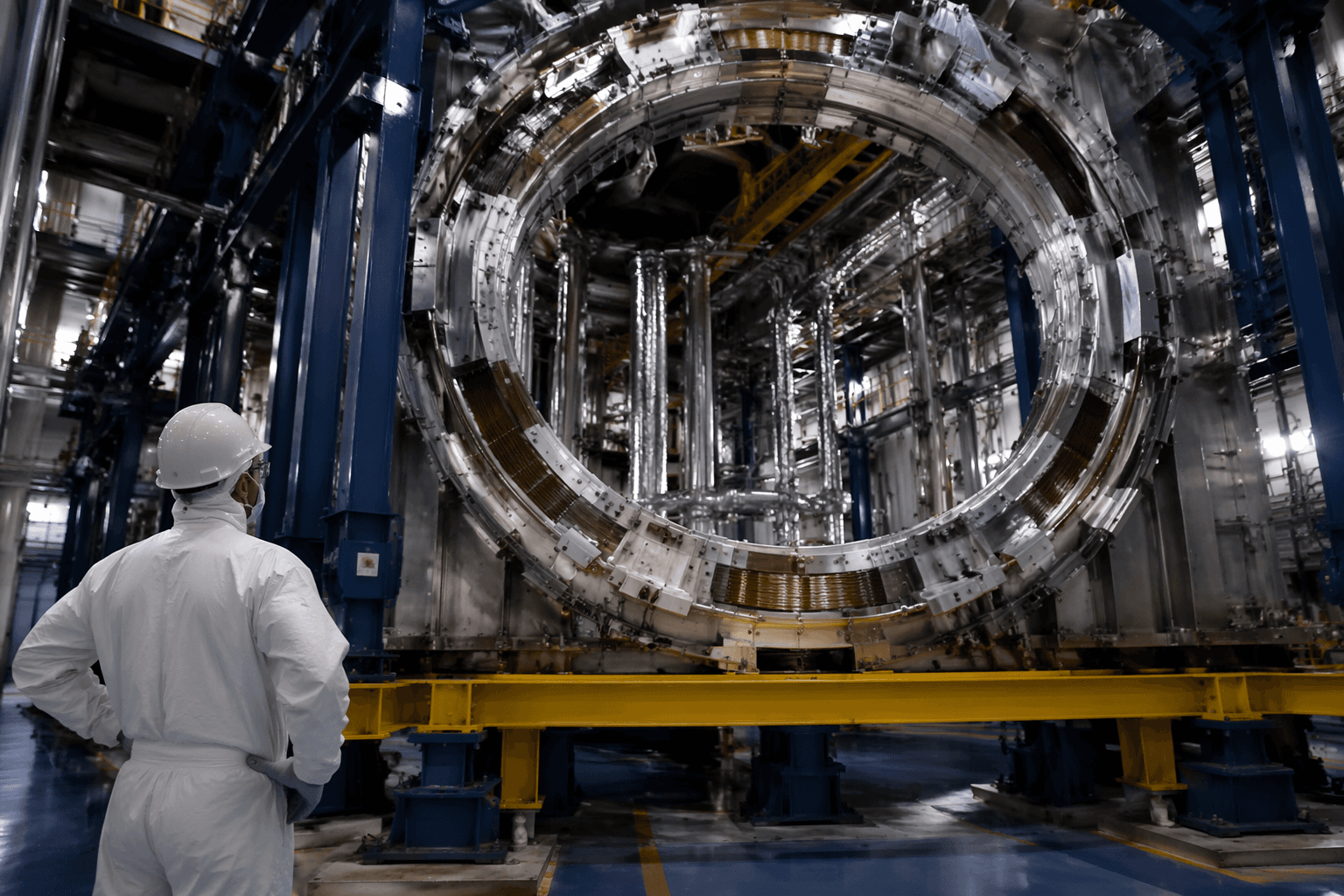
ITER launched the cold-test program in June 2023 as part of a revised assembly and commissioning strategy, then fast-tracked the facility after the 2024 baseline created room in the schedule. Rather than build a fresh hall from scratch, the project repurposed the former poloidal field coil winding building, the same space Europe used to manufacture PF2, PF3, PF4 and PF5. That gave ITER the lifting capacity, scale and cryoplant access needed to handle coils of this size, along with the dedicated power supply, feeder, instrumentation and helium refrigeration connection required for a full electrical and cryogenic campaign.
The purpose is straightforward: prove the magnets before installation, not after. ITER says each cold-test campaign should take four to six months per coil, and TF07 will be followed by additional toroidal field coils from other manufacturers, along with the smaller PF1 poloidal coil. The facility will check insulation at high voltage, quench detection, control logic, instrumentation chains and protection functions, then verify performance at nominal current. ITER has said the same hall will later be available to other fusion stakeholders as part of its knowledge-sharing push with the private sector.
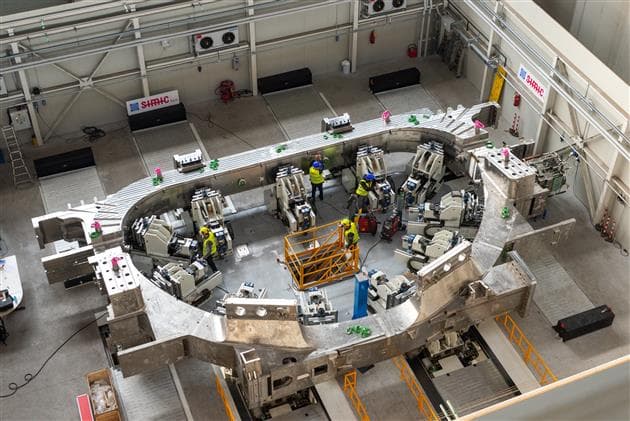
The step also marks a technical shift for the project’s magnet program. ITER says all six poloidal field coils and 14 of the 19 toroidal field coils had already been routinely tested at 80 K before installation, but 4 K testing had previously been done only for U.S.-procured central solenoid modules. With TF07 now down to operating temperature, ITER has pushed one of its most consequential hardware gates a little closer, and with it the next phase of integrated commissioning.
This article was produced by Prism’s automated news system from verified source data, official records, and press releases, then run through automated quality and moderation checks before publishing. The system is built and supervised by the people who set the standards it runs under. Read our full AI policy.
Know something we missed? Have a correction or additional information?
Submit a Tip