Japan’s fusion moonshot spurs startups, industrial spin-offs, and long-term research
Japan's fusion moonshot is already spawning real businesses. Kyoto Fusioneering shows how reactor know-how can become a supply-chain play before commercial electricity arrives.

From moonshot to market
Japan’s fusion push is no longer just a story about distant reactors and patient physics. The sharper story now is industrial: a national moonshot designed to reach a 2050 society without resource constraints is already producing startups, hardware, and engineering services that can earn money long before commercial fusion electricity does. That shift matters because it gives the field something rare in long-horizon energy research: near-term business lines that help keep the bigger bet alive.
At the center is Japan Science and Technology Agency’s Moonshot Goal 10, which sets a target of a dynamic society in harmony with the global environment and free from resource constraints by 2050 through diverse applications of fusion energy. JST says the program works backward from that 2050 society, identifying technical bottlenecks first and then pushing disruptive solutions across disciplines. In other words, the moonshot is not just asking whether fusion can become a power source someday. It is asking what has to be built, sold, and scaled now so the ecosystem survives long enough to get there.
Why the policy backdrop changed
The policy signal from Tokyo got stronger in September 2023, when the Ministry of Education, Culture, Sports, Science and Technology selected nuclear-fusion-related research as a new Moonshot R&D goal. That decision put fusion squarely inside Japan’s official innovation architecture, and it told companies and investors that this is not just a lab curiosity. It is a field with state backing, long duration, and a clear mandate to spill beyond basic research into industrial capability.
That timing also reflects how fusion has evolved historically. Practical fusion has been pursued worldwide for more than 70 years, with research beginning in the 1950s, then slowing for a period before surging again in the 2010s. Climate concerns, decarbonization pressure, and a fresh wave of private capital changed the mood. Recent gains in superconductors, supercomputers, and AI have made the technical road look less hopeless than it once did, even if the final destination remains difficult.
Kyoto Fusioneering becomes the model
The clearest example of this new fusion economy is Kyoto Fusioneering Ltd., a Kyoto University spinout founded in 2019 by Emeritus Professor Satoshi Konishi. Mitsui & Co. underwrote new shares in the company on May 17, 2023, describing it as a firm created to conduct R&D for nuclear-fusion solutions and provide plant engineering services. Mitsui framed the move as a chance to accumulate fusion knowledge and help push the technology toward industrialization and practical use.
That is the crucial detail. Kyoto Fusioneering is not waiting for a finished commercial reactor to open the business. It is building around the plant itself, the systems that make a plant work, and the engineering know-how needed to turn a physics project into infrastructure. The company’s goal is to build a fusion supply chain centered on Japan’s manufacturing companies, a strategy that lines up neatly with Japan’s broader industrial identity.
Japan Bank for International Cooperation described the startup in February 2026 as a Kyoto University startup with about 160 employees, ranging from their 20s to 70s, including international staff. Konishi’s message, as quoted by JBIC, was blunt and strategic: if Japan can build a fusion supply chain using its manufacturing expertise, the country can gain a competitive edge globally. That is the kind of business logic that turns a national science project into a regional industrial story.
The hardware story is the commercial story
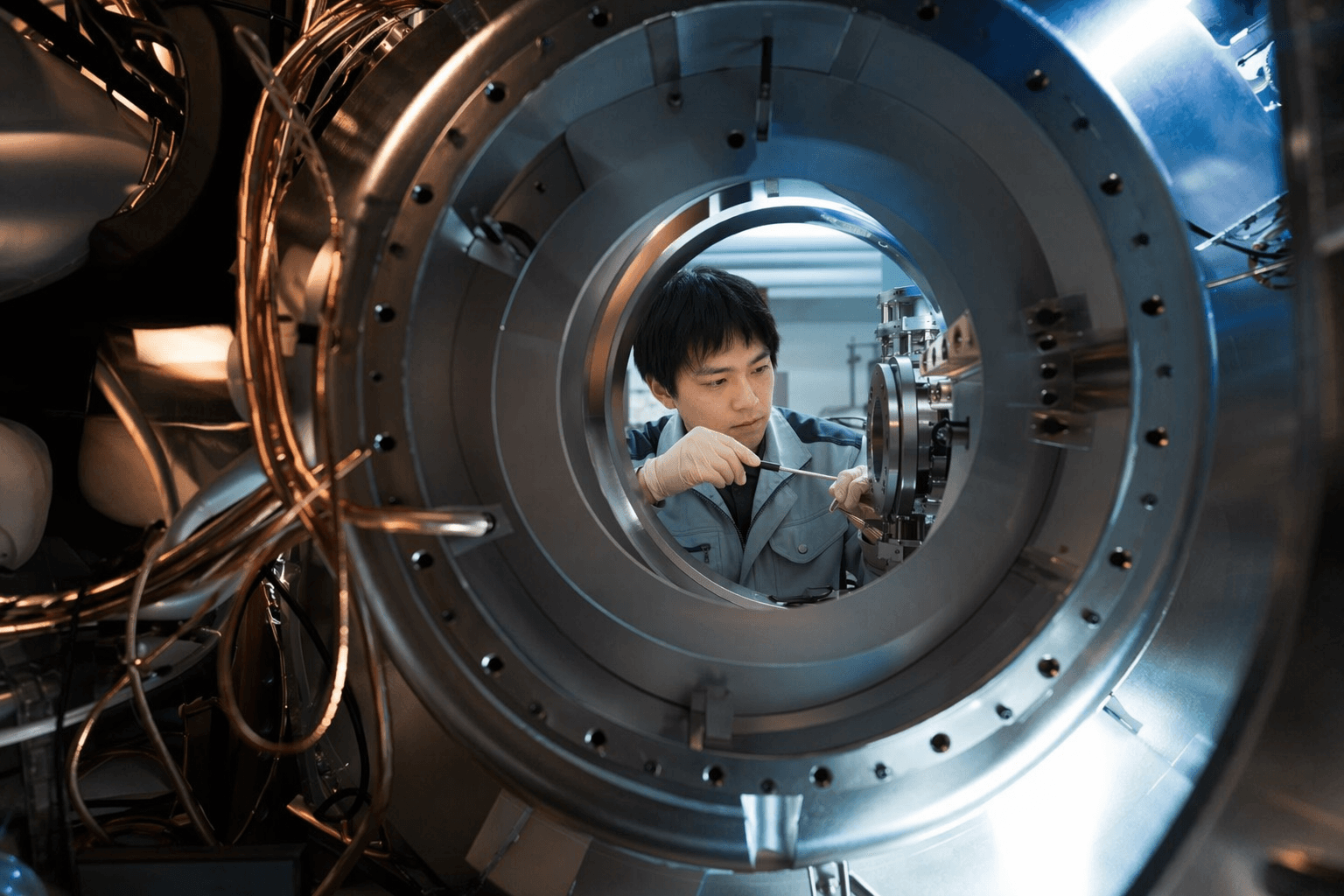
Kyoto Fusioneering’s pitch is built around key components for fusion power plants and integrated demonstration of those systems. Its flagship technologies include a gyrotron system and the UNITY project, both of which it showcased at City-Tech Challenge 2023. The company won the Grand Prize at that event and received a 10 million yen prize, a useful reminder that public-sector startup programs are helping fusion companies gain visibility outside the usual fusion conference circuit.
Those details matter because the fusion economy is not only about reactor cores. It is also about the surrounding ecosystem: plasma systems, peripheral equipment, control hardware, and plant engineering. That is where startups can find revenue while the most famous parts of fusion remain under construction or in testing. The Moonshot framing explicitly leaves room for “various applied technologies,” and Kyoto Fusioneering is making that phrase concrete.
Why Japan’s manufacturing base matters
Japan’s advantage in this race is not just research talent. It is manufacturing depth. Science Japan’s 2025 profile of Kyoto Fusioneering said the company is leveraging Japan’s manufacturing strengths by developing plasma systems that generate fusion reactions, peripheral equipment, and plant engineering. It also noted that risk capital is flowing into fusion commercialization worldwide, which means the window for building an industrial position is open right now, not sometime after the first grid-connected fusion plant.
That industrial framing also helps explain why fusion investment has a different feel in Japan than in places where the narrative leans almost entirely on scientific prestige. Here, the question is increasingly how fusion can support domestic firms, component makers, and engineering businesses. In practice, that means the winners may not be the first groups to produce electricity, but the first to standardize parts, services, and system integration for a future industry.
ITER keeps the long game in view
The long horizon still matters, and ITER in France is the giant reminder. The project involves Japan, Europe, India, the U.S., and others, and it is still under construction. That fact keeps expectations grounded: commercial fusion electricity is not around the corner, and no one serious in the sector pretends otherwise.
But ITER’s unfinished state is exactly why the industrial spin-off model is so important. If the core power-generation timeline remains uncertain, then companies need other ways to monetize expertise. Japan’s moonshot strategy, together with companies like Kyoto Fusioneering, offers one answer: build the supply chain, sell the components, offer the engineering, and let those businesses compound while the science keeps advancing. That is how a long bet on fusion starts to pay dividends before the first reactor ever lights a city.
This article was produced by Prism’s automated news system from verified source data, official records, and press releases, then run through automated quality and moderation checks before publishing. The system is built and supervised by the people who set the standards it runs under. Read our full AI policy.
Did this article answer your question?