Kyoto University finds deuteron clusters in carbon and oxygen nuclei
Kyoto University’s first ONOKORO result found deuteron clusters in carbon-12 and oxygen-16, hinting common nuclei may be far less uniform than textbooks suggest.
A children's game helped physicists pry open a surprise inside two of the most common nuclei in nature. Kyoto University’s first ONOKORO result found deuteron clusters in carbon-12 and oxygen-16, with a reported probability of at least 30% to 40%, a level high enough to push nuclear structure models toward a less uniform picture of matter.
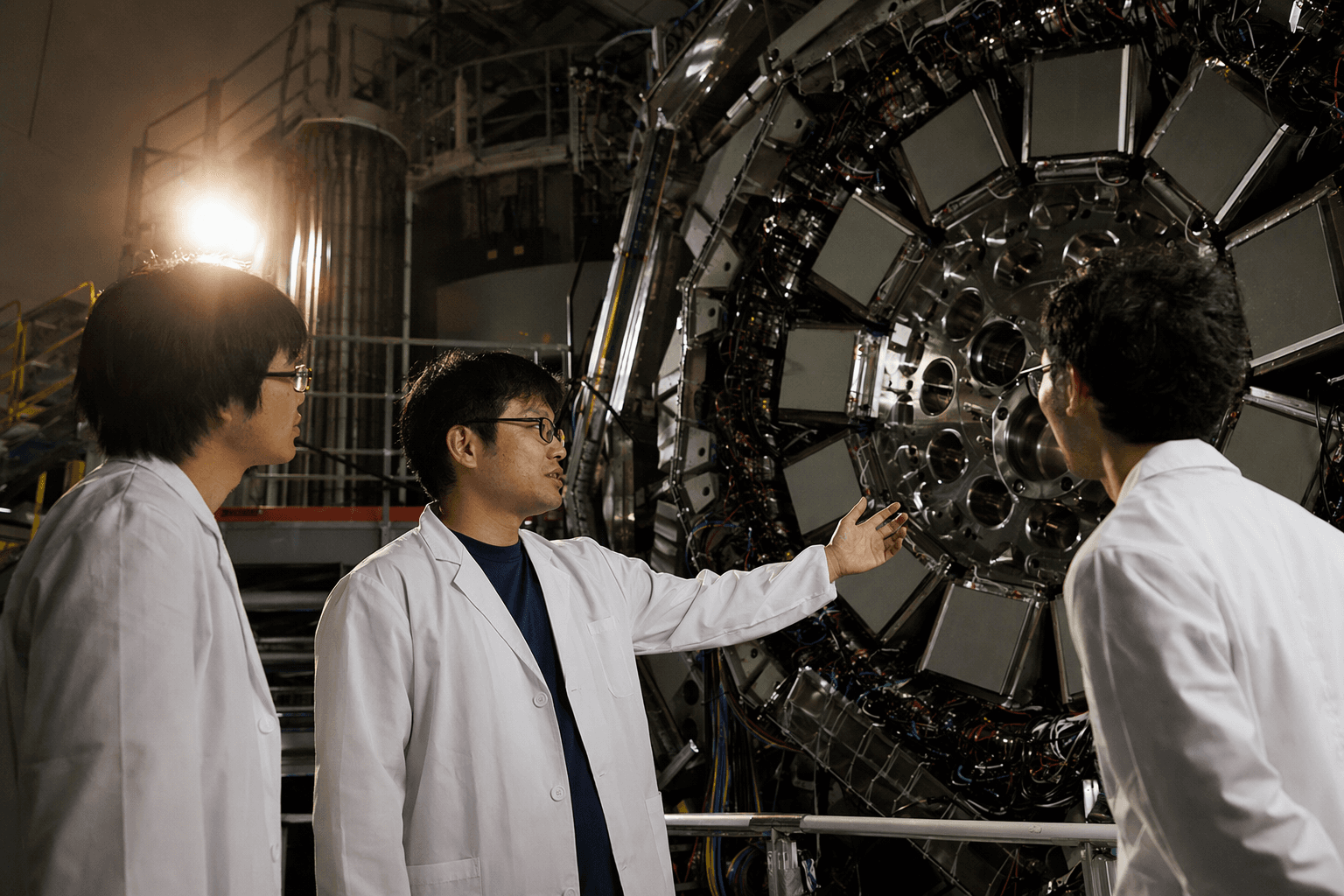
The finding came from an international collaboration that included Tomohiro Zenihiro, then-graduate student Ryotaro Tsuji, RIKEN’s Tomohiro Uesaka and Yuki Kubota, Osaka University’s Junki Tanaka, and Kyushu University’s Kazuyuki Ogata. Their paper, published online on May 1, 2026 in Progress of Theoretical and Experimental Physics, used proton-induced deuteron knockout reactions under quasi-free scattering conditions at the Research Center for Nuclear Physics in Osaka. A 226-MeV proton beam struck carbon-12 and oxygen-16, and the knocked-out deuterons were directly detected at the focal plane of the Large Acceptance Spectrometer.
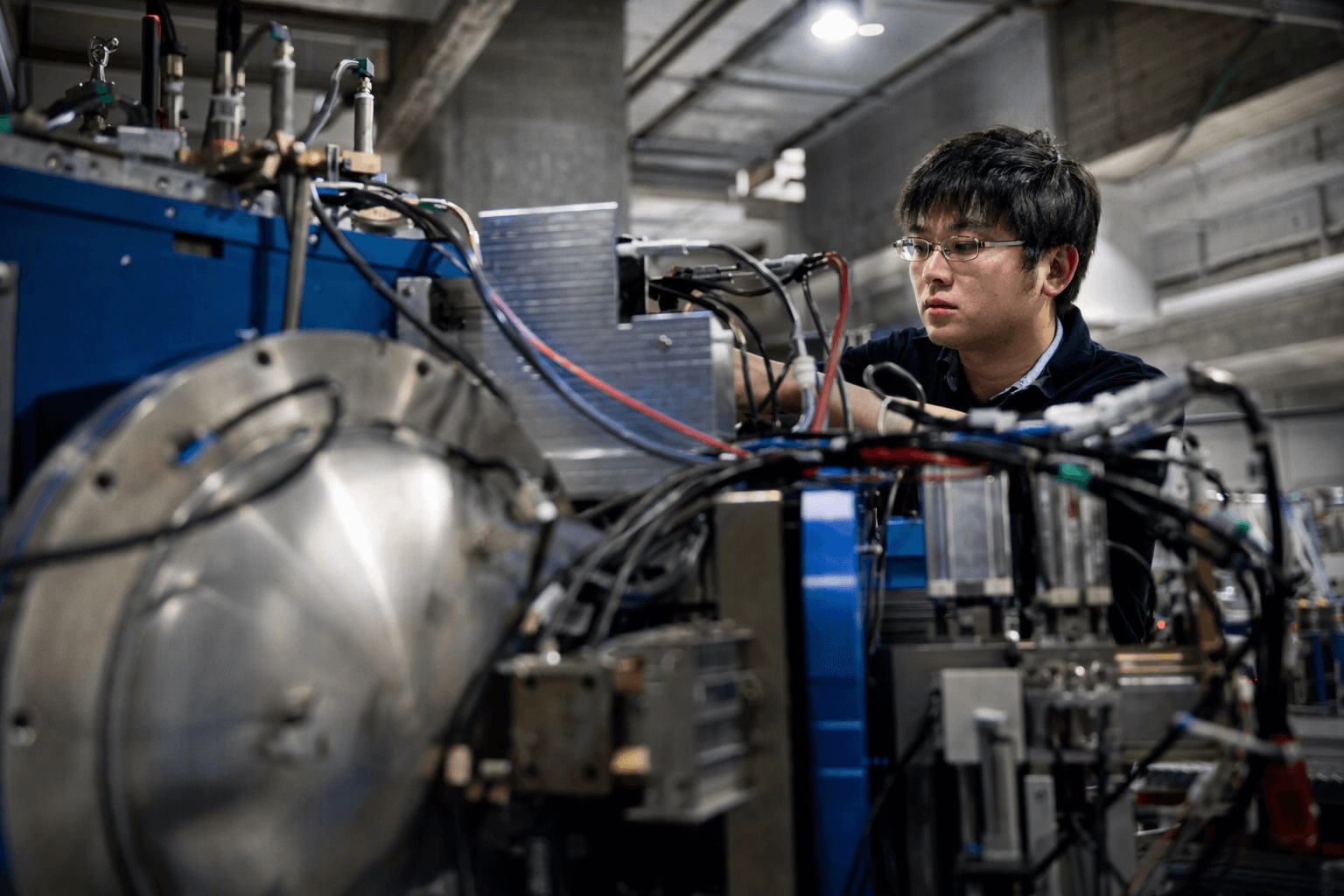
The project name is part of the story. ONOKORO refers to daruma otoshi, the Japanese game in which pieces are knocked out from a stacked figure without toppling the whole. Kyoto University has used that image to describe the experiment’s logic: remove one cluster and see what the nucleus was built from in the first place. The project began in 2021 with KAKENHI funding from the Japan Society for the Promotion of Science, and it was designed to study clustering across medium-heavy and heavy nuclei using RCNP, the Radioactive Isotope Beam Factory in Wako, Saitama, and the Heavy Ion Medical Accelerator in Chiba.
What makes the result matter now is not just that deuterons were found, but that they appeared with substantial probability in nuclei long treated as close to standard, featureless many-body systems. Kyoto University says the same data also show evidence relevant to alpha-cluster, triton-cluster, and helium-3-cluster formation, suggesting nuclear non-uniformity may be more varied, and more common, than previously assumed. That has immediate consequences for structure models that need to account for clustering as an active degree of freedom rather than a rare exception.
The stakes extend beyond the nucleus itself. Nuclear clustering is tied to the origin of nuclear stability, to alpha decay, and to matter under extreme conditions in neutron stars and supernovae. ONOKORO’s first result gives theorists and experimenters a sharper target: if carbon-12 and oxygen-16 already hide deuteron clusters at these levels, the next rounds of cluster knockout measurements could redraw how medium-heavy nuclei are built.
This article was produced by Prism’s automated news system from verified source data, official records, and press releases, then run through automated quality and moderation checks before publishing. The system is built and supervised by the people who set the standards it runs under. Read our full AI policy.
Did this article answer your question?