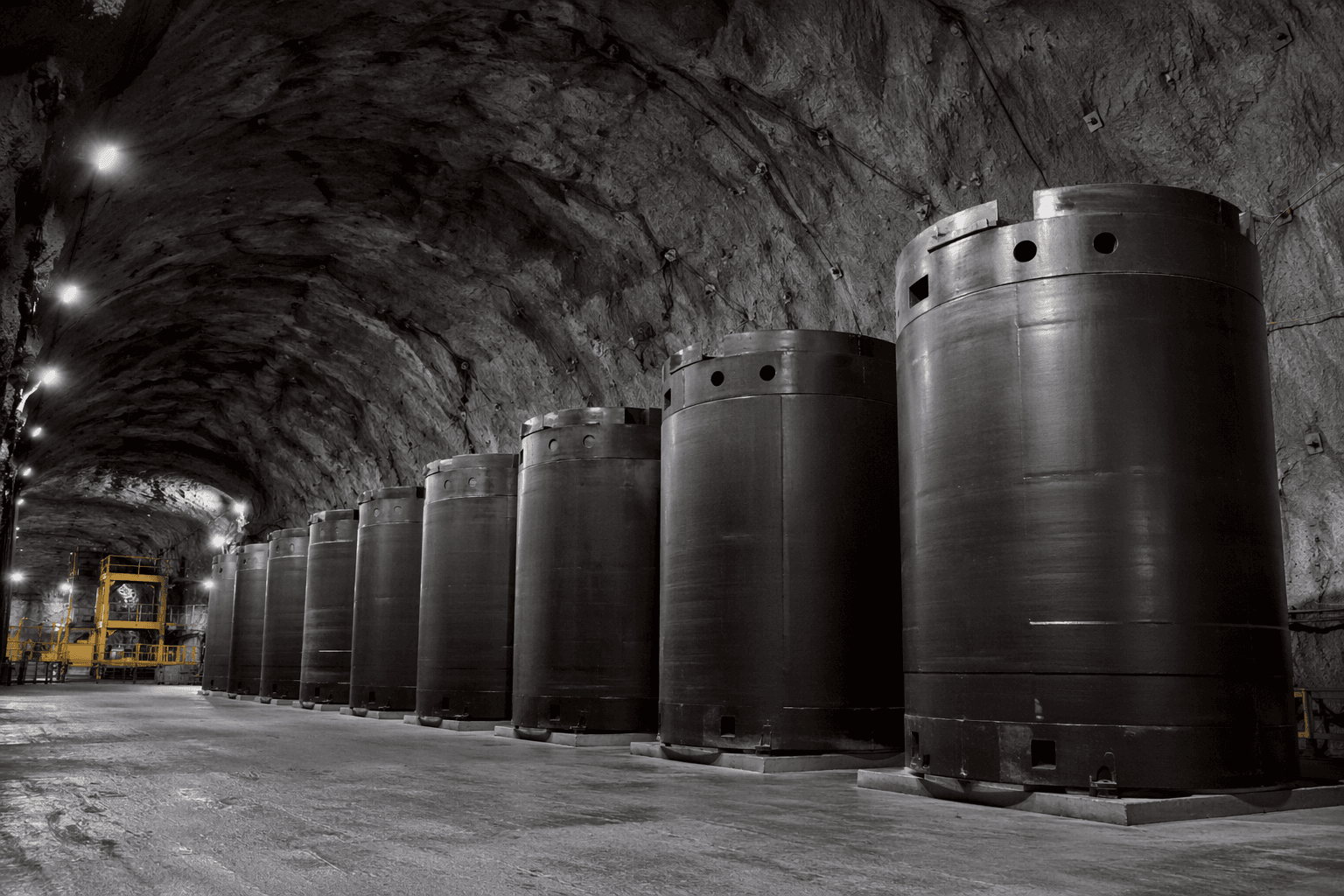
Japan's Large Helical Device Ends Operations, Leaving Fusion Data Legacy
Japan's LHD just made 27 years of stellarator plasma data free to access, including a 48-minute steady-state pulse that commercial fusion startups can now benchmark their designs against.

Twenty-seven years of open-access plasma data from Japan's Large Helical Device in Toki is now freely available to every fusion program on Earth, from DOE's Princeton Plasma Physics Laboratory in New Jersey to commercial stellarator ventures like Wisconsin-based Type One Energy — and the most commercially significant number in that entire archive may be 48: the minutes LHD sustained a continuous plasma pulse without disruption, a direct proof-of-concept that stellarators can run the way a power plant has to.
The National Institute for Fusion Science (NIFS), which operated LHD throughout its nearly 30-year run beginning in 1998, made all 27 years of experimental records publicly available on the web when the device's final campaign concluded. Novimir Pablant, PPPL's division head for stellarator experiments, called it "a wealth of data that will guide the design of future power plants." That framing undersells the specificity of what's actually in the archive.
Two PPPL-developed instruments sit at the core of the dataset's commercial value. The X-ray imaging crystal spectrometer (XICS), built at PPPL and deployed at LHD, enabled precise measurements of ion temperatures and plasma flows — the confinement scaling data that design codes for next-generation machines can actually ingest. The impurity powder dropper, also developed at PPPL and first tested at LHD in 2019 by staff research physicist Federico Nespoli, demonstrated that controlled impurity seeding can actively improve plasma performance rather than degrade it. That result directly de-risks one of the thorniest engineering problems in commercial reactor design: helium ash and impurity buildup in a sustained plasma. "We still have a lot of data that we collected during the last LHD experimental campaign, and I will definitely keep working with NIFS colleagues on the analysis and interpretation of these data, as well as extending our research to similar experiments to be performed in the Wendelstein 7-X stellarator in Germany," Nespoli said.
That cross-machine comparison to W7-X is where LHD's archive becomes a design-validation instrument rather than just a historical record. Commercial developers like Proxima Fusion, whose Stellaris power plant concept targets the 2030s, benchmark heavily against W7-X results. LHD's 27-year public dataset now provides a second independent reference point built on a different helical geometry and nearly three decades of operational history — the kind of cross-validation that either confirms a design claim or exposes it.
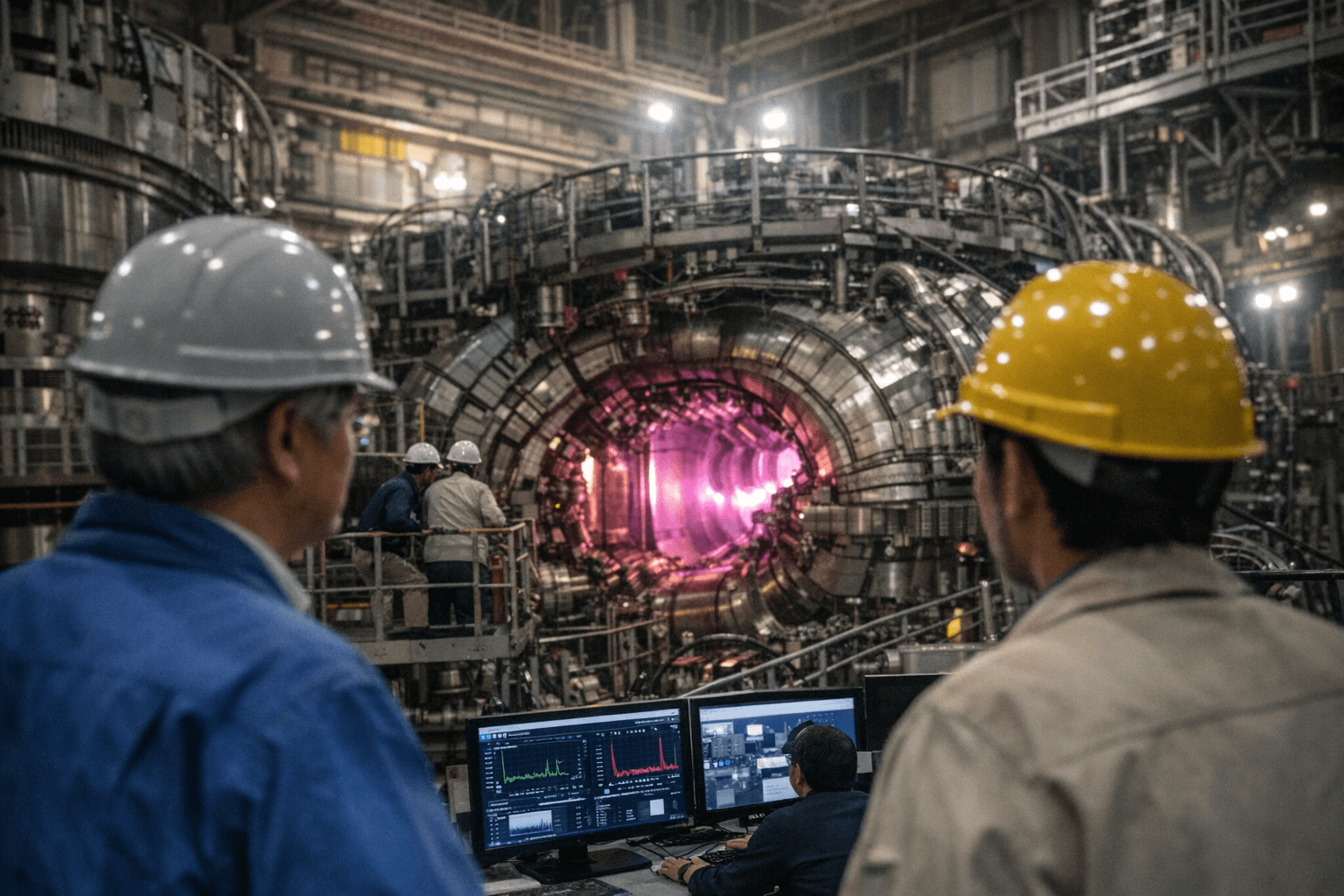
Pablant said LHD "pushed science forward in so many areas." The collaboration involved a few dozen PPPL researchers, some of whom lived in Toki for months at a stretch over more than two decades. Motoshi Goto, a professor at The Graduate University for Advanced Studies, SOKENDAI and researcher at NIFS, credited the partnership directly: "For more than 20 years, PPPL has contributed a great deal to our project. They have brought great knowledge and expertise to LHD experiments and published many papers based on LHD data. We have very close relationships between our institutes, and the diagnostic systems developed through this collaboration are currently among the best in the world."
Those diagnostics, and the plasma physics they measured across 27 years of operation, now belong to any researcher with an internet connection. For stellarator developers making costly, hard-to-reverse design choices around confinement geometry, impurity control hardware, and steady-state operation systems, LHD's public archive is the most detailed empirical benchmark the field has outside a proprietary lab.
This article was produced by Prism’s automated news system from verified source data, official records, and press releases, then run through automated quality and moderation checks before publishing. The system is built and supervised by the people who set the standards it runs under. Read our full AI policy.
Did this article answer your question?