Kentucky utilities, X-energy explore Xe-100 deployment for grid reliability
Kentucky’s first Xe-100 talks are a planning signal: LG&E, KU, and X-energy are testing whether advanced nuclear can become firm power for data centers and the grid.
Kentucky’s utilities have moved one step closer to making advanced nuclear part of everyday planning, not just a clean-energy talking point. Louisville Gas and Electric Company and Kentucky Utilities Company said they had begun early feasibility work with X-energy, Inc. to explore whether Xe-100 small modular reactors could support long-term grid reliability across the Commonwealth, including service to large-load customers such as data centers.
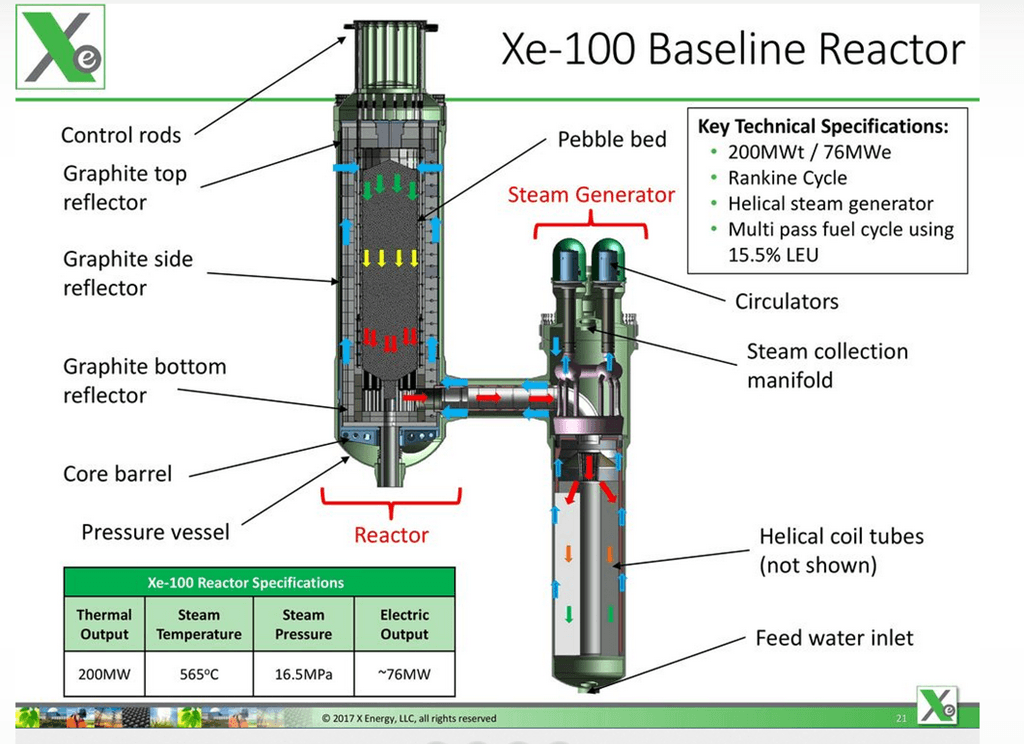
That matters because the conversation is shifting from whether nuclear belongs in the mix to how a specific reactor design could fit Kentucky’s load growth, rate structure, and permitting path. X-energy’s Xe-100 is a pebble-bed, high-temperature gas-cooled reactor, with each unit designed for about 200 MWt and roughly 80 MWe. X-energy says a four-unit plant is optimized at 320 MWe, which puts the design squarely in the range of firm utility-scale generation rather than a boutique demonstration project.
LG&E president John R. Crockett III said the company sees nuclear as a way to preserve Kentucky’s “strong competitive energy advantage” with reliable and affordable power, and he described the utility’s strategy as “all-of-the-above” generation. That language reflects the larger pressure on utilities across the country: industrial customers want round-the-clock power, and data centers are making weather-dependent generation a harder fit for long-term planning.
Kentucky is trying to build the scaffolding around that interest. The Kentucky Nuclear Energy Development Authority was created in 2024 under Senate Bill 198, which became Chapter 169, and it was set up as a non-regulatory body to help communities understand advanced nuclear opportunities, clarify early site permitting, and build ties with the NRC and DOE laboratories. The law also required a workforce study by December 1, 2024, and a site-suitability study by December 1, 2025.
The Kentucky Public Service Commission then opened its nuclear case on June 16, 2025, saying it wanted to examine construction, operation, funding, environmental effects, economic development, workforce needs, and ratepayer impacts. The commission also planned public meetings across the state and an informal conference followed by a multi-day technical conference tentatively set for early 2026.
Now the state has added a new lever. Kentucky’s Nuclear Reactor Site Readiness Pilot Program, signed into law in April 2026, created a $75 million grant initiative for site feasibility studies, early site and construction permitting, and licensing. The law allows up to three projects to receive as much as $25 million each, and it lets regulated utilities seek PSC cost recovery for qualifying permitting and licensing expenses not already included in rates.
For X-energy, the Kentucky work widens the company’s utility-facing footprint as it scales up financially, with its IPO beginning to trade on Nasdaq under the ticker XE on April 24, 2026. For Kentucky, it is a first-wave nuclear test case. The state has never hosted an operating commercial nuclear power plant, even though it has long been part of the fuel cycle through Paducah. What happens next will determine whether Xe-100-style reactors become a real option for utility planning in the Bluegrass State or stay in the feasibility phase.
This article was produced by Prism’s automated news system from verified source data, official records, and press releases, then run through automated quality and moderation checks before publishing. The system is built and supervised by the people who set the standards it runs under. Read our full AI policy.
Did this article answer your question?