Rolls-Royce SMR, Equilibrion Partner to Assess Nuclear-Powered Sustainable Aviation Fuel
A single 470 MW Rolls-Royce SMR could produce over 160 million litres of SAF per year, enough to meet roughly a third of the UK's 2040 power-to-liquids target.

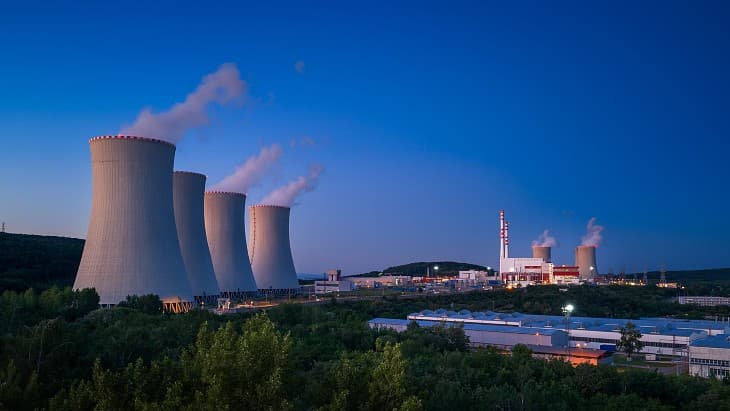
Rolls-Royce SMR and Hull-based project developer Equilibrion signed a memorandum of understanding to jointly assess whether small modular reactor heat and electricity can power commercial-scale sustainable aviation fuel production, the companies announced in the first week of March 2026.
The agreement follows a feasibility study at Bristol Airport that found SMRs could supply the large, consistent flows of heat and electricity that power-to-liquids processes require. Under the MoU, the partners will conduct a technical and economic assessment of Equilibrion's proprietary Eq.flight modular SAF production system running on Rolls-Royce SMR output.
The process works like this: SMR-generated electricity powers electrolysers that split water into hydrogen, while direct air capture provides the CO2. Those two feedstocks are then converted into synthetic jet fuel via a Fischer-Tropsch process. The resulting fuel is classified as e-SAF, also known as power-to-liquids SAF. Equilibrion's pitch is that Eq.flight's enhanced efficiency produces more SAF using less energy than competing technologies, lowering lifecycle carbon intensity in the process.
The numbers behind the partnership are significant for anyone tracking the UK's SAF mandate. Equilibrion estimates a single 470 MW Rolls-Royce SMR could produce more than 160 million litres of SAF per year. According to Rolls-Royce SMR, that output would meet around a third of the UK's 2040 power-to-liquids target. The UK's SAF mandate requires 22% of aviation fuel to be sustainable by 2040, with 3.9% specifically required to come from PtL pathways. Set against the backdrop that SAF currently accounts for less than 1% of global aviation fuel supply, and IATA has warned that production is lagging far behind what net-zero targets demand, the scale of the gap is clear.
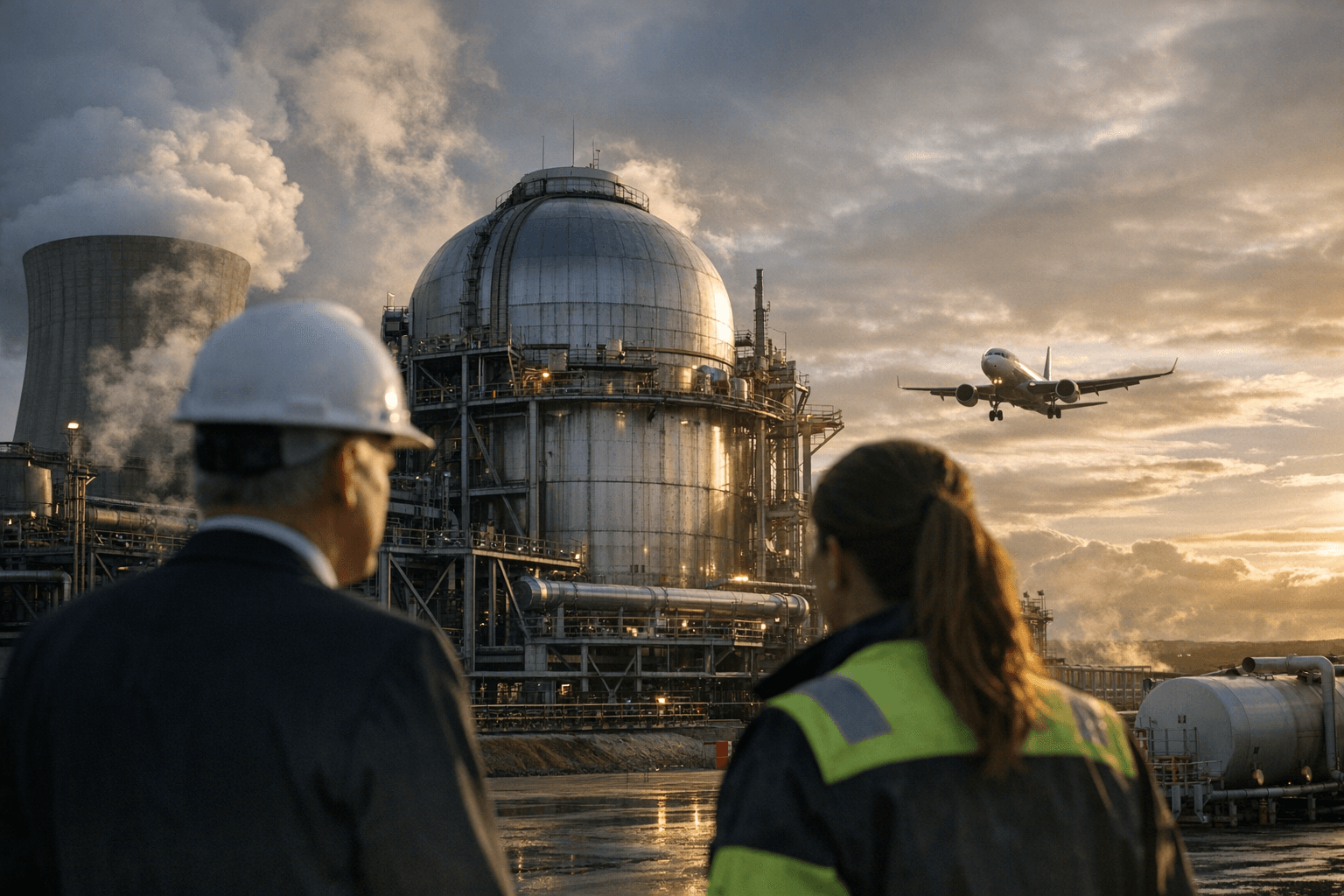
Alan Woods, Director of Strategy and Business Development for Rolls-Royce SMR, framed the case for nuclear-derived fuel production directly: "Our SMR technology is designed to provide clean, affordable and dependable low-carbon energy, exactly the qualities required to unlock large-scale Sustainable Aviation Fuel production. The technical and economic assessment completed with Equilibrion will enable them to demonstrate how nuclear can power one of the most ambitious decarbonisation challenges in aviation."
Caroline Longman, Director at Equilibrion, connected the production question to the employment case: "Aviation will only meet its climate commitments if SAF becomes available in large, dependable volumes. Nuclear-derived fuel production offers the reliability, scalability and low carbon intensity needed to deliver that future. Delivering nuclear-enabled SAF also creates long-term, high-quality employment — each Eq.flight facility has the potential to generate around 10,000 skilled local jobs over its lifetime."
Equilibrion, founded in 2022, received £1m from the UK government's Advanced Fuels Fund and is targeting a UK-based Eq.flight demonstration by 2030, supported by a Department for Transport grant under that same programme. On the Rolls-Royce SMR side, the reactor design was selected by the UK government for the country's first three SMRs, with construction already underway in Czechia. Final UK regulatory approval of the design is not expected until December.
This article was produced by Prism’s automated news system from verified source data, official records, and press releases, then run through automated quality and moderation checks before publishing. The system is built and supervised by the people who set the standards it runs under. Read our full AI policy.
Did this article answer your question?