Rolls-Royce SMR taps Škoda JS, Doosan for reactor parts work
Škoda JS and Doosan Enerbility are moving the reactor pressure vessel and other long-lead parts toward fabrication, turning Rolls-Royce SMR’s plan into shop-floor reality.
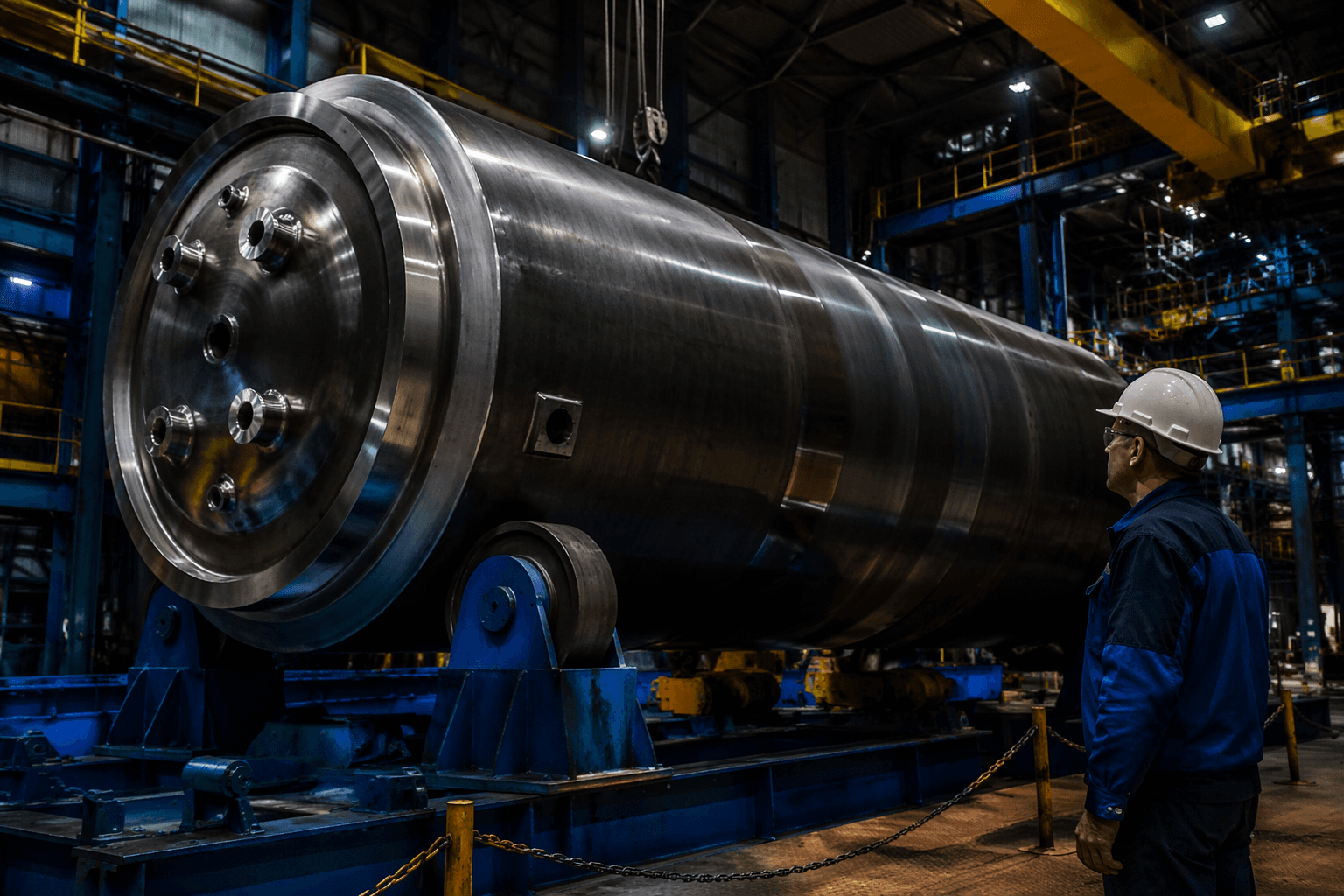
The reactor pressure vessel is moving toward fabrication, and that is the point where an SMR stops being a drawing and starts becoming a factory job. Rolls-Royce SMR has picked Škoda JS and Doosan Enerbility for pre-production work on key components, including the vessel itself, with the work focused on early supplier engagement, design finalisation and manufacturing readiness.
That matters because these are the pieces that can break a schedule long before a site is poured or a licence is issued. Ruth Todd, Rolls-Royce SMR’s operations and supply-chain director, called them “some of the most important long-lead items in nuclear plant construction.” The company is leaning on a dual-supply model to spread risk and keep delivery from hinging on one vendor, a practical move in a market where heavy forgings, pressure vessels and qualified fabrication slots can become the real bottlenecks.
The first two Rolls-Royce SMR projects are planned for Wylfa in North Wales and Temelín in the Czech Republic, and the supplier choices point to how much of the programme is now tied to local industrial capacity. Škoda JS and Doosan Enerbility both bring long experience with major nuclear hardware, and ČEZ board member Tomáš Pleskač has praised the Czech work as a way to deepen domestic nuclear know-how. ČEZ owns about 20% of Rolls-Royce SMR, and the two companies have said they want to deploy up to 3 GW of SMR capacity in the Czech Republic.
The Czech path has been building step by step. Rolls-Royce SMR and ŠKODA JS signed a memorandum of understanding on 1 August 2025, after ČEZ and Rolls-Royce SMR signed an Early Works Agreement in July 2025 to prepare the first Czech reactor. In April 2026, ČEZ said the Temelín project had reached another milestone and that documentation and materials for permitting could begin. The first Czech unit is expected in the mid-2030s, which gives this supplier work a very specific job: make sure the hardware pipeline is ready when the paperwork catches up.
The hardware itself is not vague. Rolls-Royce SMR’s design is a 470 MWe pressurised water reactor that the company says should power about one million homes for at least 60 years. It is also tied to a broader industrial plan, including a module development facility in Sheffield to produce working prototypes. That is the part that makes this look less like branding and more like an assembly line being assembled.
The political and financial frame has hardened too. The UK government chose Rolls-Royce SMR as its preferred SMR technology in June 2024, later allocating £2.6 billion in the 2025 Spending Review, while Wylfa was announced in November 2025 as a host for at least three units, with room for up to eight. Rolls-Royce SMR says the National Wealth Fund will commit up to £599 million, and Rolls-Royce plc and BNF Resources acquired Constellation’s equity interest on 4 December 2025. For a programme that used to live in renderings and licence talk, the loudest signal now is the hardware moving into view.
This article was produced by Prism’s automated news system from verified source data, official records, and press releases, then run through automated quality and moderation checks before publishing. The system is built and supervised by the people who set the standards it runs under. Read our full AI policy.
Know something we missed? Have a correction or additional information?
Submit a Tip