South Korea’s KSTAR sustains 100 million°C plasma for 102 seconds
KSTAR held 100 million°C plasma for 102 seconds, a record that proved heat handling and stability improved. It still fell far short of the steady, power-producing run a reactor needs.
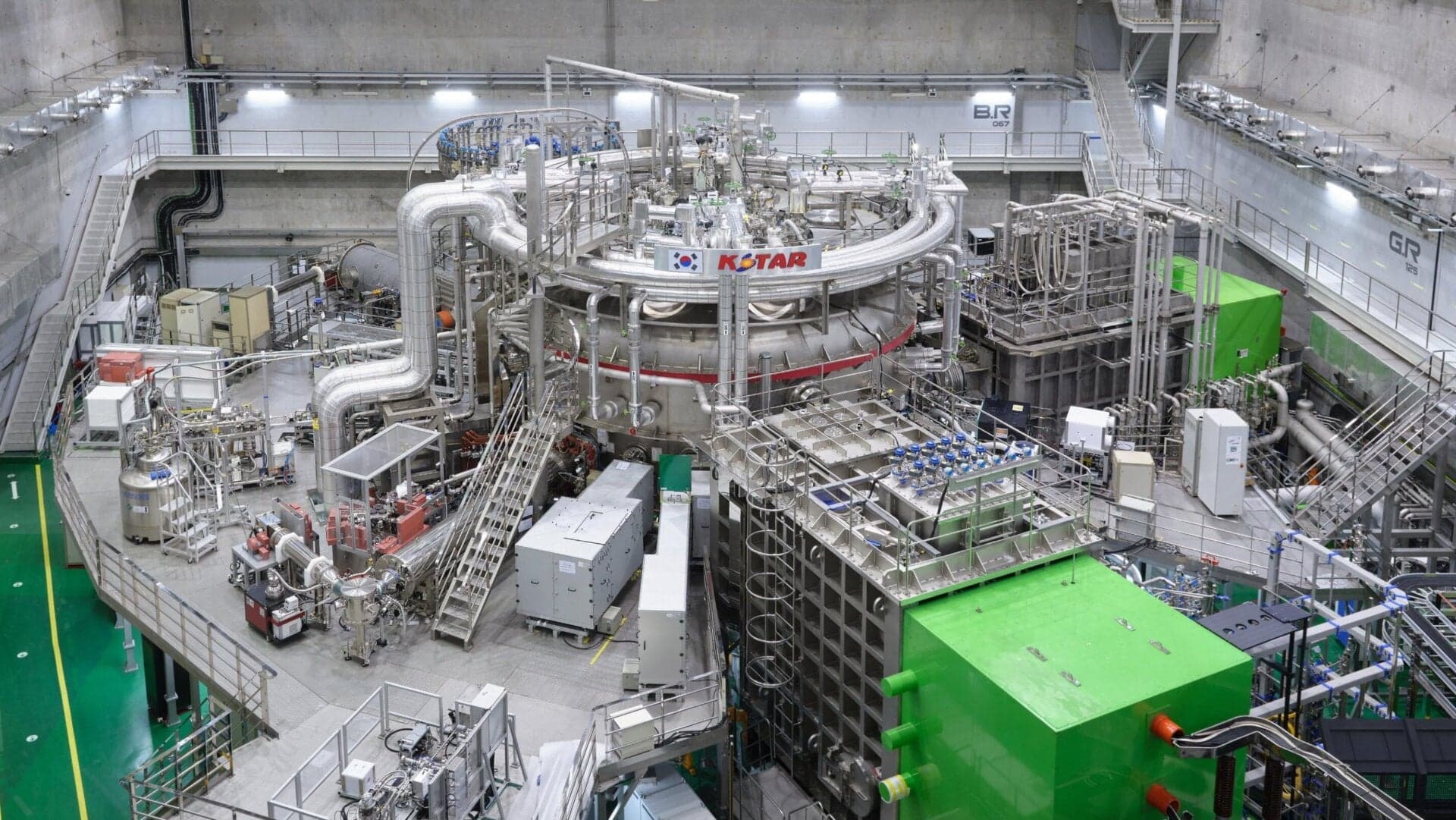
South Korea’s KSTAR did something fusion people actually care about: it held a 100 million°C plasma together for 102 seconds, not just long enough to flash a headline, but long enough to show the machine is getting better at the hard part, keeping a tokamak stable while it is being cooked from the inside.
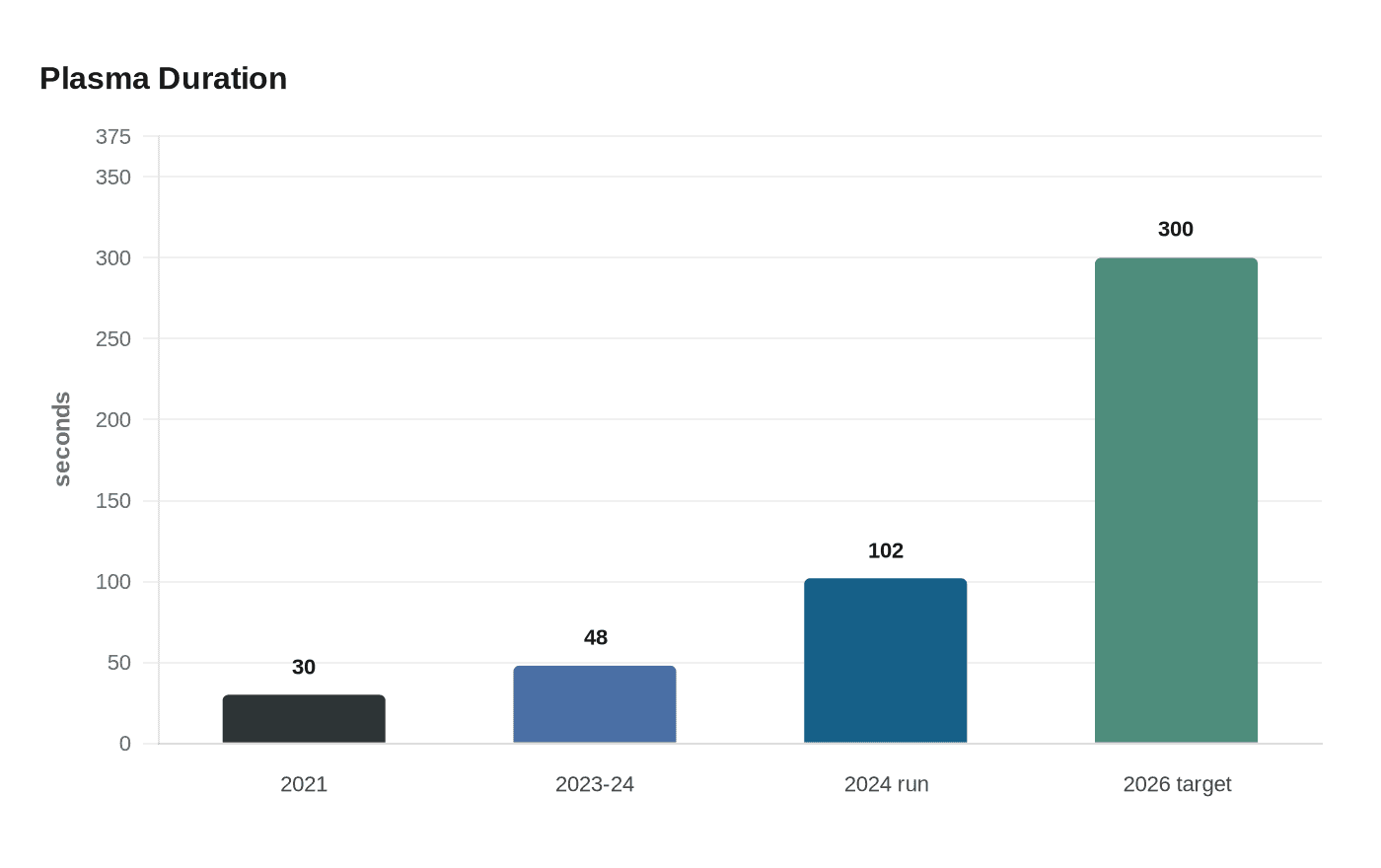
That temperature is hotter than the Sun’s core, but the real significance was duration in high-confinement mode, or H-mode, the operating state tokamaks need for long-pulse, reactor-relevant plasma. During the same 2023 to 2024 campaign, KSTAR also sustained 100 million°C plasma for 48 seconds, beating its own 30-second record from 2021. The 102-second run was achieved between December 2023 and February 2024 at the Korea Institute of Fusion Energy’s KSTAR device in Daejeon, South Korea.
The breakthrough was tied to a new tungsten divertor installed in December 2023. KFE credited the tungsten hardware with helping the machine survive the longer discharge, and the temperature data backs up that claim: the divertor’s thermocouple readings varied by less than 15°C during the 102-second pulse. That kind of thermal steadiness matters because the divertor is where the exhaust heat and particle load land first, and carbon was never going to be the long-pulse answer. KSTAR also kept key plasma-shape variables within a maximum error of 2 cm, which is the kind of control margin that separates a clean physics run from a messy one.
The discharge ran at 400 kA plasma current, 1.95 T toroidal magnetic field, 3.9 MW of neutral-beam heating, and 1.1 MW of electron-cyclotron heating. Core electron temperature stayed above 6.0 keV, core ion temperature was around 2.5 keV, and core electron density sat near 3.0 × 10^19 m^-3. Those numbers show a disciplined confinement experiment, not a power plant. They do not yet solve the central fusion problem: making the plasma produce more energy than the machine consumes, continuously, while surviving neutron damage, heat exhaust, and component wear.
That is why this result matters as a reality check, not a victory lap. KSTAR was built with domestic technology to serve as a testbed for ITER-relevant long-pulse scenarios, and its leadership says the next target is 300 seconds at 100 million°C by 2026. KFE is also pushing toward all-tungsten inner-wall components and AI-based real-time feedback control. For ITER in Cadarache, France, and for any future fusion demonstration reactor, the lesson is simple: the field is still learning how to hold the fire, not yet how to sell the electricity.
This article was produced by Prism’s automated news system from verified source data, official records, and press releases, then run through automated quality and moderation checks before publishing. The system is built and supervised by the people who set the standards it runs under. Read our full AI policy.
Did this article answer your question?