States Race to Host DOE Nuclear Lifecycle Innovation Campuses Across America
Utah, South Carolina, Tennessee, Washington, and Colorado have signaled interest in hosting a DOE Nuclear Lifecycle Innovation Campus since the RFI dropped January 28.
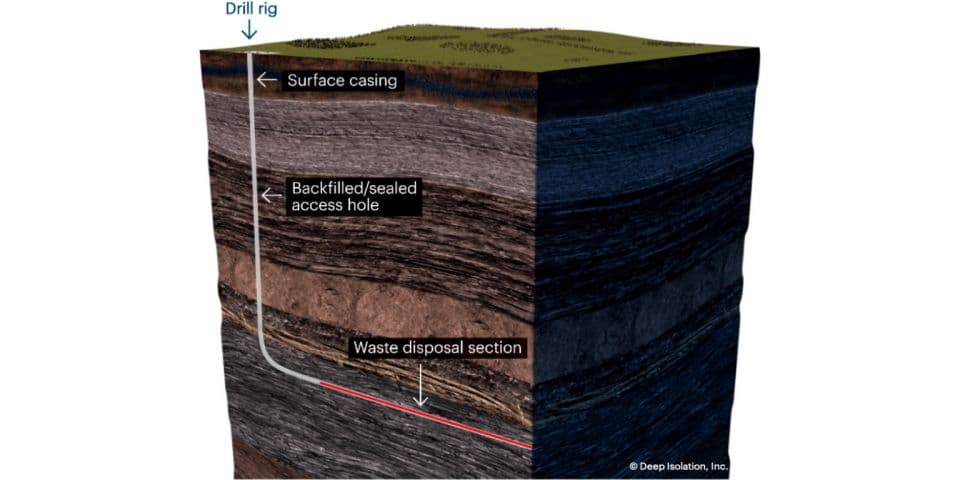
The April 1 RFI deadline found states scrambling to stake their claims on one of the most ambitious federal nuclear initiatives in decades: the Department of Energy's Nuclear Lifecycle Innovation Campuses program, which would plant full fuel-cycle infrastructure, from enrichment and fabrication to waste disposal, in willing states across the country.
The DOE launched the competition on January 28, inviting states to outline their priorities, site suitability, workforce, regulatory readiness, and proposed funding structures. The scope is unusually broad: campus activities could include fuel fabrication, enrichment, spent fuel reprocessing, separations, radioactive waste management, and potential co-location with advanced reactors and data centers.
Utah moved fastest and most visibly. Governor Spencer Cox held a news conference in northwest Tooele County on March 27 to announce the state's formal intent to respond, pitching up to 10,000 jobs and the reuse of spent nuclear fuel. The state had already laid the legislative groundwork, passing HB78, which established a Nuclear Energy Regulatory Office within the Division of Waste Management and Radiation Control, and SB135, which explicitly directed the Utah Office of Energy Development to pursue a Nuclear Lifecycle Innovation Campus. A salt dome in Millard County is among the sites being evaluated for spent fuel storage. "We're ready to lean in again," said Tooele County Council chair Jared Hamner, who referenced the county's existing relationship with the EnergySolutions facility at Clive.
South Carolina Senator Tom Davis filed a joint resolution on February 18 directing a unified state response. "This is not a routine federal solicitation," Davis said. "It is one of the most significant economic and national security initiatives the federal government has launched in a generation, and South Carolina cannot afford to treat it as anything less." The resolution remained in committee as of March 31.
Tennessee's state legislature passed a resolution urging Governor Bill Lee to submit an RFI response, though as of March 31 it was still on the Senate regular calendar. In Washington, House Joint Memorial 4016, introduced February 14, called on Governor Bob Ferguson to direct state agencies toward a competitive submission; it too sat in committee at month's end. Colorado presented a different picture: county-level interest from Mesa and Moffat Counties was on the record, but whether the state itself filed a response remained unclear.
The waste question hovers over every submission. Acting DOE deputy assistant secretary Marla Morales framed it plainly: "This RFI says if you want to have the front of the fuel cycle, if you want to be part of this conversation, you have to have an answer to the back end." States competing only on enrichment or fabrication without addressing disposition may find their bids incomplete by the time DOE begins its review.
That review will not be quick. DOE told respondents to expect roughly six months of processing, with program design and selection criteria shaped by what states actually submitted. Procurement opportunities, site-characterization work, and public engagement hearings are all downstream of that review, making the current legislative and executive positioning in states like Utah and South Carolina the earliest signal of where the real action is likely to land.
This article was produced by Prism’s automated news system from verified source data, official records, and press releases, then run through automated quality and moderation checks before publishing. The system is built and supervised by the people who set the standards it runs under. Read our full AI policy.
Did this article answer your question?


