TEPCO begins two-week palm-sized micro-drone inspections inside Fukushima Unit 3 containment
TEPCO sent palm-sized micro-drones into the Unit 3 primary containment on March 5, flying two short missions while a planned two-week, 21-flight program tests access routes for fuel-debris retrieval.

Tokyo Electric Power Company began internal inspections of Fukushima Daiichi Unit 3’s primary containment vessel using palm-sized micro-drones, launching the first flights on March 5, 2026. Two drones completed two flights that day, each lasting about eight minutes, as part of a program planned to run about two weeks and include roughly 21 sorties, each planned at roughly 10 minutes per day, to map conditions and identify access routes for large-scale fuel-debris retrieval scheduled for fiscal 2037 or later.
The aircraft themselves are tiny: accounts describe a footprint of roughly 12 by 13 centimetres, with one set of dimensions listing 12 centimetres long, 13 centimetres wide and 4 centimetres high, and another description giving 13 centimetres by 12 centimetres; a third description calls them about 10 centimetres square. All reports agree the drones weigh 95 grams including battery and carry cameras and LED lights. One report said the drones did not carry dosimeters to keep weight down, meaning radiation levels could not be measured during these flights.
TEPCO and the contractors structured the mission in stages. Initial flights were devoted to testing radio communications range in new flight areas, followed by flights to gather footage and later, more detailed inspection runs intended to capture imagery for 3-D reconstruction. Air-tightness has to be maintained at all times during operations inside the containment, and poor communications forced the teams to shorten the planned circuit on the first day, returning the drones early rather than completing the full route.
Visibility proved another operational limit. Akira Ono, president of Fukushima Daiichi Decontamination & Decommissioning Engineering Co., warned that mist can reduce visibility and said, "There may be mist reducing visibility at times. We will make safety our top priority when deciding whether to continue the investigation." TEPCO added that it will proceed cautiously: "we will continue to move forward safely and steadily with this task."
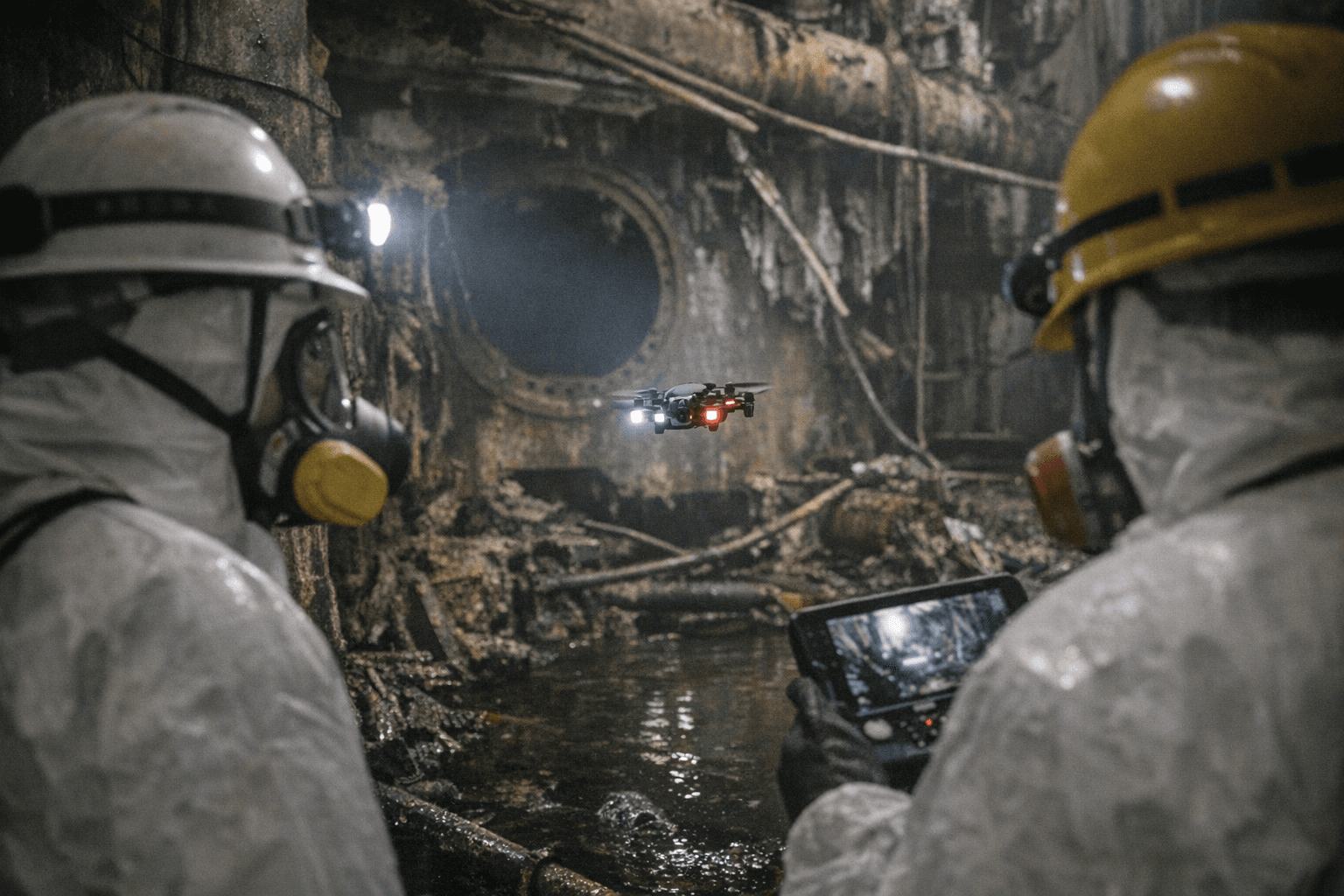
TEPCO also released a roughly three-minute clip of drone footage taken inside the plant, showing a main structural support in Unit 1’s primary containment vessel and featuring a snake-like robotic light source alongside the flying unit. It is separate from, and not automatically the same as, the Unit 3 flights now under way; TEPCO will analyze imagery from the Unit 3 mission and convert the photos into 3-D data to check penetration holes, assess damage and locate deposits expected to be used during later removal work.
The inspections feed into long-term planning for the remnants of the 2011 triple core melt, estimated at about 880 tonnes of fuel debris across Units 1–3. For Unit 3, the concept calls for dropping debris to the bottom and retrieving it from the side during the large-scale removal phase targeted for fiscal 2037 or later. The Unit 3 micro-drone campaign was postponed from a prior December start because of drone equipment issues and is now the first in a series of remote reconnaissance steps intended to map routes and limitations ahead of full retrieval operations.
Know something we missed? Have a correction or additional information?
Submit a Tip

