Trinity test sample reveals rare crystal formed by nuclear blast
A new crystal in red trinitite shows Trinity’s blast briefly reached conditions that made a Ca-Cu-Si clathrate no lab has reproduced.
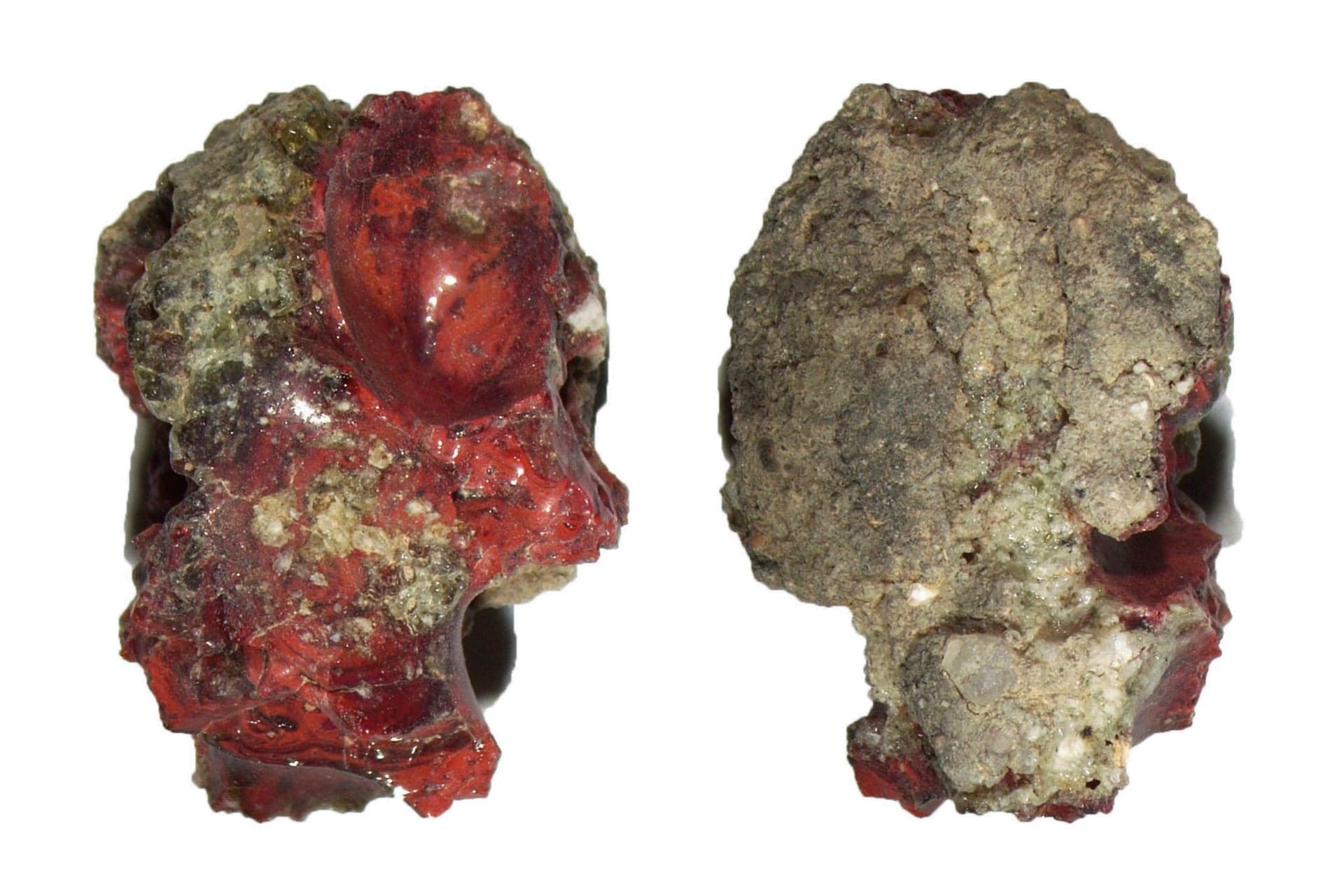
A rare crystal trapped in Trinity debris has pushed the first atomic blast into materials-science territory that still resists laboratory replication. In red trinitite from the 1945 detonation, researchers identified a previously unknown calcium-copper-silicon type-I clathrate, the first crystallographically confirmed clathrate found among the solid products of a nuclear explosion.
The crystal was found inside a copper-rich droplet embedded in trinitite, the glassy residue created when desert sand fused in the fireball from the Trinity test. That blast, the world’s first nuclear detonation, went off at 5:29:45 a.m. Mountain War Time on July 16, 1945, on the Alamogordo Bombing Range in New Mexico, about 210 miles south of Los Alamos. The device released energy equivalent to about 21 kilotons of TNT, vaporized the 30-meter test tower and nearby copper infrastructure, and scattered a molten record across the Jornada del Muerto.
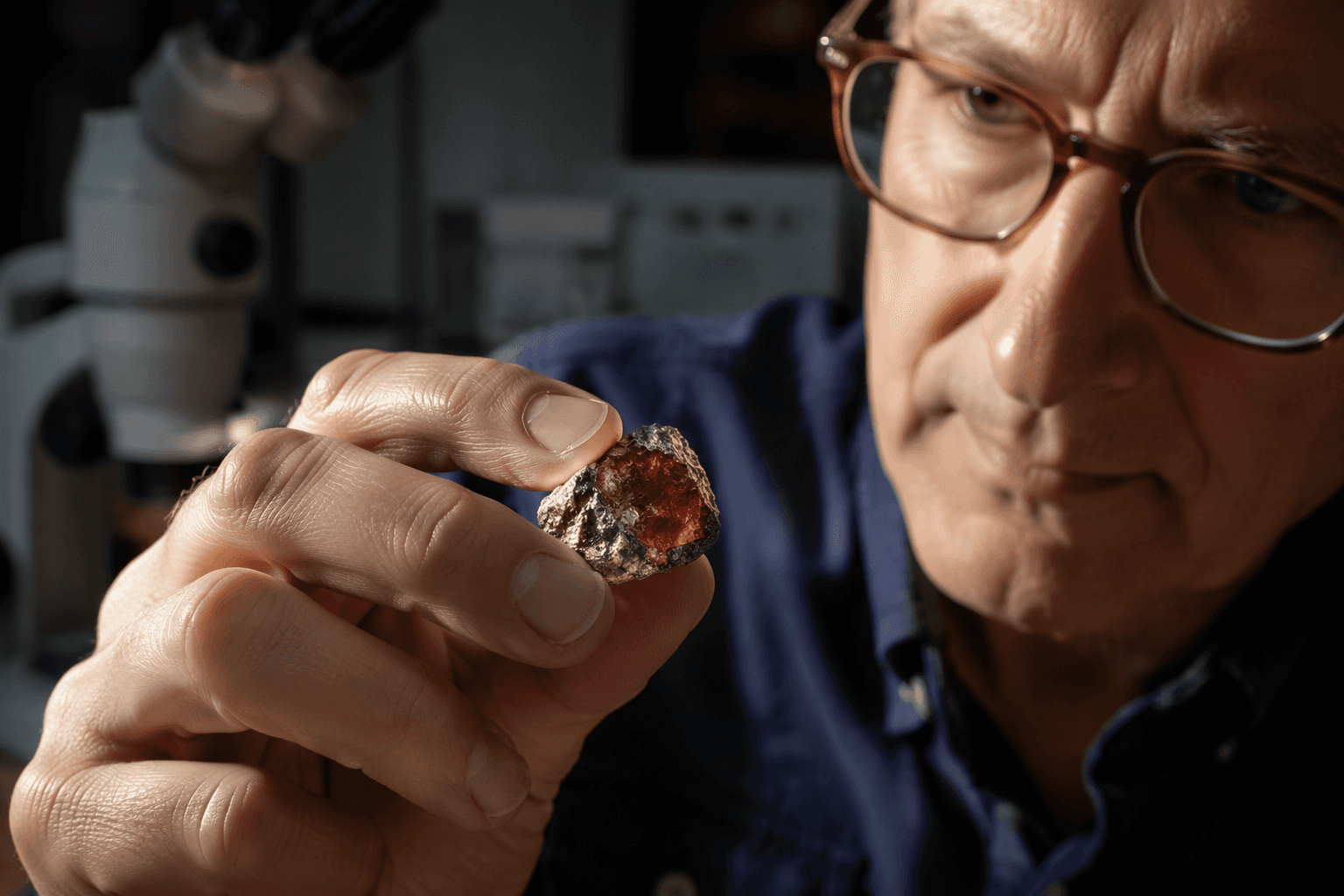
Trinitite is usually green, but the rarer red variety carries more of the metals blasted off the tower, coaxial cables, and recording instruments. That metal-rich chemistry appears to have helped create the unusual Ca-Cu-Si phase now reported in the Proceedings of the National Academy of Sciences. The study says the formation zone briefly exceeded 1,500 C and reached pressures of roughly 5 to 8 gigapascals before rapid cooling froze the structure in place.
That makes the find more than a curiosity. Clathrates are cage-like crystals, and this one gives scientists a concrete example of a solid-state phase born in the extreme, transient environment of a nuclear detonation. The conditions that produced it are far beyond routine synthesis routes, which is exactly why Trinity debris matters to nuclear forensics and extreme materials research. It preserves a timestamped record of how shock, heat, pressure, and metal vapor combined in a single event.
The new crystal also adds to an unusual pattern already tied to the Trinity site. In 2021, the same research line reported a previously unknown icosahedral quasicrystal in red trinitite, described as the oldest extant anthropogenic quasicrystal known. Together, the quasicrystal and the new clathrate show that Trinity debris is not just fallout from history. It is a sealed sample of a one-time experiment in extreme physics, where the first nuclear blast left behind solids that still challenge what can be made on purpose in the lab.
This article was produced by Prism’s automated news system from verified source data, official records, and press releases, then run through automated quality and moderation checks before publishing. The system is built and supervised by the people who set the standards it runs under. Read our full AI policy.
Know something we missed? Have a correction or additional information?
Submit a Tip