Uranium Prices Firm as AI and Nuclear Demand Drive Long-Term Outlook
Uranium ended April at $86.35 a pound, but the real squeeze is in supply: AI-linked demand is rising faster than mines and fuel services can respond.
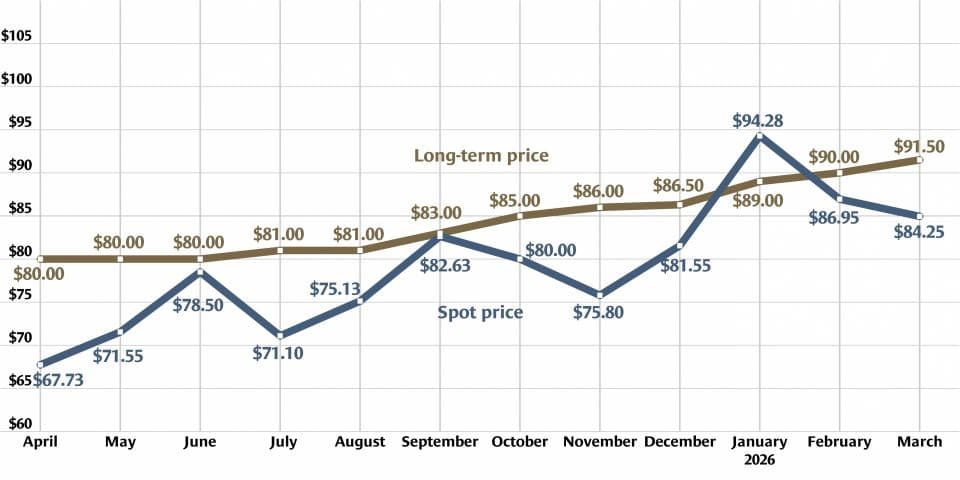
Utilities are still locking in uranium through long-term contracts, but the fuel cycle is tightening just as AI data-center demand and new reactor deals are pulling harder on the market. Cameco put the end-of-April spot price at $86.35 a pound, above March’s $84.25 and still well below the $148 peak uranium hit in May 2007.
That price matters because uranium is not traded like copper or oil. Cameco says most of the market is negotiated privately, with utilities buying most uranium and fuel services under long-term contracts and only the rest exposed to the spot market. Trading Economics showed futures at $86.55 on May 1, up 1.64 percent for the month and 24 percent over the past year. The message is clear: buyers are paying attention to a long runway of demand, not just the week-to-week noise.

The demand side has changed fast. The U.S. Department of Energy has been advancing plans to support co-located data-center and energy infrastructure on federal land, and Meta’s January 9 agreements with Vistra, TerraPower and Oklo, tied to Mark Zuckerberg’s AI supercluster plans, showed how big that appetite has become. Vistra said the package would provide more than 2,600 megawatts of zero-carbon energy and include 433 megawatts of combined power-output increases. Google’s deal with Kairos Power calls for up to 500 megawatts of new carbon-free power by 2035, with the first reactor targeted by 2030, and Amazon has backed X-energy’s advanced reactor plans.

The bottleneck is not the idea of new reactors. It is the slow, capital-heavy path from exploration to mining, conversion and delivery. World Nuclear Association projects a 28 percent increase in uranium demand from 2023 to 2030, and says mines have recently supplied about 90 percent of utility requirements, with the rest coming from secondary supplies such as recycling and stockpiles. The International Atomic Energy Agency said in April 2025 that enough uranium resources exist through 2050 and beyond, but only if investment arrives in time to move material into the market when it is needed.
Kazatomprom, the world’s largest uranium producer, has also said it is lowering its 2026 production plans, which is exactly the kind of signal that keeps the market firm. Justin Huhn sees prices potentially moving toward $100 a pound from the end-2025 level, and, if demand climbs to 250 million to 300 million pounds a year in about a decade, even the $125 to $150 range. For reactor operators and developers, that means tighter contracting, more fuel-security risk, and a better chance that uranium pricing feeds into higher power costs before the new buildout fully catches up.
This article was produced by Prism’s automated news system from verified source data, official records, and press releases, then run through automated quality and moderation checks before publishing. The system is built and supervised by the people who set the standards it runs under. Read our full AI policy.
Did this article answer your question?