U.S. Nuclear Energy Project Tracker — April 2026 Update: NRC Progress, Hyperscaler Offtake, and Reactor Project Signals
TerraPower's Natrium got its NRC construction permit 8 months early; here's what that milestone and the NIA's April tracker reveal about which U.S. reactor projects are real.
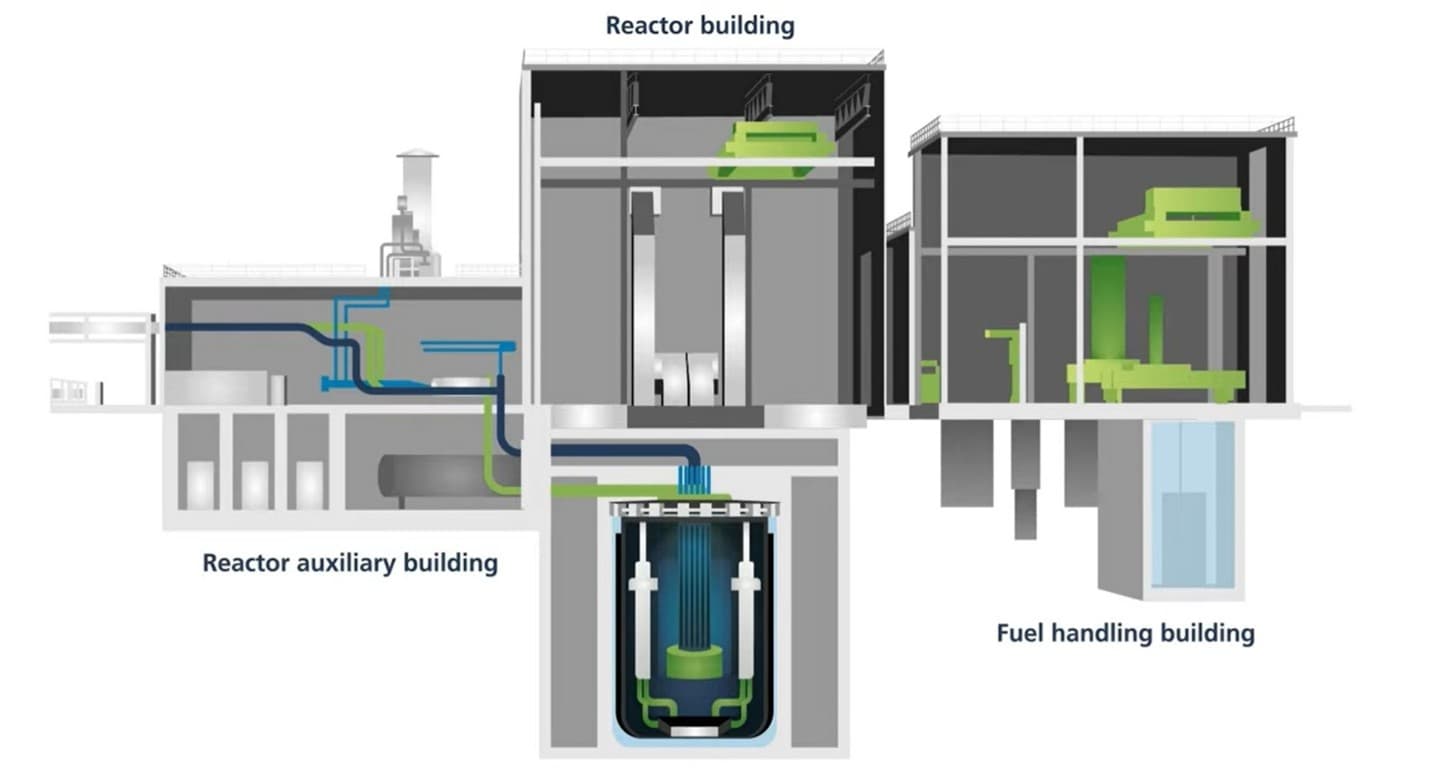
TerraPower's Natrium reactor project in Kemmerer, Wyoming became the first commercial-scale advanced nuclear plant in U.S. history to receive an NRC construction permit on March 4, 2026, and it did so roughly eight months ahead of the agency's own projected schedule. That single fact anchors the Nuclear Innovation Alliance's April 7 tracker update and sets the tone for what Dr. James Richards and his team are tracking across five project indicators: site selection and site work, licensing, project teaming, offtake, and funding. The NIA update is the closest thing the U.S. advanced reactor sector has to a unified scoreboard, and the April 2026 edition shows a field that is beginning to separate genuine construction candidates from projects still living on term sheets and renderings.
The Natrium Benchmark: What a Compressed Review Actually Means
When the NRC accepted TerraPower's Part 50 construction permit application in May 2024, the agency's own schedule called for completing a final safety evaluation by August 2026, a projected 27-month review. The commission finished that review in December 2025 and voted unanimously to issue the permit on March 4, 2026, an 18-month turnaround completed 11 percent under the NRC's own budget. For any project still in pre-application, that number is the new benchmark: 18 months from docketing to permit if the application is robust and pre-application engagement has been thorough.
TerraPower noted the review was completed in 18 months, with the company citing extensive pre-application engagement with the NRC and a thorough application submitted nearly two years before the permit was issued. The NRC completed its safety review of the Kemmerer project in December 2025, ahead of schedule and 11 percent under budget. For the NIA tracker's audience, the significance isn't just the permit itself; it's the signal that regulatory schedule risk, long cited as the dominant uncertainty in advanced reactor financing, is compressible when developers invest seriously in pre-application work.
Three Concrete Milestones the NIA Tracker Is Watching
Beyond Natrium, the April update identifies two additional developments that move physical needles rather than press-release counters.
The first is the UIUC and NANO Nuclear construction permit application. The Grainger College of Engineering at the University of Illinois Urbana-Champaign submitted a construction permit application on March 31, 2026 to the NRC in partnership with NANO Nuclear Energy to construct a Kronos micro modular reactor on campus. NANO Nuclear Energy (NASDAQ: NNE) announced that the CPA for its KRONOS MMR microreactor was submitted on April 2, 2026, marking a critical licensing milestone. This is not an MOU or a letter of intent: it is a formal NRC filing, meaning the agency's review clock now runs. University-sited microreactor proposals have a different risk profile from utility-scale projects, but a filed CPA triggers concrete near-term deliverables, including NRC acceptance review, public docketing, and environmental scoping, all of which produce documents the community can engage with in the next 6 to 12 months.
The second milestone is the activity cluster at Idaho National Laboratory. The tracker records Radiant Nuclear's residency in the EBR-II dome, a legacy fast reactor structure that gives Radiant access to licensed nuclear facility infrastructure without needing to build a greenfield test site. Separately, components have been shipped to INL for both Valar and Aalo Atomics. Component shipments to a DOE site represent a transition from paper design to hardware, and hardware at a federal laboratory triggers a different category of documentation: procurement records, safety basis submissions, and DOE lab agreements that are publicly traceable.
The third concrete milestone is the tracker's inclusion of all eleven DOE Reactor Pilot Program demonstration units. The NIA notes that many of these units have received Preliminary Data Safety Analysis approvals from DOE, which is the gate that enables demonstration construction to begin. Having all eleven units meet the tracker's inclusion criteria means the NIA now has a complete scoreboard for the federal demonstration pipeline, not a partial one.
Hyperscaler Offtake: Separating Committed Revenue from Marketing
The April update gives prominent attention to offtake agreements with hyperscalers and data center operators. This is the right signal to watch, but it requires the audience's fatigue filter. There is a meaningful difference between a signed power purchase agreement with a creditworthy corporate counterparty and a memorandum of understanding that announces intent to negotiate.

Offtake agreements and investments in the nuclear fission industry, most of which will not come into effect until the first half of the 2030s, represent a calculation by some of the largest technology companies in the world that the surge in demand for clean, firm power is real. The NIA tracker's specific contribution is its project-level view: it records which developers have moved beyond the announcement phase to agreements that can actually be shown to a lender. Meta's nuclear agreements, for example, aim to extend the life and capacity of existing nuclear plants and ensure stable, firm power for AI data centers, with Natrium deliveries discussed in the 2032 to 2035 window.
What makes hyperscaler offtake structurally important for the NIA's tracked projects is the pathway it opens beyond the first-of-a-kind unit. The tracker notes that committed offtake is enabling developers to signal follow-on units to investors, transforming a single demonstration from a one-off regulatory experiment into the first unit of a potential fleet. That framing matters for financing: a lender evaluating a first-of-a-kind reactor with no revenue certainty sees a very different risk profile than one evaluating a project with a creditworthy corporate offtaker and a committed second unit in the queue.
Two Warning Signals Worth Tracking
The NIA tracker is designed to surface positive momentum, but the April update implicitly flags two conditions that could convert accelerated licensing timelines into what the NIA's own analysis calls "orphaned approvals": permits issued for plants that cannot be financed or built because the supporting infrastructure isn't ready.
The first is the HALEU supply chain. High-Assay Low-Enriched Uranium is the fuel feedstock required by most advanced reactor designs in the tracker, and domestic enrichment capacity remains constrained. A construction permit is only as valuable as the fuel supply behind it; a project that receives NRC authorization but cannot source qualified HALEU on a commercial basis will slip regardless of how clean its regulatory timeline looks.
The second is workforce and supply chain coordination more broadly. Project developers and hyperscalers face ongoing risks related to permitting, fuel procurement, interconnection logistics, and complex power purchase agreement structures. The NIA's update underscores that policymakers need to ensure these elements move in parallel with licensing, not sequentially. If workforce development and grid integration planning lag the NRC's improved review speed, the sector will accumulate permits without deployable projects.
What the Next 6 to 12 Months Reveal
For anyone tracking this space practically, the NIA's April 2026 update identifies the specific signals worth watching through the end of 2026. The UIUC and NANO Nuclear CPA will either be accepted for docketing or returned with deficiency comments, and that determination will tell observers a great deal about how the NRC intends to handle university-sited microreactors under existing Part 50 processes. The INL hardware activity from Valar and Aalo Atomics should produce publicly available safety basis filings that give a more granular view of each company's technical readiness. And the hyperscaler offtake story will mature: agreements that were announced as intent in 2025 will either convert to signed contracts with construction milestones or quietly expire, thinning the field of credible developer-offtaker pairs.
The Natrium construction permit, completed 18 months after docketing and eight months ahead of schedule, is the credible proof point the U.S. advanced reactor sector has been building toward for a decade. The question the NIA tracker is now positioned to answer, month by month, is which of the projects behind it can replicate that discipline in their own applications and site work, and which are still waiting for the financing structure that only a committed corporate customer can provide.
This article was produced by Prism’s automated news system from verified source data, official records, and press releases, then run through automated quality and moderation checks before publishing. The system is built and supervised by the people who set the standards it runs under. Read our full AI policy.
Did this article answer your question?