Vietnam and Russia Sign Agreement to Build Two VVER-1200 Reactors
Vietnam and Russia signed an IGA on March 23 to build two VVER-1200 reactors at Ninh Thuan 1, using the proven Leningrad AES-2006 plant as the design reference.
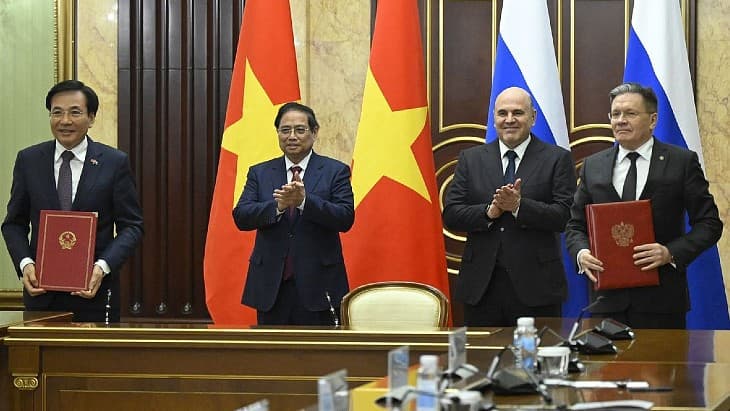
Vietnam and Russia locked in one of the more consequential nuclear deals of 2026 last week, signing an intergovernmental agreement to cooperate on the construction of two VVER-1200 reactors at the Ninh Thuan 1 Nuclear Power Plant. The March 23 signing formalized years of bilateral discussions into a framework that now commits both governments to the project, with Rosatom and associated Russian agencies positioned as the likely engineering and construction partners.
The VVER-1200 is a Generation III+ pressurized water reactor design that Russia has already deployed in multiple countries, and the choice of the Leningrad (AES-2006) units as the reference project is deliberate and practical. Using an operating plant as a design baseline means Vietnam can work from tested documentation and Leningrad's operational track record rather than starting from a clean sheet. That accelerates engineering, procurement, and regulatory harmonization in ways that matter enormously for a country building its first nuclear infrastructure.
The intergovernmental agreement itself covers cooperation, financing negotiations, and coordination between national regulators and project implementers on both sides. It is a framework document, not a construction contract. Front-end engineering, licensing approvals, financing closure, and construction start dates all remain to be determined through subsequent agreements. Vietnamese officials framed the deal as part of a strategic energy diversification plan aimed at securing reliable baseload, low-carbon generation to support rapid industrial growth. Russian officials characterized it as a continuation of Rosatom's established civil nuclear export model.
The Ninh Thuan 1 site has been in Vietnam's energy planning for several years. The country's push to add baseload low-carbon capacity reflects both emissions commitments and the raw electricity demand that comes with sustained economic expansion in Southeast Asia. Two VVER-1200 units, each rated at roughly 1,200 MWe, would represent a substantial addition to the Vietnamese grid.
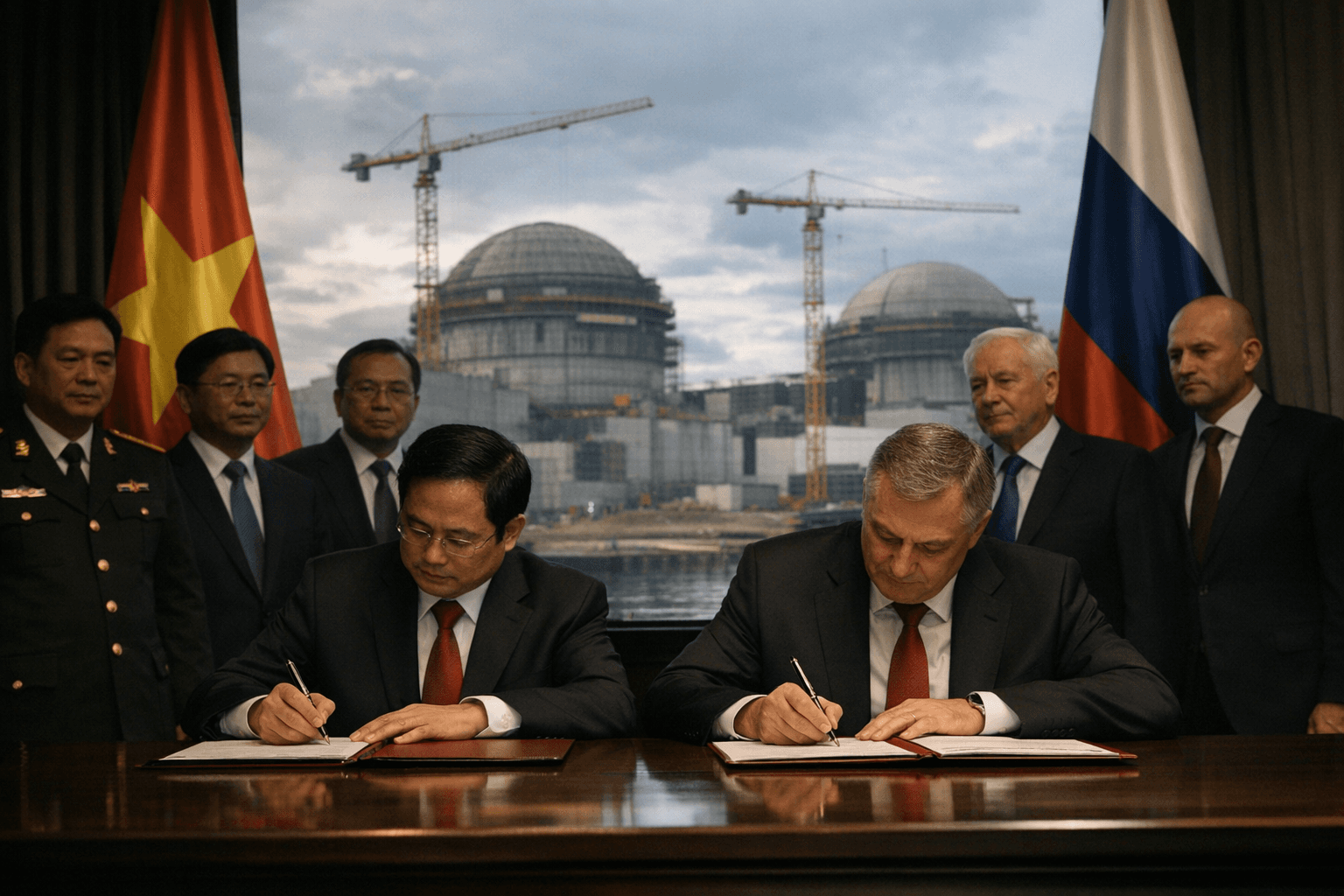
The geopolitical dimension here is real. This is a large-scale capital commitment, a long-term supply-chain relationship, and a technology transfer negotiation all wrapped into one document. Financing structure will be one of the most closely watched variables: whether Russia offers export finance, state guarantees, or a build-own-operate arrangement will shape how much financial risk Vietnam assumes and how much leverage Rosatom retains over the project lifecycle. Non-proliferation safeguard arrangements, regulatory capacity-building inside Vietnam, and workforce development timelines will also draw scrutiny from international observers.
With large reactor projects typically measured in decades from agreement to first criticality, the near-term work at Ninh Thuan 1 will be dominated by preparatory activity: environmental assessments, regulatory framework development, stakeholder engagement, and supply-chain groundwork. The signing puts a real institutional structure behind a project that has been a planning concept for years, and that shift from aspiration to signed obligation is what makes March 23 a date worth marking.
Know something we missed? Have a correction or additional information?
Submit a Tip

