911ParrotAlert Database Logs Found Parrots Across Multiple U.S. Cities in March
A scarlet macaw found deceased in Aliquippa and a cockatiel recovered in Valley Stream were among the found-bird entries logged on 911ParrotAlert during one week in late March.
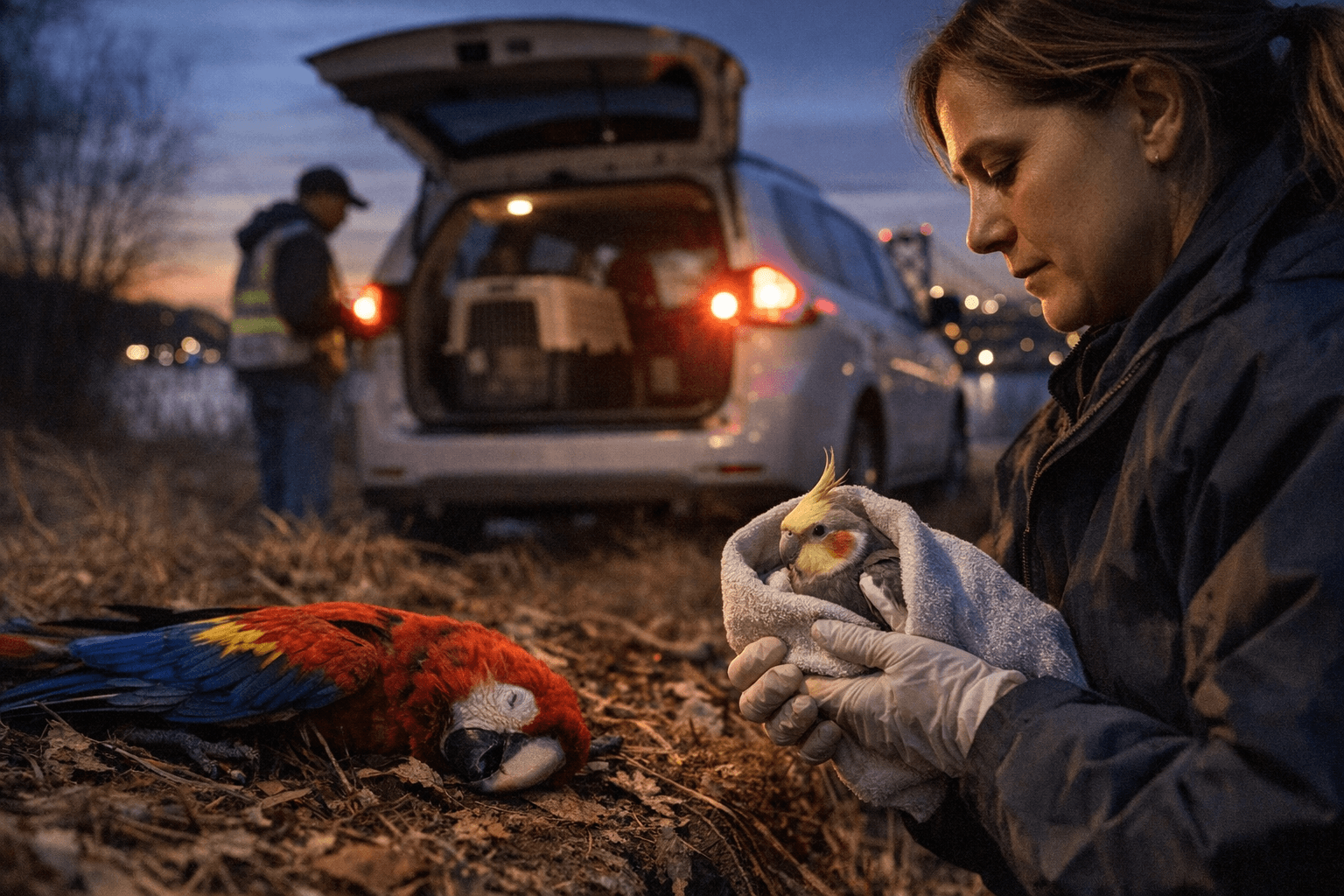
A scarlet macaw turned up deceased in Aliquippa, Pennsylvania on March 23, while a Pacific parrotlet was recovered in Washington, D.C. the same day. By March 30, a cockatiel had been found in Valley Stream, New York. In between, entries from Denver and West Los Angeles, both dated March 25, added parakeet and parrotlet reports to a log that spanned the continent in under eight days.
The cluster of late-March postings on 911ParrotAlert illustrates what the database captures that no single shelter system can: a real-time, date-stamped picture of escaped companion parrots surfacing across U.S. cities within the same narrow window. The site functions as a searchable registry where finders, animal control officers, and private owners post sightings and intake reports, each entry tagged with species, date, city, and ZIP code. That specificity matters in the first hours after a bird goes missing, when geographic and temporal precision directly affects whether an owner searching the database finds a match.
The majority of March's entries involved small parrots: budgies, cockatiels, conures, and parrotlets recovered by neighbors or brought into municipal shelters. That pattern reflects the reality of urban bird loss. Small psittacines are frequently kept in homes without outdoor aviaries, escape through open windows or doors, and land within a few blocks of where they were lost. Centralized reporting closes the gap between a neighbor who finds a cockatiel in a backyard and an owner posting a frantic notice two ZIP codes away.
The Aliquippa macaw entry stands apart. Scarlet macaws are not common pet escapes in western Pennsylvania, and a deceased-bird report carries a different weight than a "found and holding" entry. It signals that not every escape ends in reunification, and that larger parrots, which can travel further and are more exposed to weather and predators, face steeper odds once outside. The entry still serves a function: it closes a record, which prevents prolonged searching and misdirected resources.
For anyone managing a lost or found bird right now, 911ParrotAlert's intake process points toward what actually works. Entries that include identifying details, photos, and leg band or microchip information give shelters and private finders a verifiable basis for matching birds to owners before any handoff. Keeping microchip registrations and band records current is the precondition that makes that verification possible. Filing a lost notice with the database, local shelters, and neighborhood social media groups simultaneously, rather than sequentially, compresses the search timeline considerably.
The pagination visible on the site's found-bird archive indicates the March entries are part of a continuous, high-volume log, not an anomaly. Birds escape year-round, in every climate and city size. The density of late-March postings, from the District of Columbia to the Los Angeles basin to the New York suburbs, is a reliable indicator of what any given week looks like when the data is being collected systematically. The database's value scales with the number of people checking it daily.
This article was produced by Prism’s automated news system from verified source data, official records, and press releases, then run through automated quality and moderation checks before publishing. The system is built and supervised by the people who set the standards it runs under. Read our full AI policy.
Did this article answer your question?