All Star Parrots lists birds waiting for rescue homes and care
Spooky, Percy, Blue and Sunny headline a busy rehoming board that shows how broad parrot rescue demand is, and what adopters need to match.
A live rehoming board with real names, real species, and real pressure
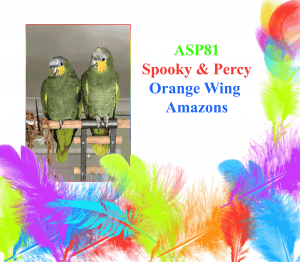
Spooky and Percy, two orange-wing amazons, sit on the same rehoming list as Blue, a blue-and-gold macaw, and Sunny, a Senegal. That mix alone tells the story: All Star Parrots is not dealing with one type of bird or one kind of home, but with a broad, active flow of parrots that need the right next step. The rescue’s rehoming page reads less like a static notice and more like a working waiting room, where every name marks a bird still looking for a fit.
The current roster stretches across sizes, species, and temperaments. Alongside the orange-wing amazons and Blue the blue-and-gold macaw are Zuri, a blue-fronted Amazon, Paddy and Roger, galah cockatoos, and a long line of African greys, including Barney, Sharky, Jakey, Coco, Morris, Billy, Barnie and Eric. Add Birdie bird and Khaleesi, a pair of conures, Sonny the Hahns macaw, Fudge the black-headed caique, Spike the conure, and Mango the green-wing macaw, and the list starts to look like a cross-section of companion parrot life rather than a single rescue case.
What the roster reveals about rescue demand
This kind of lineup shows how varied the need is behind the scenes. African greys appear in numbers, which suggests that experienced, patient homes are always in demand for birds that can be sensitive, social, and deeply bonded. The presence of large macaws such as Blue and Mango points to another constant in rescue work: big birds need big commitment, not just in cage size and space, but in time, noise tolerance, and long-term handling confidence.
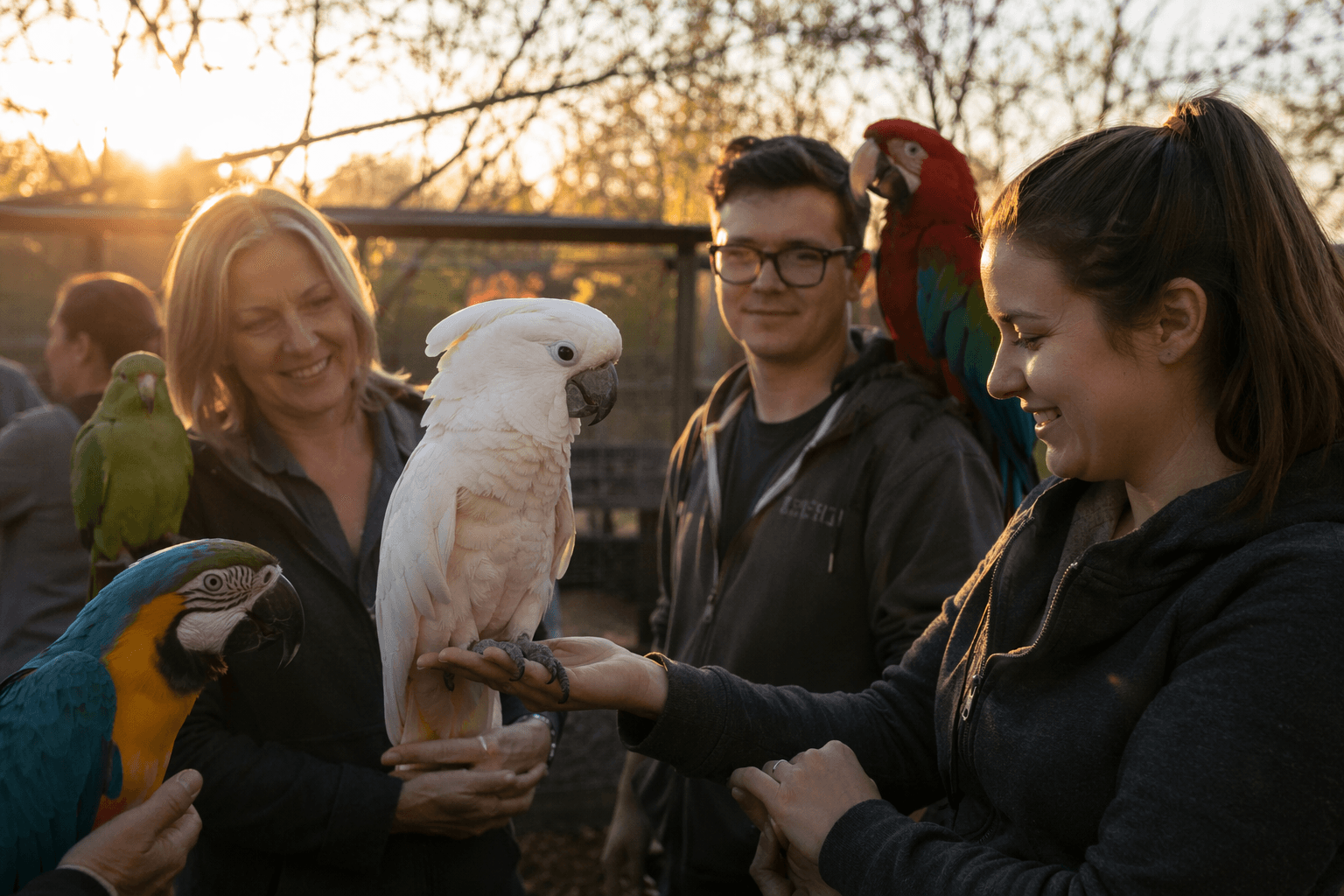
The smaller and mid-sized birds on the page matter just as much. Sunny the Senegal, Spike the conure, the conure pair Birdie bird and Khaleesi, and Fudge the black-headed caique show that rescue demand is not only about the iconic giants. These birds can be lively, intense, and very interactive, which means a good match depends on daily routines, household activity, and whether the bird’s energy level fits the home’s rhythm.
How to read the list before you inquire
A rehoming roster like this is most useful when you read it as a matching tool, not a wish list. A bird such as a blue-and-gold macaw or green-wing macaw usually asks for a different environment than a Senegal, a conure, or a caique. The right inquiry starts with honest self-assessment: how much noise your home can handle, how much out-of-cage time you can give, and whether everyone in the household is ready for a long-term parrot commitment.
That is especially important because the birds listed here may have complex histories and are still being assessed. A bird under assessment may need more observation before the rescue can say exactly what kind of environment suits it best. For prospective adopters, that means patience matters as much as enthusiasm. The best match is rarely the fastest one.
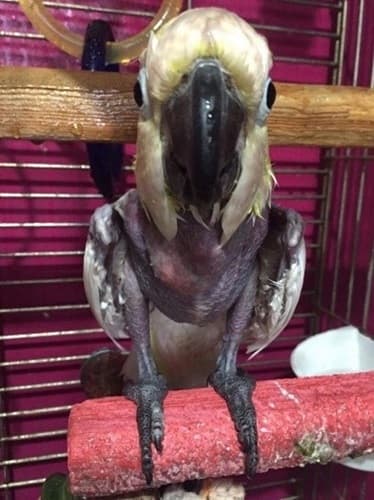
A practical way to approach the roster is to think in terms of fit:
- Large macaws such as Blue and Mango may suit homes prepared for size, volume, and high daily engagement.
- Amazons like Spooky, Percy, and Zuri often need confident handling and consistency.
- African greys such as Barney, Sharky, Jakey, Coco, Morris, Billy, Barnie and Eric may suit people who understand sensitive, intelligent birds that thrive on stability.
- Cockatoos like Paddy and Roger can bring strong personalities and big emotional needs.
- Conures, caiques, and Senegals such as Birdie bird, Khaleesi, Fudge, Spike and Sunny may fit homes that can keep up with active, interactive birds in a more compact size.
The rescue behind the list
All Star Parrots says it is dedicated to providing a safe haven for birds that need rescue, rehabilitation and rehoming, while also educating the public about parrot welfare. That combination matters because a rehoming page is not only an adoption board. It is also a public snapshot of the rescue’s workload and a reminder that every bird on the list has already moved through a welfare process that may include assessment, recovery, and preparation for a new home.

The page also points to a partnership with ExoticDirect, which offers 30 days of free insurance or a 15% discount on a full policy for birds going home through the rescue. That detail may sound administrative, but it is part of the larger reality of parrot ownership. These are long-lived, specialized pets, and insurance can help new guardians plan for the unexpected instead of being caught off guard by it. The rescue’s emphasis on specialist coverage reinforces the same message the rehoming list itself sends: good intentions are not enough without a plan.
Why this board matters to the parrot community
What makes this rehoming page stand out is not simply the number of birds, but the range of birds and the transparency of the roster. Naming Spooky, Percy, Blue, Sunny, Zuri, Paddy, Roger, the African greys, the conures, Sonny, Fudge and Mango makes the need visible in a way that abstract welfare talk never can. It turns rescue demand into something concrete enough for readers to understand and act on.
For anyone looking at the list with adoption in mind, the real question is not which bird is most appealing. It is which bird matches the home, experience level, and expectations that can support a parrot for years. That is the thread running through the whole page, from the busy mix of species to the insurance offer and the rescue’s welfare mission. The waiting room is full, and the best outcomes will come from homes that read the roster with clear eyes and realistic commitment.
This article was produced by Prism’s automated news system from verified source data, official records, and press releases, then run through automated quality and moderation checks before publishing. The system is built and supervised by the people who set the standards it runs under. Read our full AI policy.
Did this article answer your question?