Lost parrot in Japan recites name and address, reunites with owners
A missing African grey in Nagareyama sang children’s songs, then gave his full name and address, helping police reunite him with the Nakamura family.
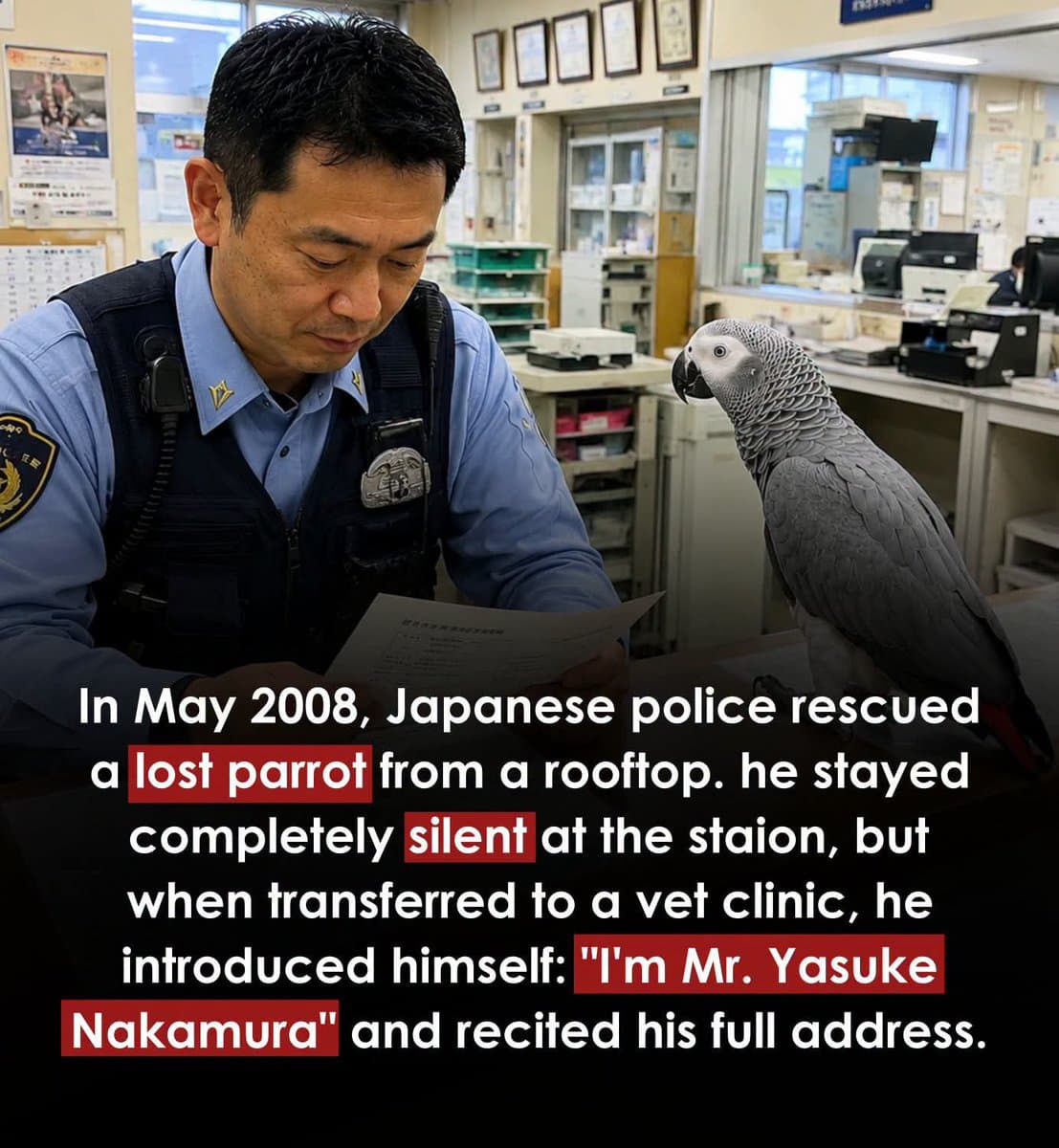
Yosuke, a missing African grey parrot in Nagareyama, Japan, turned a routine rescue into something straight out of a parrot keeper’s daydream: he identified himself and gave police the address that led him home. The bird had been gone for two weeks after flying out of his cage, and officers first picked him up after a woman reported a parrot sitting on a fence in her backyard near Tokyo.
Police later found Yosuke on a neighbor’s roof in Nagareyama city, Chiba prefecture, then kept him at the station overnight before transferring him to a veterinary hospital. That is where the real surprise came. Yosuke first greeted the staff and sang popular children’s songs, then recited, “I’m Mr. Yosuke Nakamura,” and gave his full street address down to the number. Police checked the location and confirmed that a Nakamura family lived there.
The bird’s owners said they had been teaching him his name and address for about two years. That detail matters more than the cute headline does. A parrot that can be conditioned to spit out an identity and an address is not just mimicking sound. It is holding onto a trained response that, in an emergency, can become a rescue tool. For keepers, that is the practical lesson hiding inside the story: speech training is not only party trick material. It can be part of a broader safety plan that includes recall cues, a sturdy cage routine, and a bird that is used to interacting calmly with people outside the home.

BBC News identified Yosuke as an African grey, described in its coverage as a red-tailed African grey, and noted that experts consider the species among the most intelligent birds, with cognitive ability often compared to that of a six-year-old child. This case gave that reputation a very specific shape. Yosuke did not simply chatter after a stressful two weeks on the loose. He delivered the exact information that let Japanese police connect him to the right home.
For parrot owners, the takeaway is blunt: enrichment and training are not extras. A bird that learns names, addresses, recall cues, and everyday speech can be easier to identify, easier to calm, and more likely to make the right information available when everything else has gone wrong. Yosuke’s reunion started with a roof, passed through a police station, and ended because his training stuck when it counted most.
This article was produced by Prism’s automated news system from verified source data, official records, and press releases, then run through automated quality and moderation checks before publishing. The system is built and supervised by the people who set the standards it runs under. Read our full AI policy.
Did this article answer your question?