Avian First Aid Kits Help Sanctuaries Respond Fast to Bird Emergencies
A bird can crash in minutes. The fastest sanctuaries keep phones, styptic powder, saline, and a labeled ICU setup ready before the emergency starts.
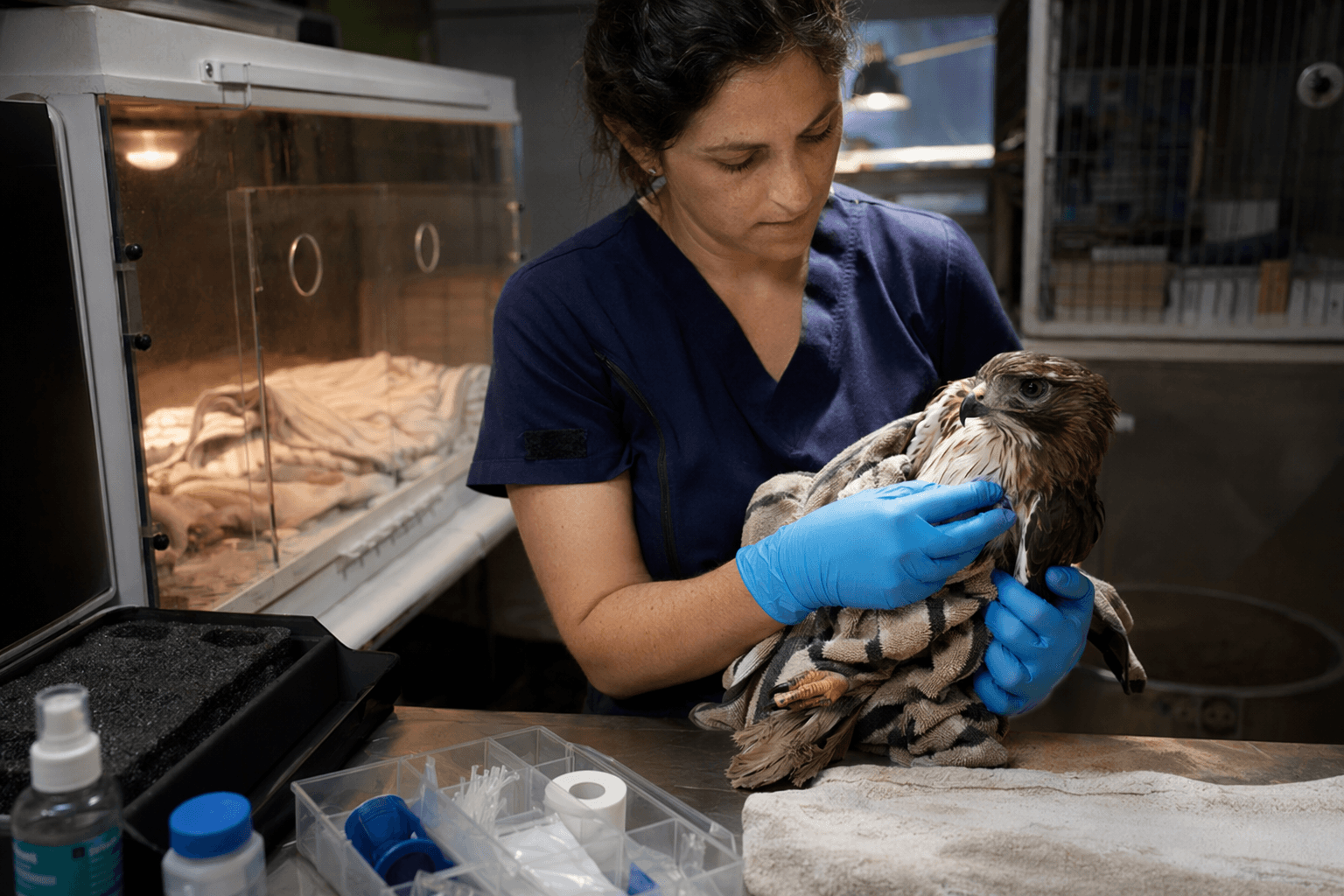
The first 10 minutes can save a bird. A parrot can go from preening normally to bleeding from a broken blood feather, or from alert to fluffed and collapsed on the cage floor, in the space of moments, and that is exactly why avian emergency prep has to live within arm’s reach, not in a drawer somewhere later. In multi-bird settings, the difference between control and chaos is often a kit that is stocked, labeled, and instantly readable by whoever is on the floor when the alarm hits.
The kit’s real job is buying time
An avian first aid kit is not a substitute for veterinary care. Its job is simpler and more urgent: keep a bird stable until an avian veterinarian takes over. Avian veterinary references stress that birds can deteriorate rapidly when they are ill or injured, which makes fast intervention essential for a better prognosis.
The most important item in the kit is not a bandage or a bottle. It is a phone list. Merck Veterinary Manual says emergency numbers belong at the top of the kit, including your avian veterinarian’s phone number and address, an alternate veterinarian, and the nearest emergency clinic that will actually treat birds. Poison control contact information should sit there too, because a quick call can matter just as much as a quick wrap.
What belongs inside, and why it matters
A useful kit has to cover bleeding, flushing, handling, and quick stabilization. That means sterile saline, electrolyte powder, wound irrigation supplies, gauze pads, non-stick dressings, feather-friendly tape, styptic powder, cornstarch, tweezers, forceps, gloves, and other handling tools. If a bird is injured and you are trying to work cleanly and calmly under pressure, those are the items that keep a small problem from turning into a much bigger one.
A few tools are easy to overlook until you need them. Merck also recommends a penlight, a restraining towel or stockinette, and small pads, which are easier to use even if they can be harder to find. A metal nail file can help smooth a chipped beak tip or a broken nail, and that kind of small detail can reduce further damage while you wait for the vet.
For fragile birds, the kit should also include species-specific items that match what you keep. That is where sanctuary-scale thinking helps companion homes too: if the bird you care for is especially delicate, the kit should be built around that reality instead of a generic pet box.
Stock it like a rescue, not like a shelf
The container matters almost as much as the contents. Waterproof storage, color-coded sections, and clearly labeled compartments reduce the panic that eats up precious seconds when someone is trying to stabilize a bird and talk to a vet at the same time. If several people may use the kit, the layout has to be obvious enough that a volunteer can find the right item without guessing.
Rescue resources recommend going further and keeping a pet status file right with the supplies. That file should include weight-monitoring charts, a first aid reference manual, emergency contact information for a specialized avian veterinarian and an experienced handler or aviculturist, plus a small cage or aquarium that can be adapted as a temporary intensive care unit. In practice, that means the kit is not just a bag of tools. It is a small emergency station.
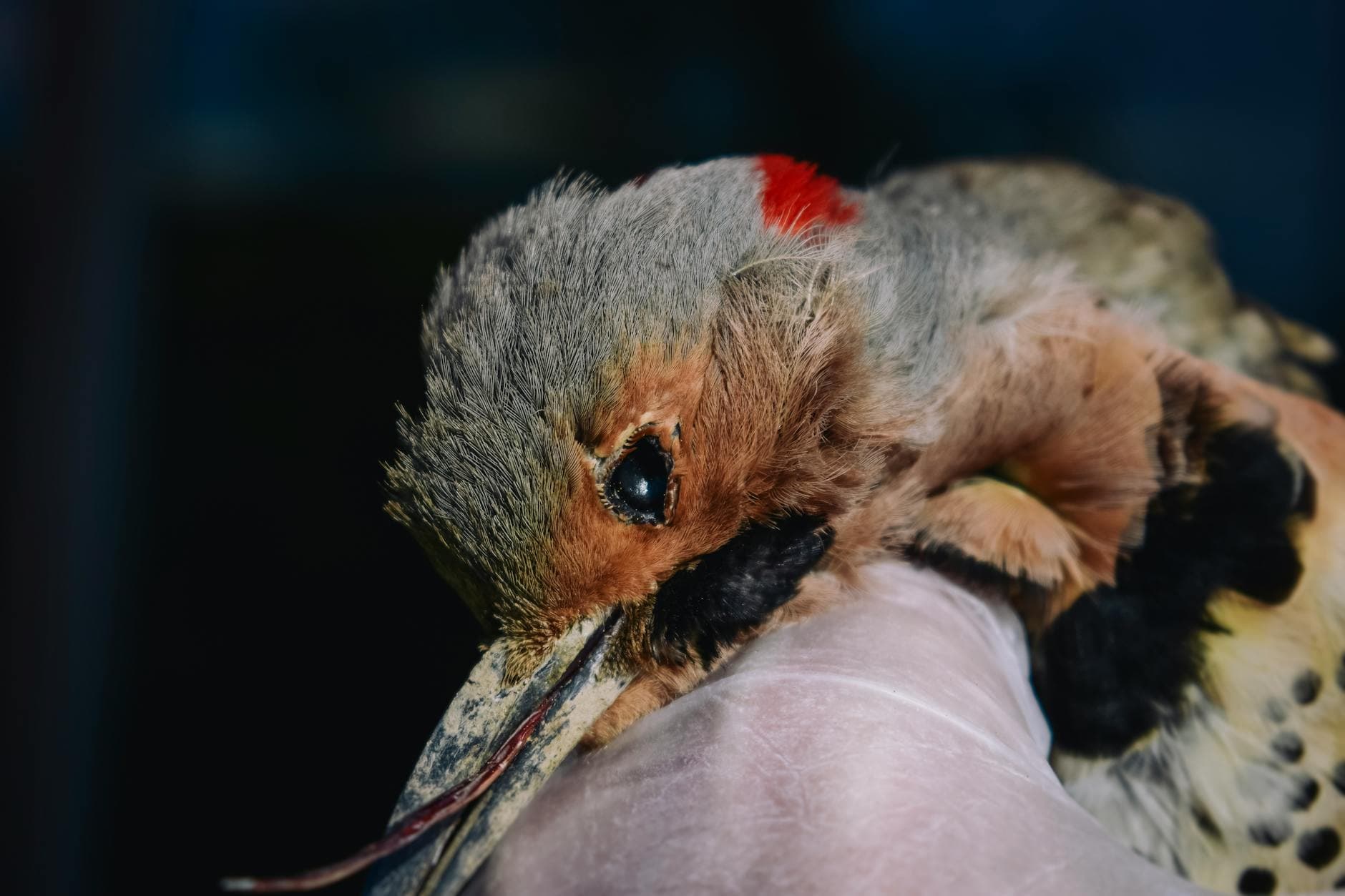
Make the first response automatic
When a bird is hurt, the sequence should be simple enough to follow under stress. Stop the bleeding first, then clean the wound, stabilize temperature, support hydration, and contact an avian veterinarian with the species, symptoms, and history ready to share. That order matters because it keeps the responder focused on the bird’s immediate survival while the clinic prepares for arrival.
This is especially important with broken blood feathers. When feathers are growing in, the shaft is filled with blood, and if a long flight or tail blood feather breaks, a bird can lose a lot of blood very quickly. That is the kind of emergency where hesitation costs time, and a prepacked kit can be the difference between a controlled transfer and a crisis.
Keep the kit current before you need it
A kit that is out of date is almost as dangerous as no kit at all. Expired supplies, broken seals, empty bottles, and missing phone numbers waste the exact minutes you cannot spare, so inventory checks need to happen on a schedule. Quarterly restocking is the practical benchmark here, along with checking expiration dates and replacing anything that looks compromised.
This is also where sanctuary operators and multi-bird homes need to think like a team. One person should know where the kit lives, another should know which bird carrier or temporary holding space is ready, and everyone should know the emergency clinic number without hunting for it. Preparedness works best when it is boring, visible, and repeatable.
Biosecurity now belongs in the same conversation
Fast response is no longer only about trauma. USDA Animal and Plant Health Inspection Service says its highly pathogenic avian influenza resources are designed to help people prepare for and respond to outbreaks, and that matters in a world where bird emergencies can include disease control as well as injuries. CDC says H5 bird flu remains widespread in wild birds worldwide and has caused outbreaks in poultry and U.S. dairy cows, with sporadic human cases in the United States.
Cornell has noted that highly pathogenic avian influenza emerged in North America in 2022 and that the current outbreak is a real threat to sanctuary residents. That is why biosecurity SOPs published in 2025 call for mandatory footbaths and disinfection protocols in avian facilities. For sanctuaries, the modern first aid mindset has to include quarantine readiness, clean-in clean-out habits, and the kind of rapid containment that protects every bird in the room.
The lesson is simple and blunt: avian first aid is stewardship. Whether you care for one companion parrot or a whole rescue floor, a stocked, labeled, and current emergency kit turns panic into action, and action is what gives a bird its best chance.
This article was produced by Prism’s automated news system from verified source data, official records, and press releases, then run through automated quality and moderation checks before publishing. The system is built and supervised by the people who set the standards it runs under. Read our full AI policy.
Did this article answer your question?