Parrot Lifespan Depends on Species, Care, and Long-Term Planning
A parrot can be a 10-year pet or a 80-year responsibility, and that difference changes everything from housing to guardianship. The smartest care begins before you bring one home.
The lifetime reality check
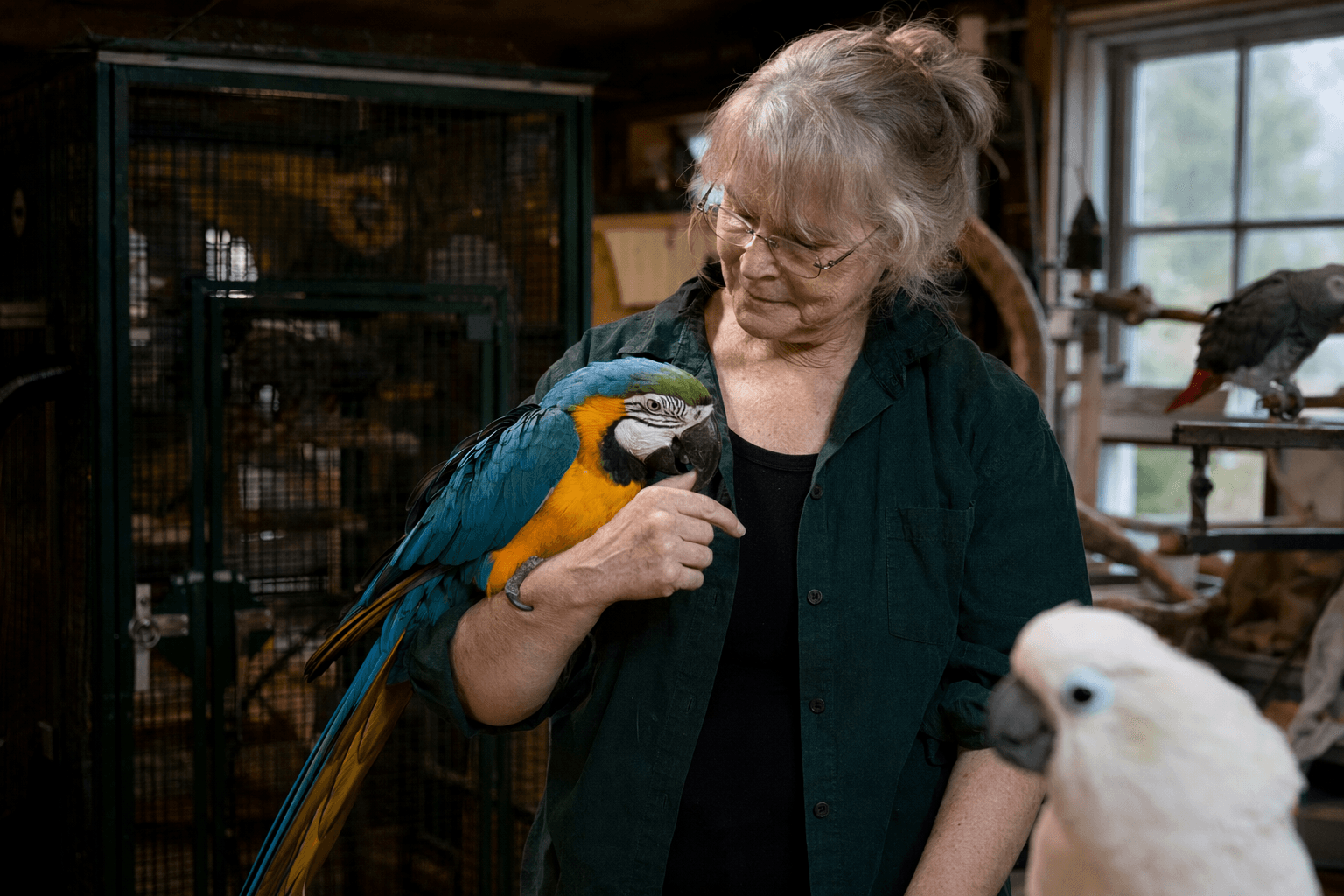
A parrot is not a short-term pet. Depending on species and care, the bird in your home may still be there through moves, job changes, college years, new children, retirement, and even the next generation of caretakers. That is why lifespan is not trivia in parrot keeping, it is the foundation of every serious ownership decision.
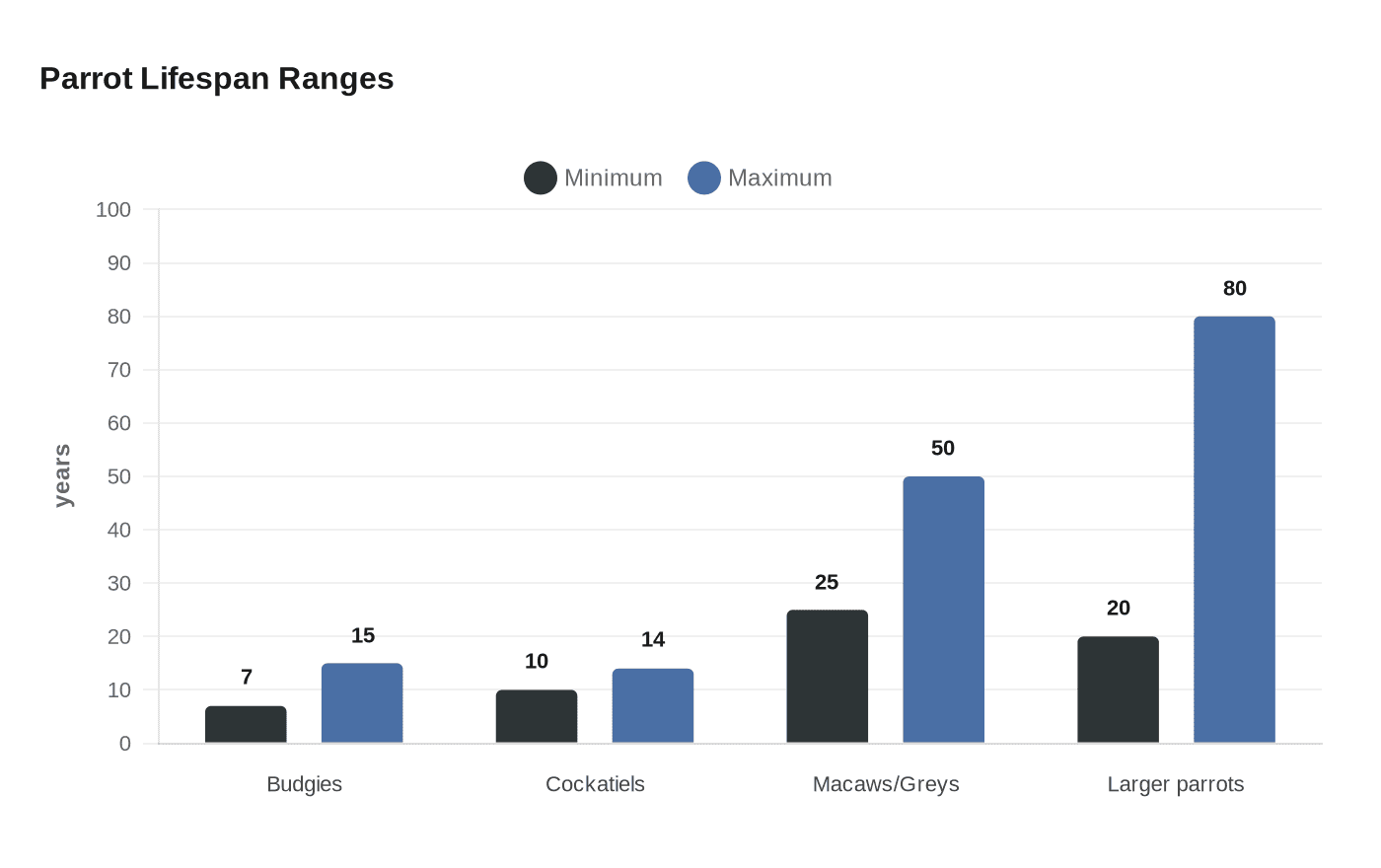
The range is wide enough to reshape planning from the start. Budgies in captivity can live 7 to 15 years, cockatiels usually reach about 10 to 14 years, and larger parrots such as macaws and grey parrots are often placed in the 25 to 50 year range. VCA Animal Hospitals notes that some larger parrots, including macaws and cockatoos, can live 20 to 80 years or more, which means the bird you choose may outlast multiple chapters of your life.
Species choice sets the timeline
Choosing a parrot species is partly about personality, size, noise, and activity level, but lifespan belongs at the center of that decision. A budgie can be a long-lived companion by small-bird standards, yet its expected lifespan is still very different from that of a macaw that may need decades of care. PetMD’s numbers make the contrast plain: captive budgies generally live 7 to 15 years, while wild budgies often live only 4 to 6 years because of predation and other threats.
That gap matters because a longer-lived species brings a longer responsibility curve. A cockatiel at 10 to 14 years may fit one household’s timeline, while a grey parrot or macaw at 25 to 50 years demands a plan for adulthood, aging, and succession in care. The species is not just a pet choice, it is a family plan.
Care is what turns potential into real longevity
Genetics and species matter, but no bird gets the benefit of a long lifespan on genetics alone. Diet, environment, exercise, socialization, and preventative health care all shape whether a parrot stays healthy as it ages. A bird that is chosen well but managed poorly will not match the lifespan range written in a care guide.
That is why lifespan should push you into practical questions before adoption. Can you maintain a stable diet year after year? Can the home provide enough space, light, stimulation, and safe out-of-cage time? Can you afford regular veterinary care and adapt routines as the bird slows down or develops age-related issues? The answer needs to be yes before the bird arrives, not after the first problem shows up.
Why preventive veterinary care is non-negotiable
Pet birds are especially tricky patients because they hide illness until they are seriously sick. By the time a parrot looks obviously unwell, the problem may already be advanced. That makes routine exams and early detection a core part of lifespan management, not a luxury.
The Association of Avian Veterinarians recommends regular checkups for companion birds, and VCA says birds should have an initial avian-veterinarian visit plus at least an annual checkup. Many veterinarians recommend visits twice a year, especially for birds whose subtle symptoms could be easy to miss at home. Specialized care matters too: Cornell University College of Veterinary Medicine’s exotic pet service is built for birds and other exotic animals and uses advanced diagnostics and surgery when needed.
Housing is the foundation of everything
If lifespan is the long view, housing is the daily structure that keeps the plan from collapsing. A cage, flight area, perches, lighting, airflow, and noise management all need to work not just for a young bird, but for an older bird that may move less, sleep more, or need easier access to food and water. Housing is not a decorative choice, it is the physical system that supports every other part of care.
That becomes even more important when you think in decades. A setup that works for a young, active parrot may need adjustment later for arthritis, balance issues, or reduced mobility. Planning for a long-lived bird means planning for a home that can change with age instead of assuming the original setup will last forever.
Budgeting, guardianship, and the parts owners underestimate
The biggest mistake new owners make is underestimating how much life can change over the bird’s lifetime. A parrot that lives 30 years can move through multiple apartments, relationships, work schedules, and financial situations. That is why budgeting for food, enrichment, emergency care, and regular avian exams matters as much as choosing the right species.
Emergency guardianship is another piece that gets overlooked. If the bird outlives an owner, or if the owner becomes ill or unable to care for it, someone else has to step in with the knowledge, time, and resources to keep the bird stable. Long-lived parrots need a written plan, not just a hopeful promise that “someone will figure it out.”
A history of captivity, breeding, and responsibility
Parrots have been kept as cage birds since ancient times, but today’s pet population is shaped by a very different history. The MSD Veterinary Manual notes that mass importation of wild-caught psittacine birds was curtailed in the mid-1980s, and the current pet bird population is primarily captive-bred. That shift changed the medical and behavioral landscape of companion-bird care in North America, Australia, New Guinea, the Solomon Islands, Brazil, Germany, New Zealand, Puerto Rico, and beyond.
The conservation side of that history is sobering. The Puerto Rican Amazon recovery effort is a stark example: the species dwindled to 13 birds in 1975 and now numbers around 500 in the wild plus another 500 in captivity. Audubon reported that captive breeding for that recovery program costs almost $1 million per year, a reminder that preserving a parrot species is a major, long-term undertaking. Cornell also reported that the Wild Macaw Reserve and Captive Breeding Center in Punta Islita, Costa Rica houses more than 100 Scarlet and Great Green Macaws, and in 2025 its Macaw Refuge and Breeding Center held more than 100 Great Green and Scarlet Macaws across captive-breeding, juvenile, individually housed, and pre-release groups.
What longevity really asks of you
A long-lived parrot does not just need food and a cage. It needs a household built for routine exams, steady nutrition, enrichment, age-appropriate adjustments, and the possibility that care will last far longer than expected. For smaller birds, that can mean a decade of stewardship. For larger parrots, it can mean a lifetime that spans several human lifetimes of change.
That is the true decision behind parrot ownership. The question is not simply how long a parrot can live, but whether the home is ready to support that bird through every stage of life.
This article was produced by Prism’s automated news system from verified source data, official records, and press releases, then run through automated quality and moderation checks before publishing. The system is built and supervised by the people who set the standards it runs under. Read our full AI policy.
Did this article answer your question?