Cautious parrot on monitor shows how trust starts with hands
A parrot perched on a monitor hesitated at a moving hand, turning a tiny clip into a clear lesson in curiosity, caution and earned trust.
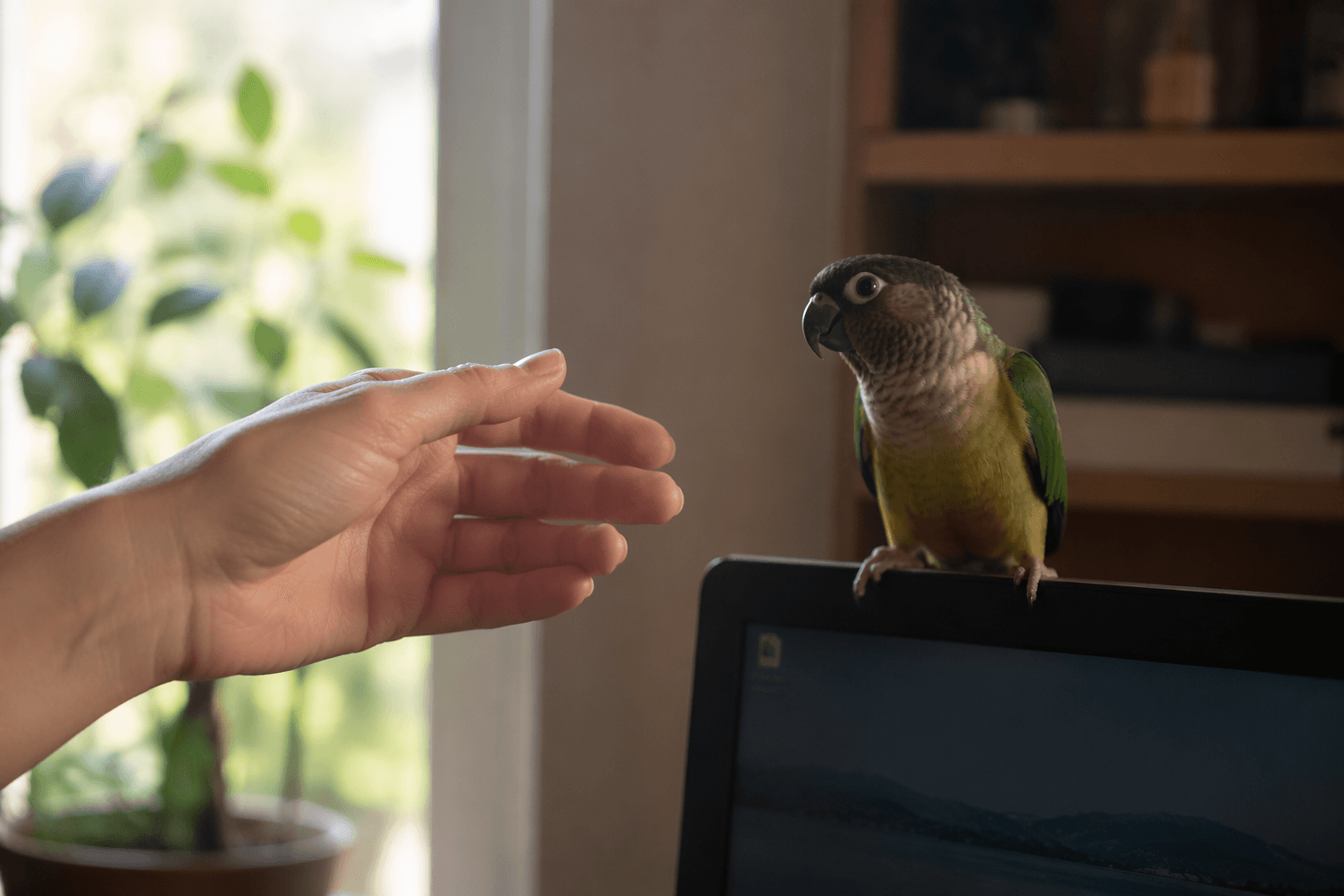
A cautious parrot perched high on a computer monitor made the clearest kind of point in a June 18 Spotlight clip from @imdugas: trust starts with hands, and hands can also break it. When a person’s hand entered the frame, the bird did not rush in. It held its ground, watched, and weighed the approach.
That hesitation is exactly what makes the moment useful for parrot people. The bird’s body language read as measured curiosity rather than immediate consent, a reminder that a parrot can be interested without being ready for contact. High on the monitor, the bird also sat in a spot that offered elevation and control, a familiar comfort zone for companion parrots that want a clear view before they decide whether to engage.
The clip lined up neatly with avian guidance that body language tells the real story. LafeberVet says careful observation can show when a bird is receptive to play or handling, and it advises approaching unfamiliar parrots calmly and quietly to avoid fear responses or aggressive behavior. That same logic explains why slow, predictable movement matters more than a quick reach or a confident grab. A bird that leans forward, stays loose, and keeps its focus on the hand may be testing the waters; a bird that stiffens, pulls back, or holds itself high is signaling distance, not permission.

The larger behavioral context is just as important. A 2007 avian behavior review described psittacine species as prey animals, which helps explain why sudden gestures and novel objects can register as threats. The Association of Avian Veterinarians also notes that security matters because parrots live in flocks, and in the home the owner becomes part of that security network. VetFolio adds that understanding natural parrot behavior is essential for emotional health in captivity, which is why reading the bird before moving the hand is not a small detail, but the whole job.
The practical lesson is simple: let the bird choose the pace. Move slowly, keep the hand predictable, and give the parrot room to say yes or no without pressure. If the bird is watching from the top of a monitor, it is already telling you something about comfort and control. The hand that respects that signal is the hand most likely to earn the next step forward.
This article was produced by Prism’s automated news system from verified source data, official records, and press releases, then run through automated quality and moderation checks before publishing. The system is built and supervised by the people who set the standards it runs under. Read our full AI policy.
Did this article answer your question?