Cockatoo furby performs for camera, showing clever social intelligence
Furby’s camera routine is funny, but it’s also a lesson in reinforcement: cockatoos learn fast, and they keep doing what gets a reaction.
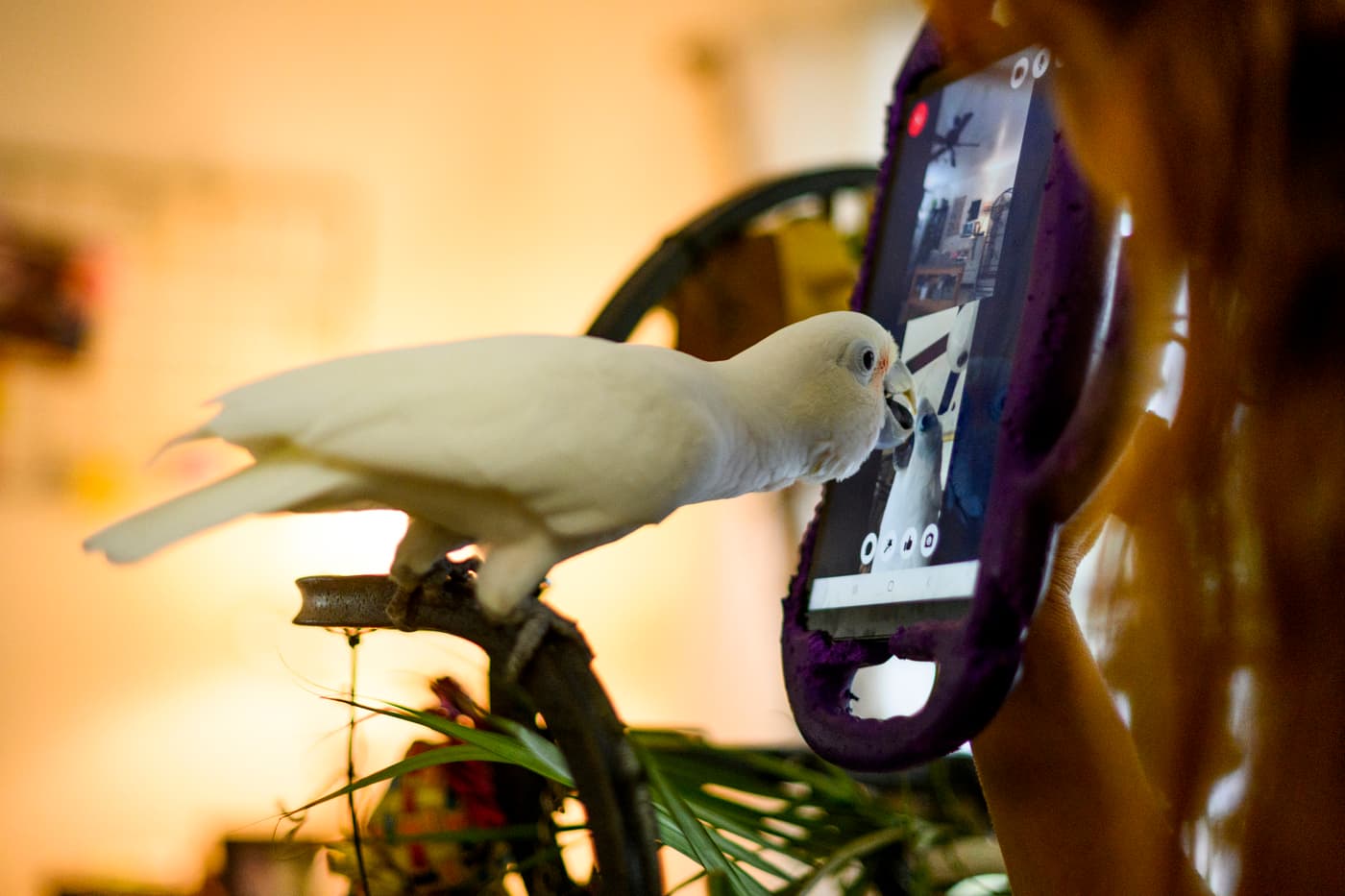
Furby is not just performing, he is reading the room
Furby’s little routine lands because it feels less like random noise and more like intent. He makes eye contact with the lens, leans into the moment, and turns tiny beak clicks and vocal shifts into a performance that clearly expects a response. That is the part cockatoo people recognize immediately: this is not just a bird being loud, it is a bird testing what gets attention.
That matters because cockatoos are not ornamental pets. They are highly intelligent, deeply social parrots that notice patterns, remember outcomes, and learn fast what works on the humans around them. When Furby seems to understand that the camera changes the interaction, the clip stops being only cute. It becomes a clean example of how a cockatoo can learn to shape the behavior of the room.
Attention is the reward, and cockatoos know it
The real takeaway for any cockatoo home is that filming, laughing, and repeated big reactions can become training, even when you never meant to train anything. If a bird makes a dramatic sound, gets a burst of attention, and then hears the room crack up, that behavior just paid off. Do that enough times and you may end up with a bird that has learned a very specific lesson: perform first, people respond second.
That does not mean you stop enjoying your bird. It means you get deliberate about what you reward. Cockatoos are famous for attention-seeking behavior, and the line between charming and exhausting is often the same line between a moment you reinforced and a habit you built.
- Reward the behavior you want immediately, not five seconds later.
- Give your brightest reaction to calm curiosity, quiet contact, and simple trained behaviors.
- Keep camera sessions short so the bird does not get overstimulated and start escalating.
- Use treats, foraging, and play as rewards, not just applause and laughter.
- If a sound is becoming a favorite because it gets a human reaction, reduce the payoff before it becomes a routine.
That approach keeps the bird from learning that nuisance behavior is the best shortcut to your attention. It also gives the bird a clearer path to success, which is especially important with a species that is smart enough to look for loopholes.
The science backs up the bird-brain behind the bit
Furby’s “ask” to be filmed fits what scientists keep finding in cockatoos. A 2021 study of wild sulphur-crested cockatoos tracked 561 individually marked birds across three neighboring roosts and used genetic samples from 205 cockatoos. The big result was not just that the birds could learn a novel garbage-bin-opening technique, but that they spread it through social learning. In other words, one bird figured something out, other birds watched, and the behavior moved through the group.
A 2022 study added another layer by showing context-dependent social associations and interactions in wild, communally roosting sulphur-crested cockatoos. That points to birds that are not simply social in a loose sense, but social in a structured one. They read context, adjust their behavior, and keep track of who matters in a given situation.
That is why a cockatoo reacting to a camera does not feel like a gimmick to bird people. It looks like the same machinery at work: observation, pattern recognition, and a willingness to exploit whatever opens the door to interaction.
A cockatoo needs a life, not just an audience
The ASPCA’s guidance on birds as pets is blunt for a reason: medium and large parrots such as cockatoos are highly intelligent, social animals with complex care requirements. They need chances to fly, climb, exercise, and get both mental and social stimulation. In many cases, they also need another bird companion as part of a healthy social life.
That is the part people miss when they fall for the entertainment value alone. A cockatoo that has no outlet for that brain and that social drive will often make its own outlet, and the result is usually noise, demand, or theatrical behavior that starts out funny and then takes over the household. Furby’s camera act is charming because it has a safe outlet. Without one, the same energy can become a problem.
A better daily setup usually includes:
- Flight-safe space and climbing opportunities.
- Foraging toys that make the bird work for food.
- Short, focused training sessions that give structure to the day.
- Regular human interaction that is calm, predictable, and not always centered on the bird demanding it.
- Rotation of toys and activities so the bird does not get bored with the same setup.
That mix gives the bird somewhere to put all that intelligence besides your head, your shoulder, and your phone camera.
The stakes are long-term, and so is the species
The lifespan alone should change how seriously you take these behaviors. White cockatoos can live more than 40 years in captivity. Sulphur-crested cockatoos can live for decades and have been reported to reach 80 years in captivity. A habit that seems cute in year one can still be running your household in year twenty.
There is also a bigger conservation and legal backdrop. The U.S. Fish and Wildlife Service notes that most exotic birds such as parrots, cockatoos, and macaws are protected under CITES and the U.S. Wild Bird Conservation Act. CITES itself is designed to make international trade in wild plants and animals legal, traceable, and biologically sustainable. That is another reminder that these birds sit at the intersection of pet ownership, welfare, and conservation, not in a casual novelty category.
One more clue to how complex these birds are comes from a 2024 review finding that parrots are the only nonhuman animals known to spontaneously dance to music in a way that may reflect positive welfare. That does not make every cockatoo a performer, but it does reinforce the same point Furby does: parrots are not just reacting. They are engaging.
The camera is part of the lesson
Furby’s funniest trick is also the most useful warning. If a cockatoo knows the camera is coming and starts working the room for attention, you are watching a bird that has learned how human reactions work. That is adorable until you realize the same learning process can lock in a scream, a demand, or a nuisance habit for years.
So the next time a cockatoo leans into the lens, the real question is not whether the clip is cute. It is whether the attention you give in that moment is teaching a trick you want to live with.
This article was produced by Prism’s automated news system from verified source data, official records, and press releases, then run through automated quality and moderation checks before publishing. The system is built and supervised by the people who set the standards it runs under. Read our full AI policy.
Did this article answer your question?