Cockatoo’s loud protest shows how strong parrot bonds shape behavior
Preston’s backyard protest is funny, but it also shows how cockatoo pair bonds can turn attention into a full-time demand.
When a loud protest is really a bond on display
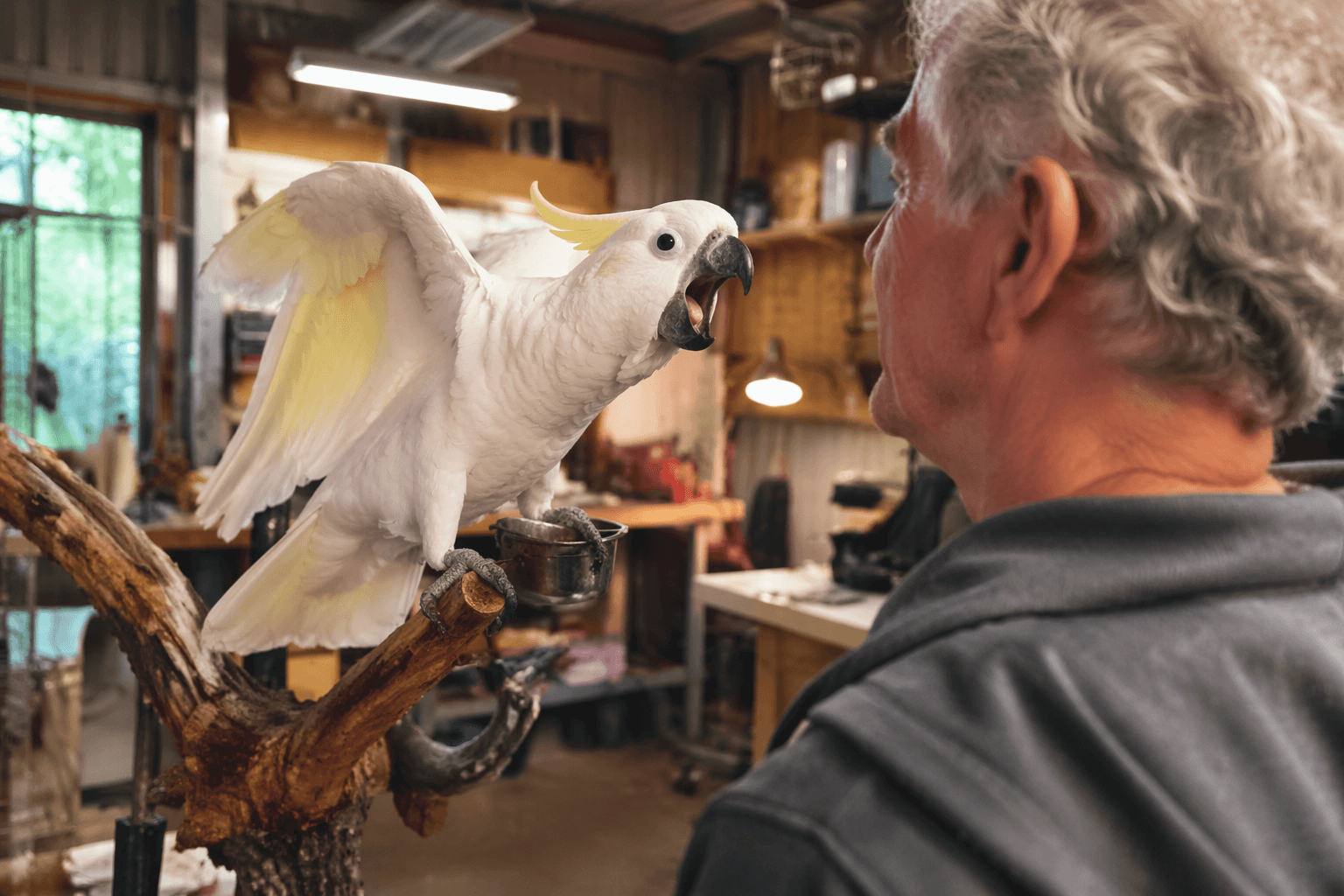
Preston, the opinionated cockatoo in Parade Pets’ latest feature, stands outside and shouts at Dad like an angsty teen in a full villain era. The joke lands because the bird is so dramatic, but the scene also rings true for anyone who has lived with a cockatoo that treats attention like a nonnegotiable right.
That is the real lesson hidden inside the viral moment: some parrots do not just enjoy contact, they actively demand it. When a cockatoo keeps repeating itself until someone responds, the behavior is often less about “bad manners” and more about a powerful social drive that is getting expressed in the noisiest way possible.
Why cockatoos get so intensely attached
Cockatoos are built for social living. Britannica describes them as noisy, gregarious birds in the wild, and points to galahs, the pink-and-gray roseate cockatoos, as a clear example: they sweep through Australian skies in flocks, pair for life, and defend nest hollows together. That kind of social wiring does not disappear in a home just because the bird is now living indoors.
Lafeber Co. goes even further, describing pet cockatoos as highly social “velcro” birds with a borderline obsessive need to be around the people in their lives. It also notes there are 21 species of cockatoos in the family Cacatuidae, which helps explain why so many different cockatoos share this same big-feelings, big-noise reputation. In other words, Preston’s clingy, vocal style is not a weird exception, it is a recognizable version of what cockatoo sociality can look like in a living room.
That is where pair-bonding matters. A cockatoo that decides one human is the favorite can become startlingly loyal, but that loyalty can also spill into jealousy, rejection of other people, and loud protest when the chosen person disappears from view. The bird is not being random. It is often asking, in the most conspicuous way possible, for contact, reassurance, routine, or relief from boredom.
What the shouting is telling you
Preston’s outside performance works as a reminder that vocalizing is often communication, not background noise. A cockatoo can be loud because it wants company, because it expects a familiar routine, or because it has learned that making enough noise eventually brings the human back into the picture. Once that lesson takes hold, the bird may repeat the behavior with impressive persistence.
The trick is reading the pattern without accidentally feeding it. If every shriek gets a fast response, the bird learns that screaming is the strongest lever in the household. If calm contact gets attention and screaming does not, you start teaching a very different lesson, one that protects your sanity and makes the bird’s social world more predictable.
How to respond without turning noise into a reward
The goal is not to ignore a cockatoo’s social needs. The goal is to meet those needs in ways that do not train the bird to use volume as the first, best strategy. That means paying attention to what happens right before the yelling, what ends it, and which responses make the behavior grow stronger over time.
A few practical moves help keep demand behavior from taking over:
- Answer quiet contact quickly when the bird is settled, curious, or simply checking in. You want calm behavior to feel effective.
- Do not rush in at the peak of screaming if you can avoid it. If the bird learns that the loudest moment is the moment that works, the pattern becomes harder to break.
- Build predictable one-on-one time into the day so the bird is not forced to escalate just to get noticed. Consistency matters more than grand gestures.
- Mix in foraging, training, and movement so attention is not the only form of stimulation available.
This is where the Association of Avian Veterinarians is especially useful. It says social enrichment is one of the most effective forms of enrichment for flock animals like birds, and that rearing social species with companions has been shown to reduce fearfulness and stereotypic behaviors. It also notes that allopreening helps reinforce social hierarchy and pair bonds while reducing stress levels. The larger point is simple: a cockatoo needs real social input, not just a human standing nearby as a permanent audience.
Meeting a cockatoo’s social needs without becoming the entire support system
A bird like Preston needs more than silence and discipline. He needs a social life that is rich enough that he does not have to stage a protest every time he wants connection. That can mean steady interaction, a predictable routine, and enough enrichment that the bird is not stuck inventing drama to get through the day.
At the same time, you do not want to reinforce the idea that the only way to get your attention is to become unbearable. Cockatoos are intelligent, bonded, and emotionally intense, which is exactly why they can slide so quickly from charming to exhausting if every demand is answered on the bird’s terms. The healthier arrangement is a relationship with structure, not a 24-7 emotional support job.
Preston’s backyard tantrum is funny because it is so over the top, but it also shows the emotional logic of living with a cockatoo. Behind the earful is a bird that is deeply social, deeply attached, and never subtle about what it wants, which is exactly why the smartest response is not to out-shout the bird, but to make sure the right kind of attention is already part of the day.
This article was produced by Prism’s automated news system from verified source data, official records, and press releases, then run through automated quality and moderation checks before publishing. The system is built and supervised by the people who set the standards it runs under. Read our full AI policy.
Did this article answer your question?