Great Green Macaw Cucumber Loves Bead Toy That Strengthens His Beak
Cucumber’s favorite toy doubles as beak work, not just play. The real lesson is how the right chew object keeps a macaw busy, focused, and healthier.
Why Cucumber’s bead toy stands out
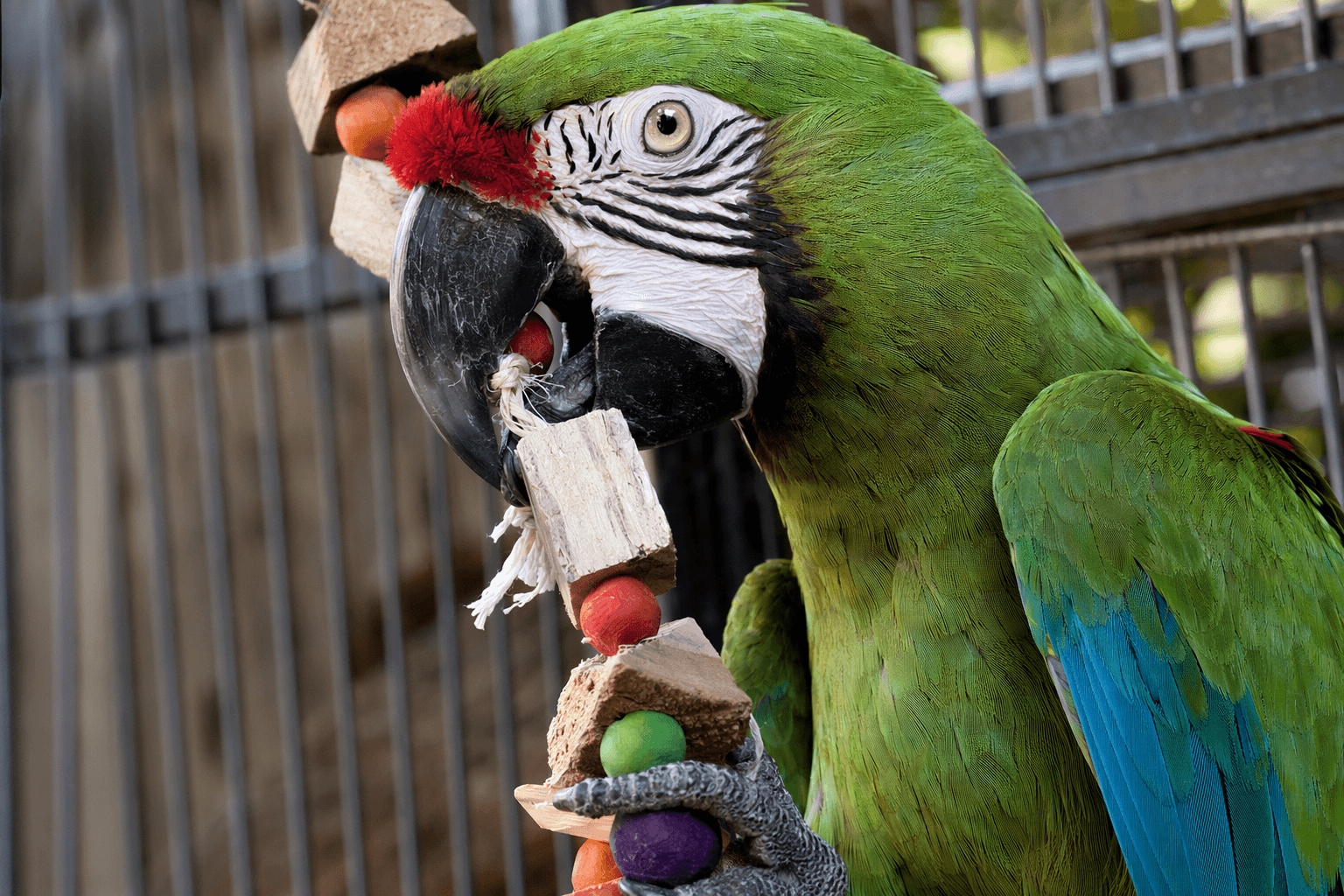
Cucumber, a Great Green Macaw also identified as a Buffon’s Macaw, has a favorite that says more about parrot care than most toy reviews ever do. Parrot Wizard’s April 24 video spotlights the Tropical Grapes toy, and the appeal is obvious once you look past the bright pieces: it gives a powerful bird a job his body already wants to do. The toy is built around endless large wooden beads that macaws love snapping, and that repetitive action mirrors the feel of cracking open large nuts like walnuts.
That matters because the toy is not being sold as a cute distraction. It is framed as beak exercise, occupation, and species-appropriate enrichment, the kind that gives a macaw something meaningful to do with both beak and feet. In a bird like Cucumber, whose beak strength and chewing drive are part of the package, the right toy does more than entertain. It channels instinct into work.
What a good parrot toy is really doing
The lesson in Cucumber’s favorite toy is that “good” enrichment is active, not passive. A toy earns its place when it occupies a bird long enough to interrupt boredom, invites repeated manipulation, and gives the beak a safe outlet. That is especially important for large parrots, where boredom can turn into destructive chewing or restless pacing fast.
The Association of Avian Veterinarians makes that same point from a husbandry angle. Chewing is an important parrot behavior because it helps birds explore their environment and keep their beaks well groomed. The organization also places toys under manipulative and occupational enrichment, which is exactly where a bead-heavy toy belongs when it is designed for a macaw that wants to snap, pry, and work with its feet.
There is also a physical care payoff. The Association of Avian Veterinarians says a lack of proper enrichment can contribute to flaky beak keratin, a reminder that toy choice is not cosmetic. A bird that has the right chewing surfaces and textures is not simply being amused, it is being supported.
Why the bead-and-snap design works so well
The Tropical Grapes toy succeeds because it matches the species, not just the cage. Macaws are built for serious pressure, repetitive chewing, and problem-solving with durable materials. Large wooden beads give Cucumber something he can hit, snap, and grind down in a way that feels closer to natural foraging and nut work than to casual play.
That resemblance to cracking walnuts is part of the genius. A toy does not have to imitate the wild perfectly to be useful, but it should echo the motion, resistance, and payoff that a bird’s body understands. For a great green macaw, the satisfaction often comes from the process itself: grasp, test, crack, repeat.
The result is a calmer-looking bird with a real task in front of him. Parrot Wizard says the toy helps strengthen Cucumber’s beak and keep him occupied, which is a practical combination for any guardian trying to balance enrichment with daily life. A toy that holds attention for more than a few minutes has already done more than most novelty buys.
What Cucumber’s training timeline adds to the story
Cucumber is not appearing in this context as a random pet with a single preference. Parrot Wizard had already been training him for almost three months when the introduction about him was posted, so the toy preference sits inside an ongoing relationship of trust, handling, and observation. That makes the bead toy feel less like a one-off favorite and more like a clue to what keeps this particular bird engaged.
That broader archive matters too. Parrot Wizard presents its free video library as educational content covering training, care, harness work, socialization, grooming, and vet-related topics. In that company, the toy video becomes part of a larger teaching pattern: show real birds doing real things, then let caregivers infer what practical enrichment looks like at home.
How to judge toys for your own bird
The best part of Cucumber’s setup is that it gives a simple framework you can use without copying the exact toy. When you shop or rotate toys, look for the same underlying functions rather than the same shape.
- It should absorb beak pressure without falling apart too quickly.
- It should invite repeated chewing, not just one quick tug.
- It should give the feet something to hold while the beak works.
- It should feel interesting enough to hold attention beyond a minute or two.
- It should match your bird’s species, size, and chewing power.
- It should rotate with other toys so the novelty does not disappear overnight.
For a macaw, that usually means sturdy materials, larger parts, and enough resistance to make the bird work for the payoff. For smaller parrots, the same idea still applies, but the scale and texture need to fit the bird in front of you. The goal is not to fill a cage with clutter. The goal is to offer the right kind of challenge.
Why this matters beyond one bird
The Great Green Macaw adds a final layer to the story. The species is assessed by the IUCN Red List, and BirdLife International notes that conservation programs in Costa Rica include species management, habitat protection and restoration, community outreach, and behavioral change. BirdLife also identifies Sarapiquí in northern Costa Rica as one of the species’ last strongholds.
That conservation backdrop gives Cucumber’s favorite toy unexpected weight. A bird like this is not just a clever companion with a preference for wooden beads. He represents a species that needs careful stewardship, from habitat work in the wild to durable enrichment in the home. When a toy keeps a great green macaw occupied, strengthens his beak, and gives him a satisfying job to do, it is doing the quiet daily work that good parrot care depends on.
In the end, the best macaw toy is not the flashiest one on the perch. It is the one that meets the bird where his instincts live, gives the beak honest work, and leaves the bird calmer because he got to be fully a macaw.
This article was produced by Prism’s automated news system from verified source data, official records, and press releases, then run through automated quality and moderation checks before publishing. The system is built and supervised by the people who set the standards it runs under. Read our full AI policy.
Did this article answer your question?