How to Safely Remove a Parrot From Your Shoulder
The safest shoulder removal happens before a parrot gets defensive. Read the bird’s body language, avoid the face, and use a calm step-down routine.
Why shoulder time turns risky fast
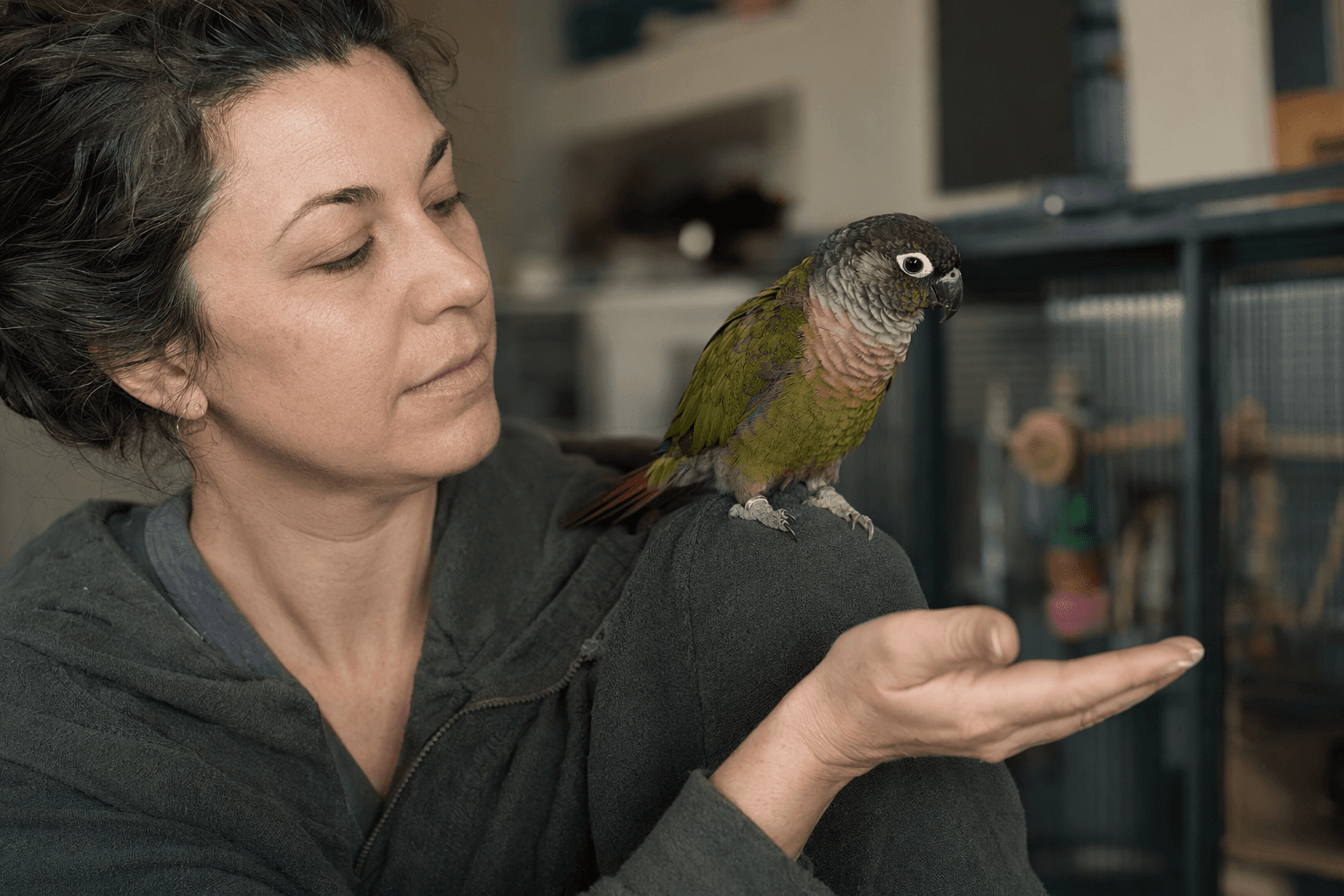
A parrot on your shoulder can feel sweet and familiar until the moment it turns possessive, overstimulated, or hard to read. That is why this is not just a handling tip, it is a safety move: once the bird has claimed that high perch, every mistake becomes easier to punish with a bite.
Chewy warns that shoulder sitting can make eye contact difficult and can put you within range of the face, ear, cheek, or shoulder if you ask the bird to step off at the wrong moment. The Institute for Environmental Research and Education goes even further, saying shoulder-sitting is generally not recommended for most bird owners because it can create injury risk, undesirable behavior, and boundary problems.
Read the bird before you move
The most important skill is not strength, it is timing. The Avian Welfare Coalition reminds us that birds are prey animals, which means fear or discomfort can flip them into a fight-or-flight response fast. If you wait until the bird is already tense, pinned, lunging, or clinging harder, you are no longer doing a simple step-down. You are asking for a defensive reaction.
Best Friends Animal Society says bird communication is driven mainly by body language, with vocalization making up only a small percentage of what the bird is telling you. That matters because shoulder removal starts before your hands move. If the bird’s feathers are tight, posture is rigid, eyes are sharp, or the bird is tracking movement around the room, slow down and change the plan before you try to lift or reposition.
What to do in the moment
The safest shoulder removal is usually the quietest one. The goal is to keep the bird from feeling trapped while you create a clear, predictable next step.
1. Pause and settle your own movement.
Sudden walking, turning, or reaching overhead can make a bird feel less secure. Stop where you are, keep your breathing steady, and give the bird a moment to reset before you ask for anything.
2. Offer a clear down option before the bird escalates.
If you know shoulder time is ending, move early. Present a hand, perch, or nearby landing spot while the bird is still calm enough to choose it. That is the key idea behind voluntary behavior, which Best Friends Animal Society recommends over forceful handling.
3. Watch for stress cues, not just noise.
A bird does not have to scream to be uncomfortable. Look for stiffening, leaning away, protective postures, a tightened grip on clothing, or a bird that starts guarding your face. Those are signals to shorten the interaction, not push through it.
4. Use a steady, confident hand and keep the bird supported.
If you need to guide a step-down, move slowly and keep the bird balanced. The point is not to yank the bird away from the shoulder, but to make the next perch feel like the obvious choice.
5. Reward the right choice the moment it happens.
When the bird steps off voluntarily, reinforce that with calm praise, a treat, or the next preferred perch. That helps teach the bird that stepping down ends the interaction safely and predictably.
What never to do once the bird has claimed the shoulder
Do not grab from above, jerk the bird off, or try to surprise it into moving. Those moves can trigger fear, and fear is exactly what the Avian Welfare Coalition warns can send a bird into fight-or-flight. A bird that feels cornered may bite harder, cling tighter, or launch away unpredictably.
Do not let the situation become a test of will. If you have guests nearby, if you are walking through a doorway, or if you are anywhere near a kitchen or another hazard, stop treating the shoulder like a convenient parking spot. The Institute for Environmental Research and Education’s warning about boundary problems is real: once shoulder access becomes routine, the bird may start expecting it, defending it, and resisting when you need it to end.
And do not rely on voice alone. Best Friends Animal Society’s point about body language matters here because a bird may look fine right up until it does not. If you wait for a scream or a lunge, you are already late.
Why a shoulder step-down should be a training habit, not an emergency fix
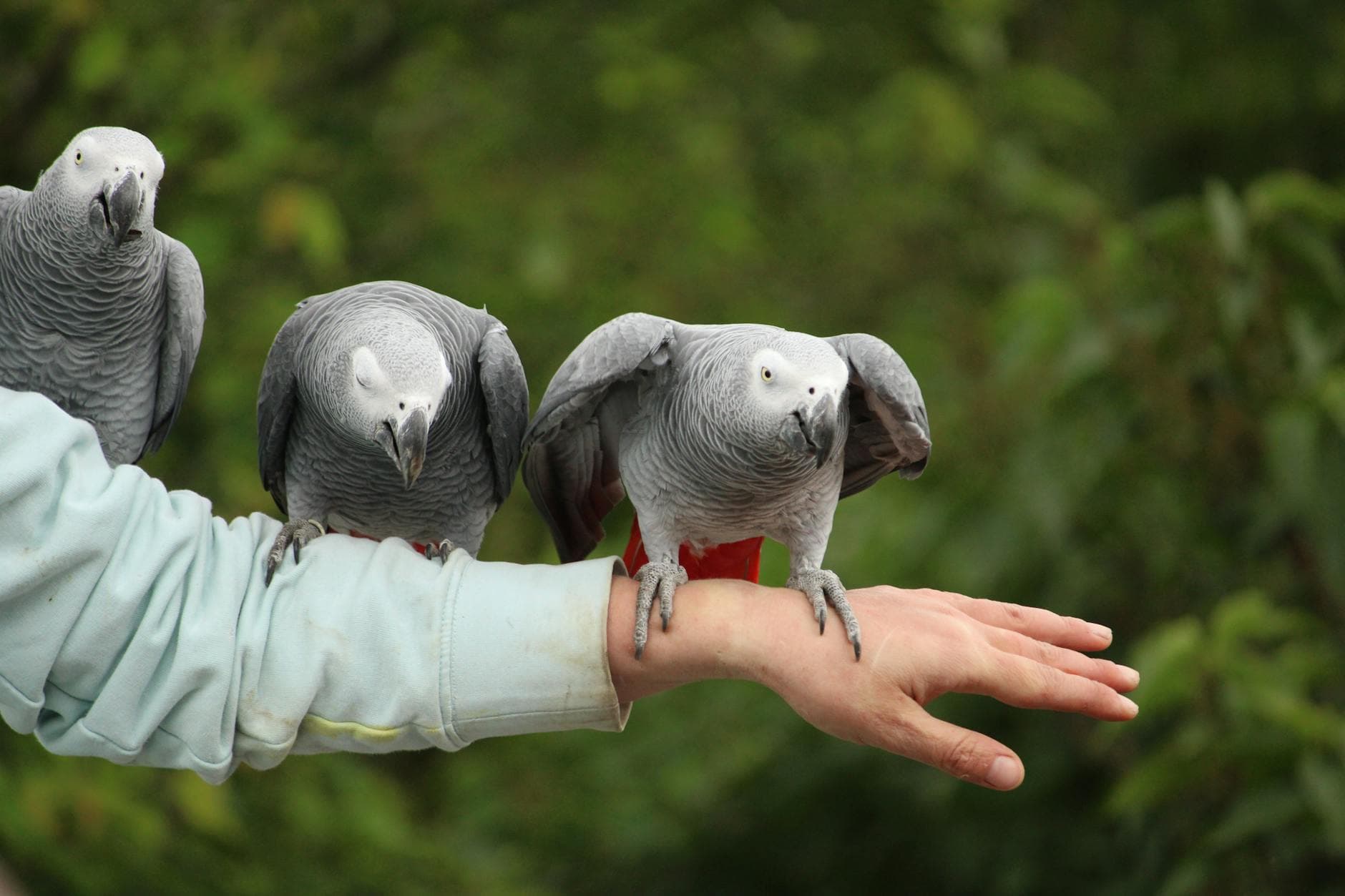
The cleanest shoulder removal is one the bird already understands. If you practice step-up and step-down on a predictable perch, you turn a risky moment into a familiar routine. That is especially useful in busy homes, where shoulder time can drift into a habit without anyone noticing how much control the bird has gained.
The Avian Welfare Coalition’s shelter guidance makes the same larger point from another angle: birds should be handled and restrained by trained staff to reduce injury and escape risk. At home, that translates into a simple principle. Your bird does better when handling is planned, consistent, and calm, not improvised when everyone is already tense.
After the bird comes down
The handoff is only half the job. Once the bird is off your shoulder, give it a predictable perch, a short reset, and a moment to settle before you ask for more interaction. Birds that are lifted or stepped down too quickly may need reassurance that the routine is not collapsing around them.
This is also where you protect future behavior. If stepping down always ends with panic, the bird learns to resist harder next time. If stepping down leads to safety, calm, and a clear next activity, you are building the kind of house manners that keep shoulder access from becoming a battle.
That is the real lesson behind this deceptively simple handling issue: the shoulder is not just a cute perch. It is a privilege, and the safest way to remove a parrot from it is to read the bird early, move gently, and make the next choice easy to accept.
This article was produced by Prism’s automated news system from verified source data, official records, and press releases, then run through automated quality and moderation checks before publishing. The system is built and supervised by the people who set the standards it runs under. Read our full AI policy.
Did this article answer your question?