Parrot Wizard trains macaw for safe, stress-free handling
Cucumber’s handling training shows how touch, restraint, and transport can become calm, lifesaving routines. For great green macaws, that trust matters at home and in the wild.
Why this handling clip matters now
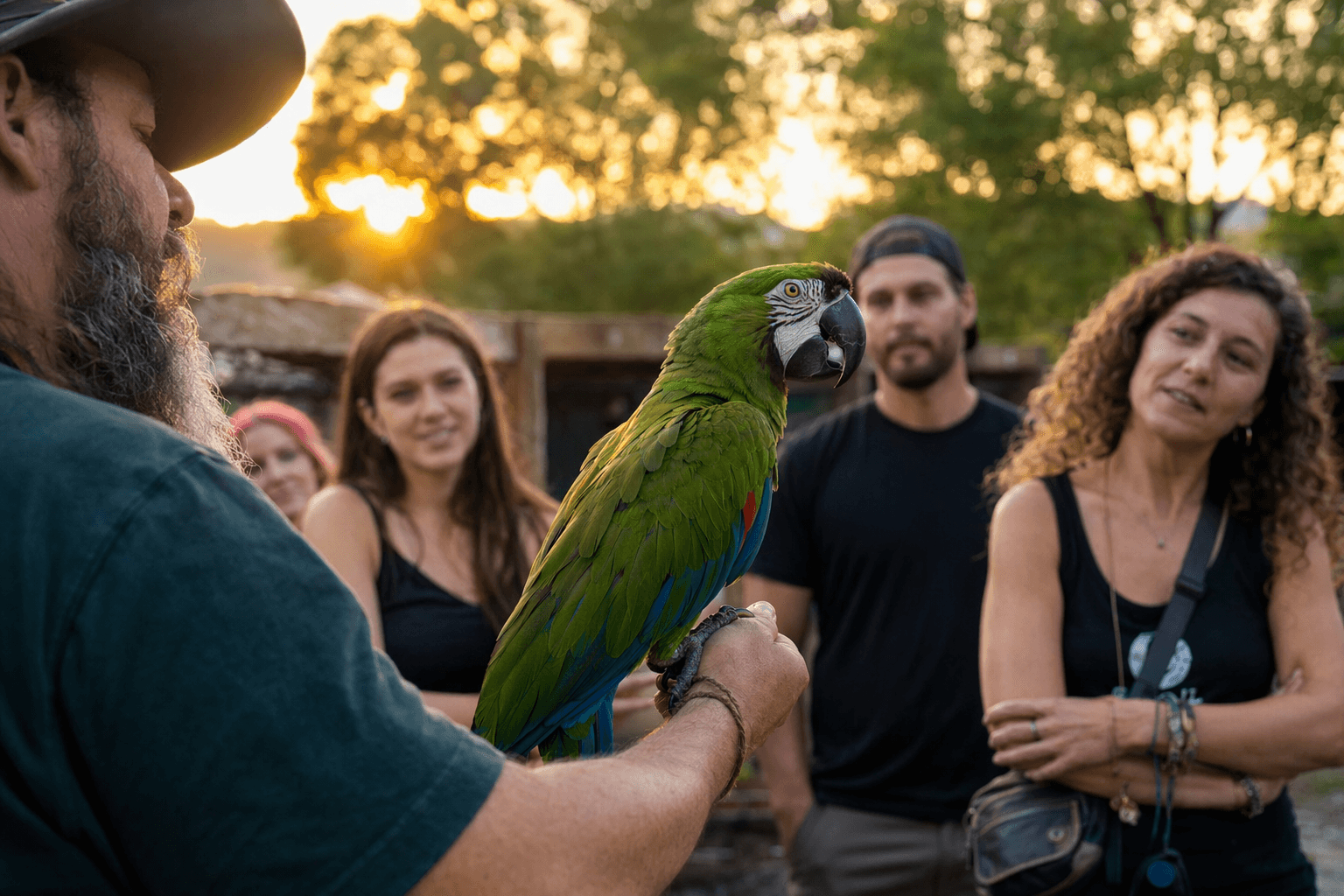
A bird that can be grabbed, passed around, and handled without panic is not just a cute project. It is a safety skill, and in a large macaw, that skill can make the difference between a smooth vet visit and a dangerous struggle. Parrot Wizard’s April 23 video on Cucumber the Great Green Macaw treats handling as a learned behavior, not a personality trait, and that framing is the real story.
The details around Cucumber give the clip extra weight. Great green macaws are critically endangered, with BirdLife estimating just 500 to 1,000 mature birds remaining and a declining population trend. Macaw Recovery Network puts the global total at fewer than 1,000, with habitat loss and the cagebird trade still pressing hard on the species. Against that backdrop, a companion macaw being trained to accept human handling is a reminder of how much careful stewardship matters, both in homes and in conservation-minded communities.
What “safe, stress-free handling” really means
This is not about dominance or forcing compliance. It is about teaching a bird that human hands predict good outcomes, not fear. In practical terms, that means the bird can be moved between people, stepped up in a busy home, redirected from unsafe spots, and managed during grooming or medical care without a blowup of panic or resistance.
Parrot Wizard’s broader video archive places this clip in the same world as taming, training, harness work, socialization, grooming, and vet-related topics. That matters because it shows handling as part of everyday parrot life, not a one-off trick reserved for camera time. A bird that has learned to tolerate touch and restraint is usually a bird that has gone through many small, positive repetitions, with people acting predictably and the bird learning what happens next.
For guardians, that is the core lesson: handling is trained. It is not assumed because a bird seems sweet, bonded, or confident one day. The real goal is cooperative management, where the bird has enough trust and conditioning to remain steady when life gets busy.
Why Cucumber’s case stands out
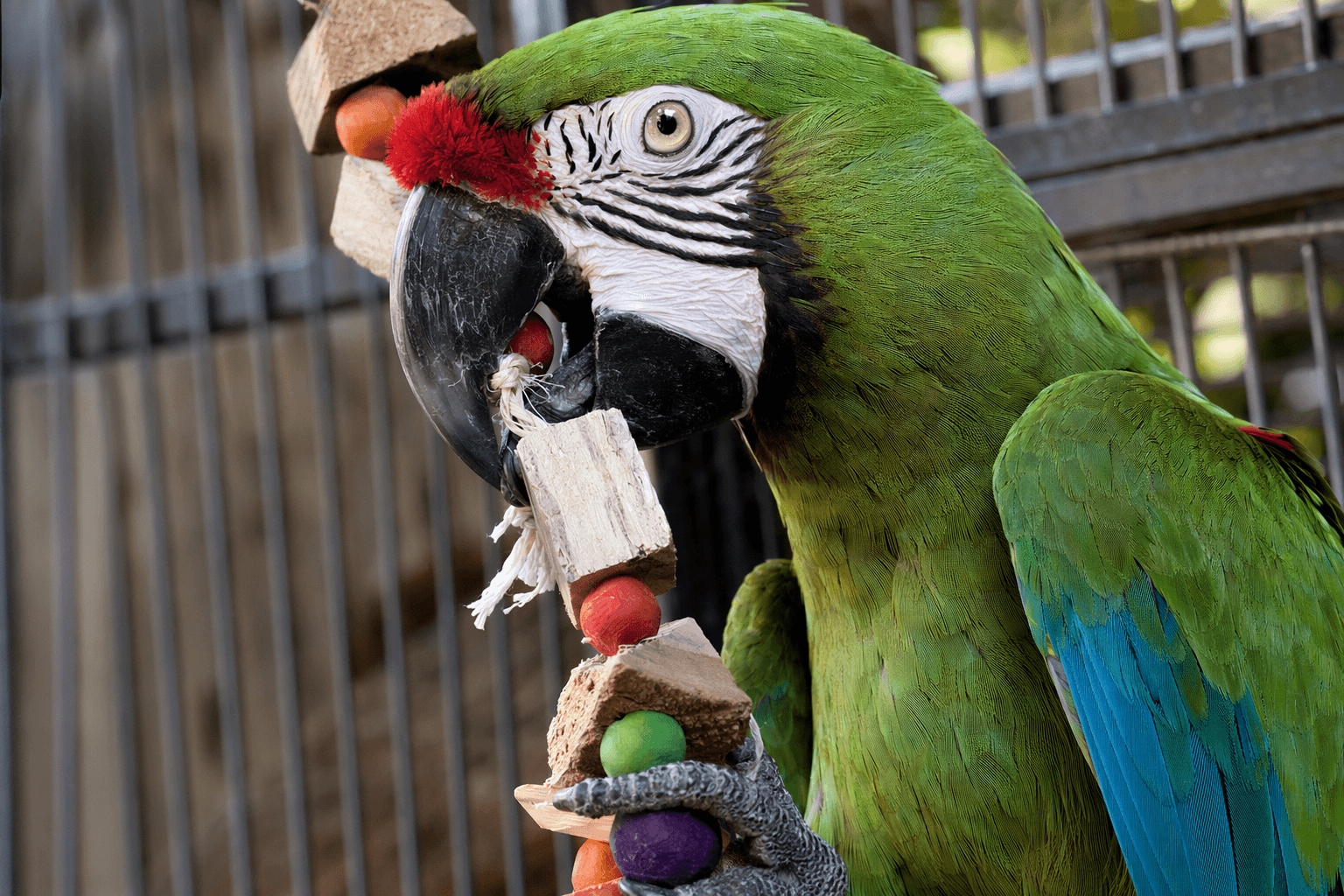
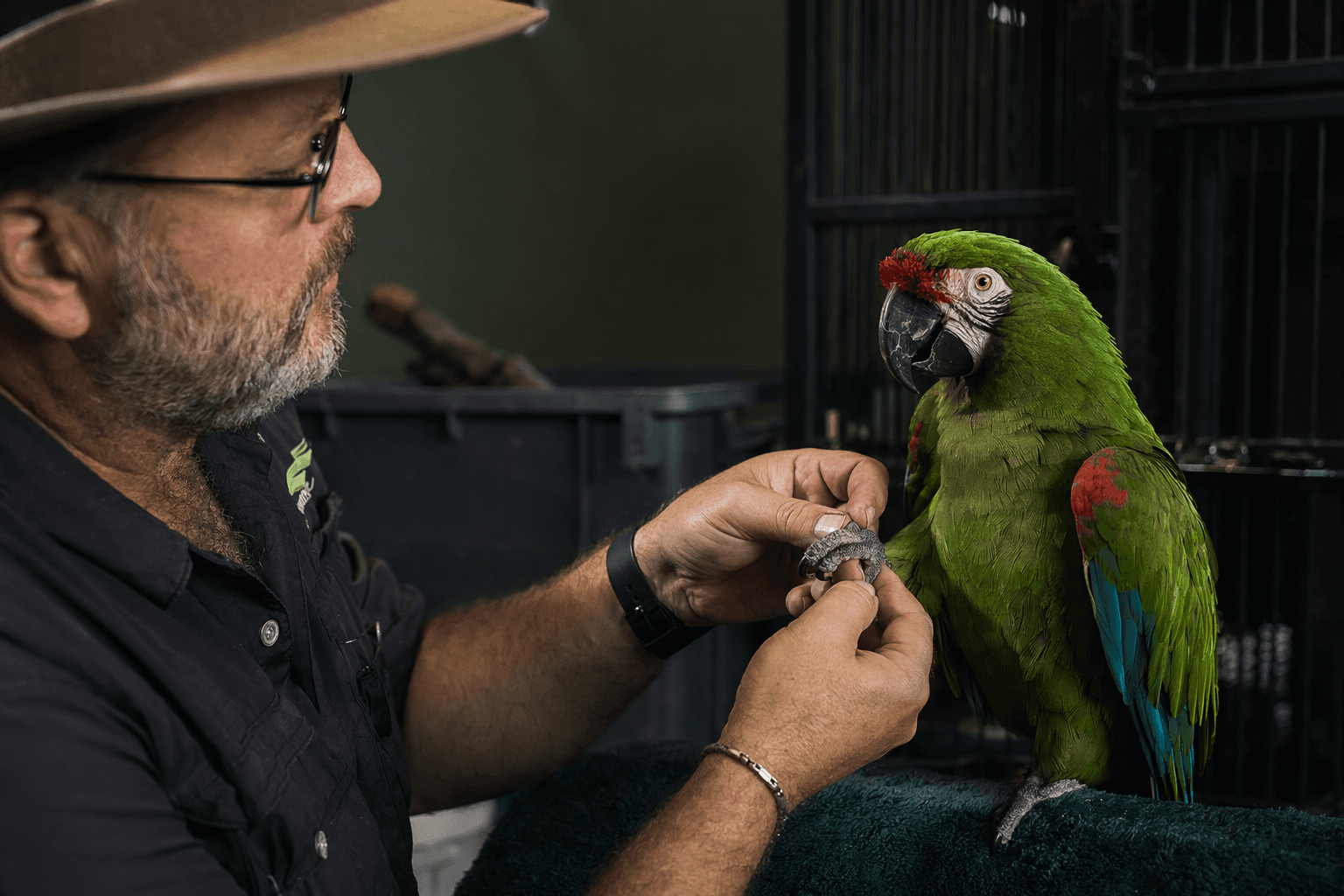
Cucumber’s April 2026 video is part of a larger sequence that makes the training feel lived-in rather than staged. Parrot Wizard’s public video index shows a cluster of Cucumber clips in that month, including handling, toy preference, training practice, nail trim requests, and flock integration. There is even a later April 25 post asking whether Cucumber is a permanent flock member, which underscores that this bird is being woven into a human social setting, not just taught isolated behaviors.
That progression matters for readers because it mirrors real bird ownership. You do not only need a macaw to accept one cue in one room. You need a bird that can be lifted, examined, transported, and settled again after the event is over. Nail trims, harnesses, recalls, and ordinary moves around the house all depend on the same foundation: the bird must believe that being handled does not automatically mean danger.
A great green macaw adds another layer to that story. This is a species large enough to intimidate inexperienced handlers, yet fragile enough in the wild that every healthy, well-managed companion bird becomes part of a broader conversation about respect, care, and responsibility.
Trust is built before restraint is needed
The best handling work starts long before anyone needs to hold the bird still. Bird handling resources consistently emphasize reading body language and using gradual, positive handling rather than assuming a bird wants to be picked up. That approach is especially important with a macaw, where one bad grab can damage trust fast and create a bigger safety problem next time.
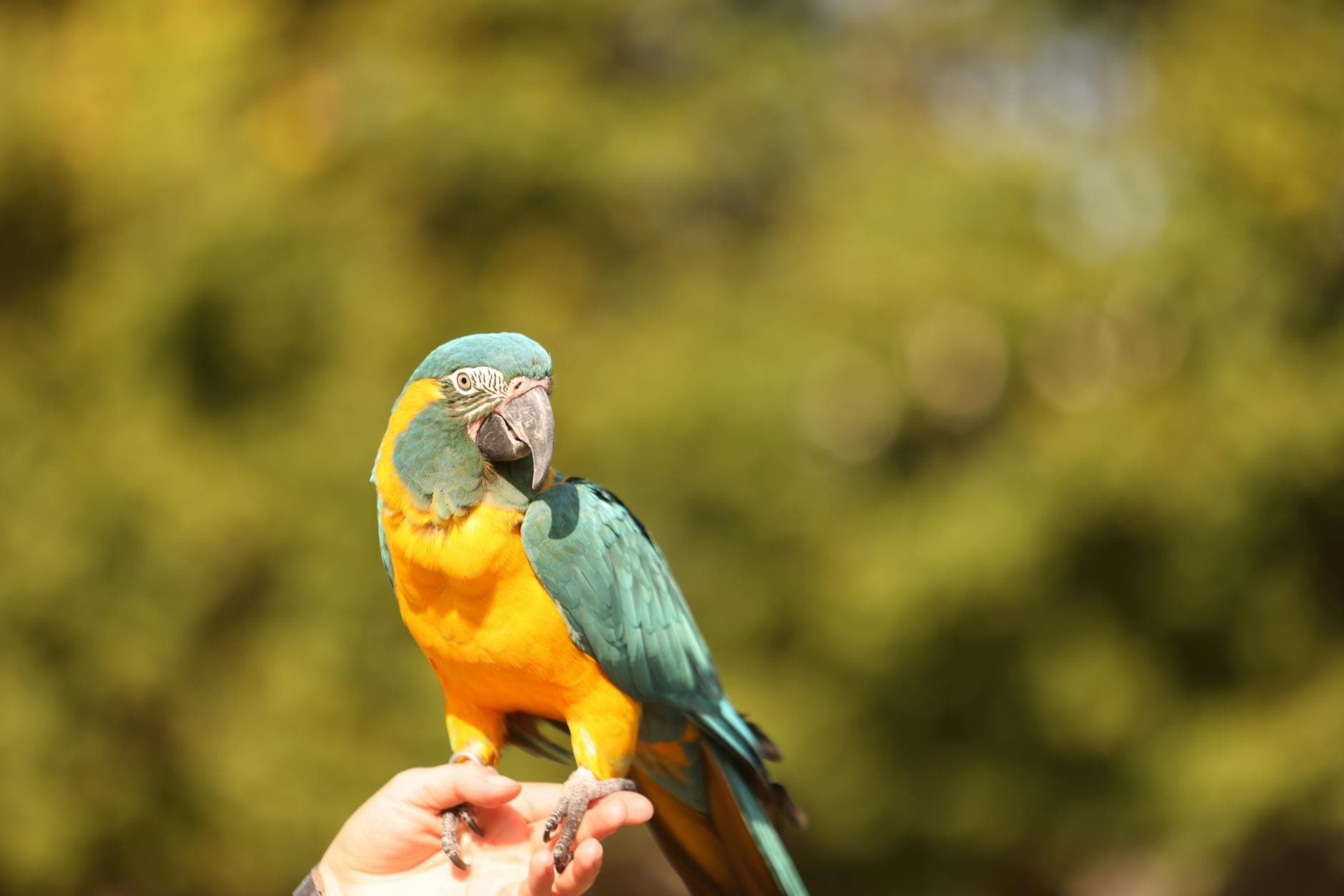
What stands out in Cucumber’s training is the emphasis on routine contact. If a bird learns that being picked up, moved, or briefly restrained is normal, those moments stop feeling like emergencies. That can make a huge difference in daily life, because most households do not get to choose when a bird needs help. A bird may need to be moved away from a hazard, into a carrier, or toward a towel or scale, and the calmer that process is, the safer it is for everyone involved.
A useful way to think about it is this:
- Cooperative handling lowers the bird’s stress before the stressful event begins.
- Repetition teaches the bird that hands are not a threat.
- Gentle, consistent practice protects trust better than sudden force.
- Transport and medical care become less dramatic when handling is already familiar.
The conservation backdrop makes the lesson sharper
The great green macaw is not just another colorful pet bird with an online following. BirdLife lists the species as critically endangered and says extensive habitat destruction and capture for the cagebird trade are driving extremely rapid and continuing declines. Macaw Recovery Network describes the species as native to Costa Rica, Colombia, Ecuador, Honduras, Nicaragua, and Panama, and says its 2022 to 2023 census covered five of those six countries, with Nicaragua not included.
That information changes how a video like Cucumber’s reads. A trained companion macaw is not simply a sign of polished birdkeeping. It also highlights how much care and continuity are required to keep a large parrot healthy, manageable, and secure in human hands. When the species itself is under pressure, every responsible handling decision becomes part of a larger ethic: reduce stress, avoid avoidable harm, and build trust that lasts.
Macaw Recovery Network’s broader message is sobering as well, noting that habitat loss has already taken a major toll. That makes the companionship side of the story feel more delicate, not less. The bird is both an individual with daily needs and a member of a species still fighting for stability.
What guardians can take from this training
The practical takeaway is simple: handling should be practiced before it is urgently needed. A bird that only experiences hands when something unpleasant is about to happen will not learn safety. A bird that gets calm, patterned handling in low-pressure moments is far more likely to cooperate when the stakes are real.
If you live with a parrot, the lesson from Cucumber is to treat touch, lifting, passing between people, and transport as part of normal life skills. Build the routine when the bird is relaxed. Keep sessions short. Watch body language. Repeat the same calm sequence until the bird expects it.
That is what makes a macaw easier to live with, easier to care for, and safer to help when a grooming table, a carrier, or a veterinary exam suddenly becomes necessary. In the end, the most impressive part of Cucumber’s training is not that he can be handled. It is that the handling has been made ordinary.
Know something we missed? Have a correction or additional information?
Submit a Tip