Hedge Fund Manager Cares for 160 Parrots Alongside High-Finance Career
Hamza Lemssouguer named his $20 billion hedge fund "Arini" after the parrot genus he breeds - 160 rare birds at a 400-year-old Tudor estate outside London.
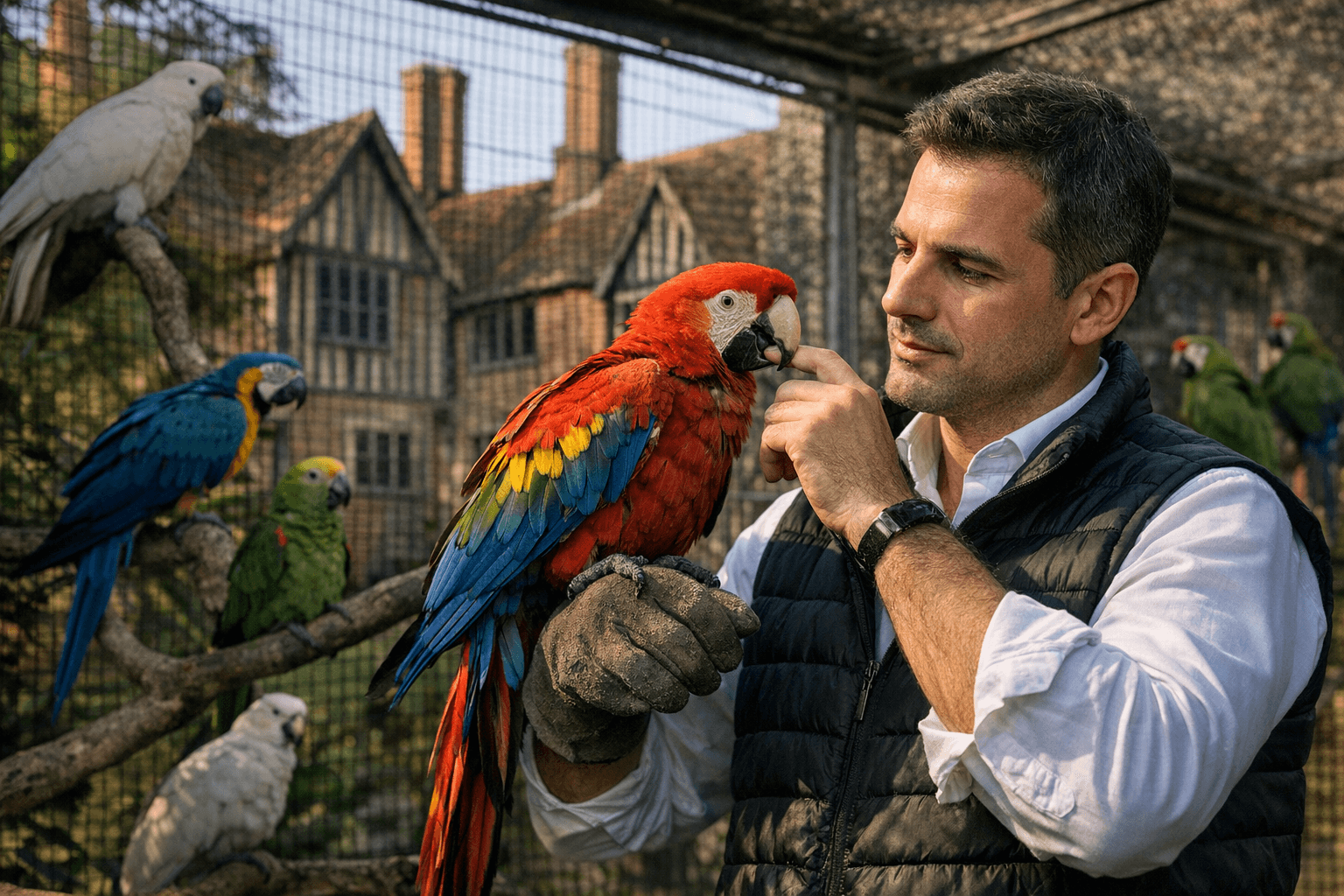
We bought a farm and we started the operation of breeding endangered species of parrot," Hamza Lemssouguer told students at the London School of Economics. "Now we have over 100 endangered species." The audience was there for a masterclass on credit investing from the fastest-growing new hedge fund manager in the world. The parrots, it turns out, are inseparable from the story.
Lemssouguer, 35, manages $20 billion at Arini Capital Management, a London-based fund he launched in 2022 with $1.3 billion in initial capital after turning down an offer from Citadel founder Ken Griffin to run a European credit fund. His main fund has averaged annual returns of roughly 15%, approximately double the credit hedge fund index. But the name he chose for that fund was not a financial term. Arini is the taxonomic tribe of neotropical parrots: large, vibrantly colored macaws and conures from South America and Central America, characterized by long tapering tails and some of the most threatened conservation statuses in aviculture.
He named his $20 billion fund after the birds he breeds on a 400-year-old Tudor estate in the English Home Counties. He lives there with his wife Aline and their children, alongside the 160-bird flock.
The breeding program began during the COVID-19 pandemic, when Lemssouguer and Aline, then his girlfriend, started working with endangered parrot species. The purpose was never collection. "The idea is that we try to grow the numbers and hopefully participate in reintroduction efforts in the wildlife further down the road," he has said. He describes that road as potentially 20 years long. He does not sell any of the birds.
The couple have since formalized the mission through the A&H Foundation, which they launched together. Aline Lemssouguer, a former vice president in credit sales at Credit Suisse, works alongside Hamza on the foundation, which focuses on conservation and education in South America and Africa. The board includes Ken Costa, former chair of investment banking at UBS. None of the parrots appear at the Arini offices in London.
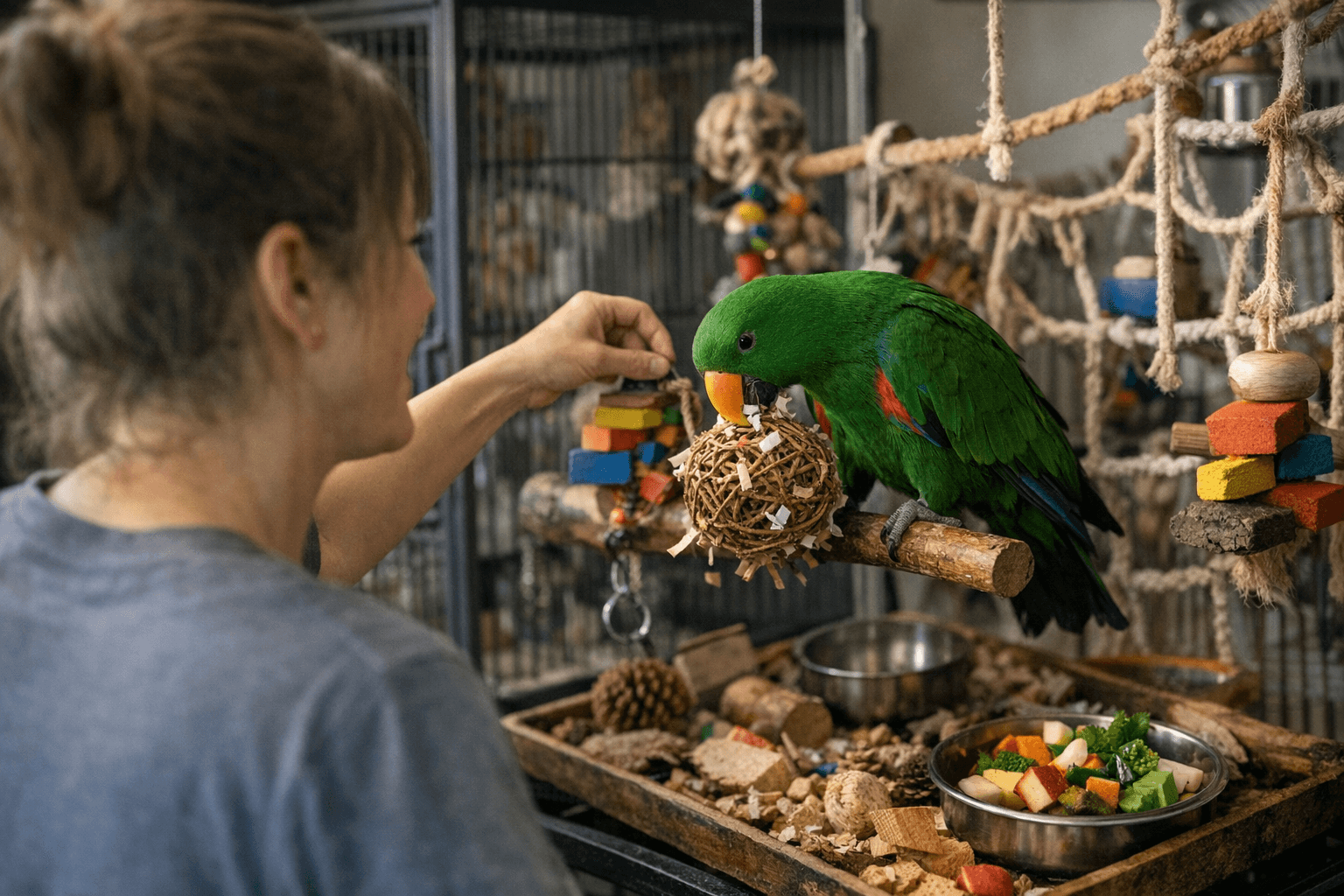
For anyone who has managed even three birds at once, the operational demands of 160 endangered parrots are not abstract. Species-specific dietary requirements, air quality management, quarantine protocols for a conservation-grade breeding program tracking over 100 endangered species across genetic lines intended for eventual wild reintroduction: these are not weekend tasks. Lemssouguer has not detailed his specific husbandry systems publicly, but the scale and conservation intent of the operation make clear that this is professional-grade animal management running in parallel with a $20 billion fund.
Lemssouguer grew up in Morocco, studied mathematics at France's elite École Polytechnique, and spent six years at Credit Suisse, where he became the bank's top bond trader and reportedly generated $220 million in profit-and-loss in 2020 alone. He abstains from alcohol and does not drive. His fund employs 20 analysts, drawn from countries including Afghanistan, Turkey, and Ukraine. His downtime belongs to the flock.
The philosophy connecting both operations is consistent: contrarian conviction, meticulous research, and a willingness to commit to timelines that most people would find uncomfortable. A 20-year reintroduction program for endangered parrots is not a casual hobby. It is a long position on a species.
Ten habits to steal for a flock of one to three birds
Running 160 endangered birds toward wildlife reintroduction requires systems that every parrot owner can scale down to a single cage. These are the practices that separate a healthy household flock from a crisis in progress.
Quarantine every new arrival for at least 30 days in a separate airspace before any contact with your existing birds. Psittacine diseases including PBFD and psittacosis do not require direct contact to spread. Shared air is sufficient.
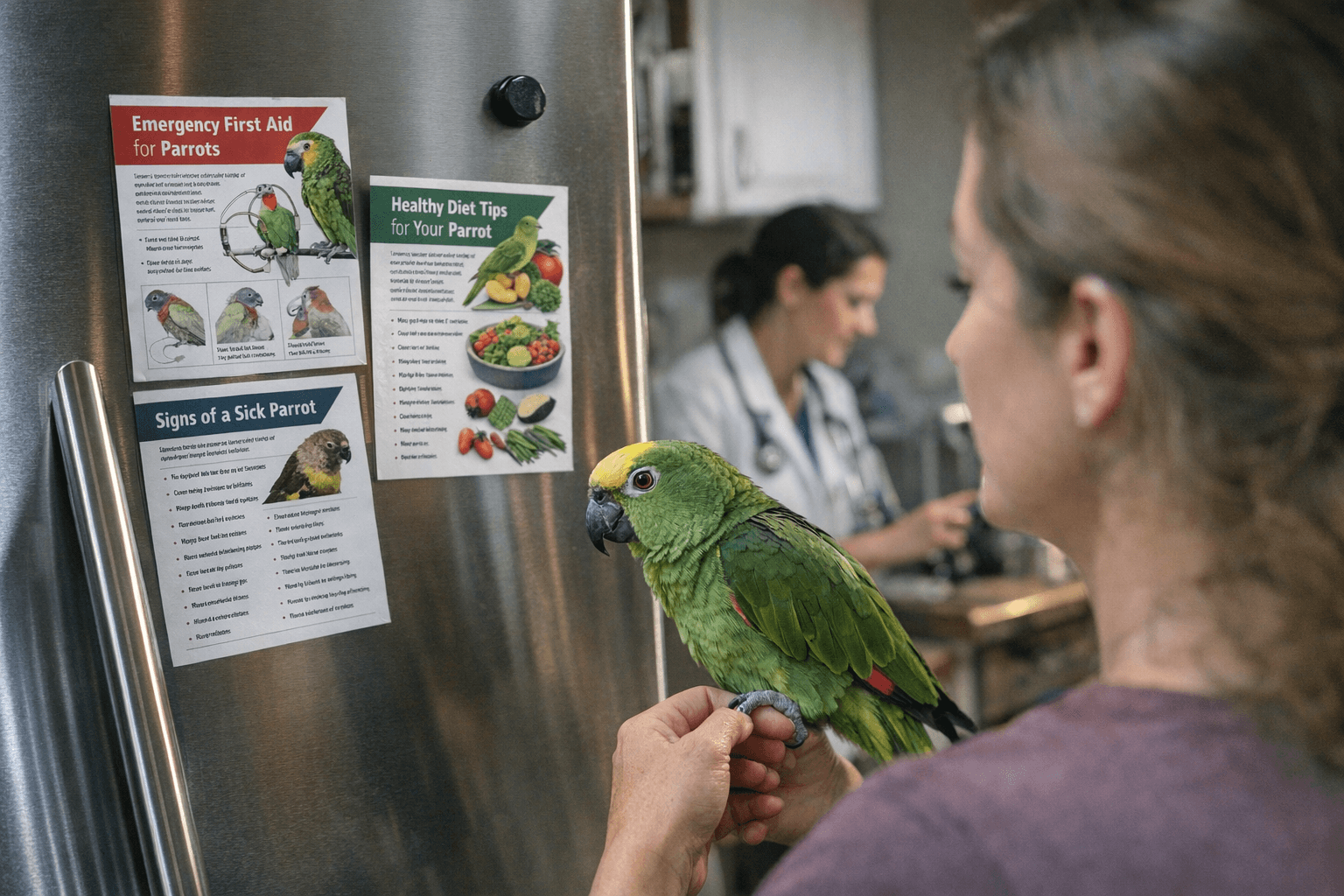
Work with an avian-certified veterinarian, not a generalist. Annual wellness exams should include PCR testing for psittacine beak and feather disease, psittacosis, and Avian Bornavirus. These are the infections that move silently through a flock for months before symptoms emerge.
Run HEPA filtration in your bird room. Feather dust is a documented respiratory hazard for both birds and humans. Above one bird in a household, air filtration stops being optional.
Write down a diet protocol and follow it with genuine consistency. Species-appropriate nutrition means fresh produce, quality formulated pellets, and minimal seed. Document what you feed and when. Intentional changes are manageable; untracked drift is not.
Keep a maintenance log. Record every cage clean, diet change, behavioral observation, and vet visit by date. Patterns in the data surface problems weeks before they become emergencies.
Rotate enrichment on a weekly schedule. A bored parrot is a self-destructive parrot. Treat foraging enrichment and novel stimulation as preventive medicine rather than decoration.
Pre-identify an emergency avian vet before you need one. Locate your nearest 24-hour avian clinic and save the number now. A wing injury or respiratory event will not wait for a Google search.
Name an emergency caretaker and train them properly. This person should know your birds' feeding routines, behavioral baselines, and vet contacts before any emergency occurs. Contingency planning is basic animal welfare, not a precaution for extreme scenarios.
Understand the genetics of what you are keeping. Conservation breeding programs like Lemssouguer's maintain full genetic records to maximize population diversity. Even hobbyist owners of breeding pairs benefit from knowing bloodlines and understanding what responsible pairing looks like.
Think in decades, not years. A hyacinth macaw, one of the Arini tribe that inspired Lemssouguer's fund name, can live 60 years. Many large parrots outlive their owners. Every decision about which bird to bring home should account for the full arc of that animal's life, not just the excitement of the first few months.
Know something we missed? Have a correction or additional information?
Submit a Tip