Indonesia officers seize 15 trafficked Papuan birds at Ambon port
Officers found 15 Papuan birds hidden on a passenger vessel in Ambon, and one variable pitohui was already dead when the crates were opened.

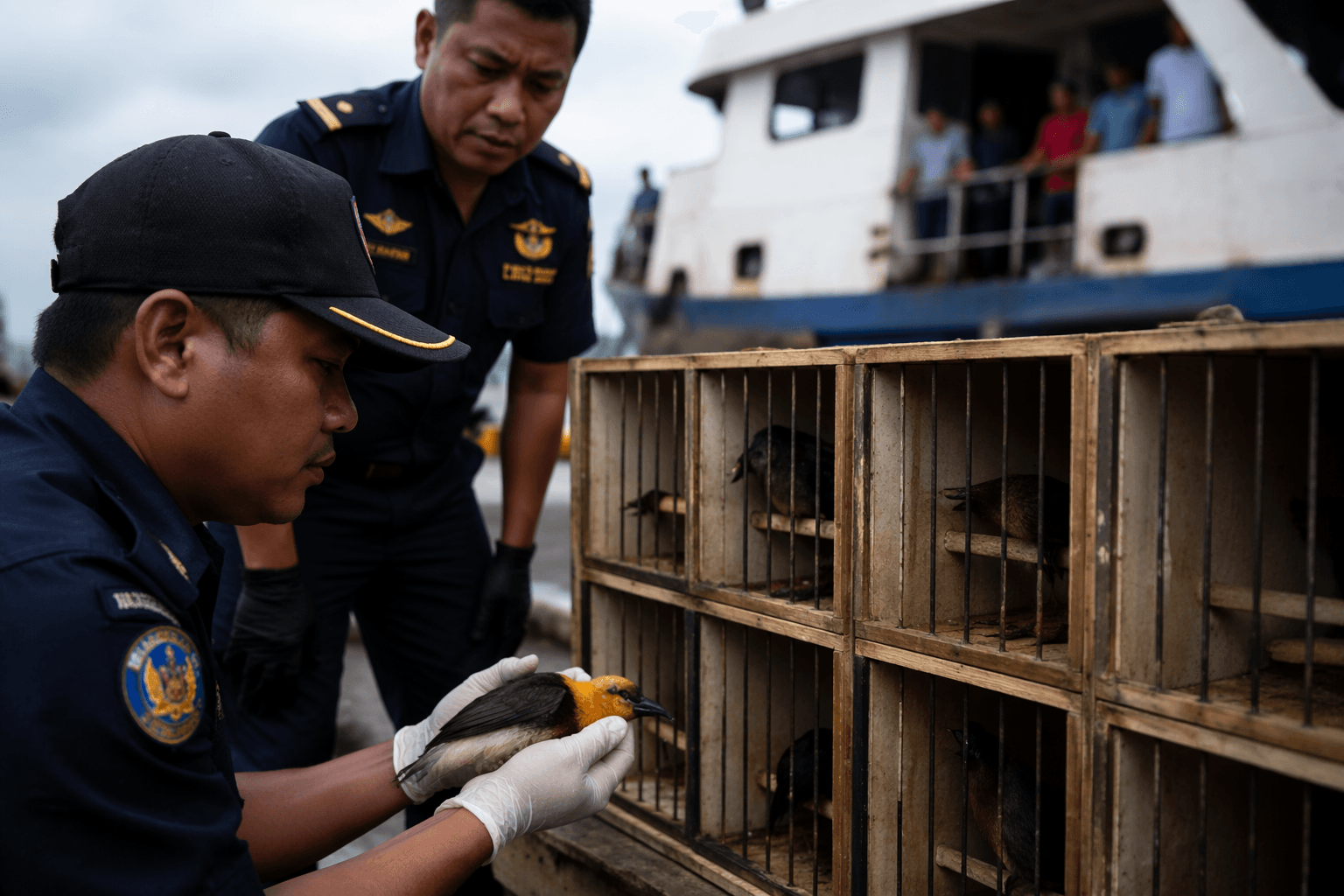
Officers at Yos Sudarso Port in Ambon stopped a shipment of 15 Papuan birds hidden aboard a commercial passenger vessel, including a sulfur-crested cockatoo, two eclectus parrots and a black-capped lory. One variable pitohui was already dead when the multi-agency team opened the makeshift containers tucked along the outer starboard sides of Decks 5 and 6.
The June 25 interception brought together the Maluku Natural Resources Conservation Agency, the Ambon port authority, PT Pelni, port police, quarantine officials, military intelligence and the navy. That kind of response is not routine theater. It is what wildlife trafficking looks like when it slips across transport, customs and conservation boundaries at once, with birds hidden in cramped spaces, no legal transport documents and no room for oxygen, rest or calm.
The surviving birds were moved to the Maluku Islands Wildlife Conservation Center for veterinary isolation and behavioral rehabilitation before any possible reintroduction. That step matters as much as the seizure itself. Birds pulled from illegal cargo do not simply need removal from a ship; they often need treatment for stress, monitoring after poor ventilation and time to recover from the fear and physical strain of confinement.
Sulfur-crested cockatoos, eclectus parrots and black-capped lories are among the species strictly protected under Indonesian law. Protected-species transport requires a permit under PP No. 7 Tahun 1999, while Permen LHK No. 20 Tahun 2018 sets out the current protected-species list and Permen LHK No. 17 Tahun 2024 covers rescue, assessment and monitoring procedures. A bird offered for sale without clear origin papers, transport permits or a health history carries the same warning signs that surfaced on Decks 5 and 6: the paperwork trail is broken before the bird ever reaches a home.
Ambon has seen that pattern before. On June 8, Maluku BKSDA seized three Timor deer horns and several endemic birds at Pattimura Airport, and another Ambon port operation blocked a separate protected-wildlife smuggling attempt aboard KM Ciremai during a June 24 to 25 inspection window. Conservation groups estimate as many as 10,000 parrots are poached each year in Maluku, and BKSDA Maluku data cited by Antara recorded 1,299 parrots seized from illegal trade between 2010 and 2019.
The Maluku Conservation Center, built with about USD 2.7 million in green sukuk funding supported by UNDP, is meant to turn those seizures into recovery. In this case, the hidden crates on a passenger deck ended in veterinary isolation, where the birds could finally be treated as living patients instead of cargo.
This article was produced by Prism’s automated news system from verified source data, official records, and press releases, then run through automated quality and moderation checks before publishing. The system is built and supervised by the people who set the standards it runs under. Read our full AI policy.
Did this article answer your question?