Missing Beak Kea Bruce Becomes Dominant Through Inventive Fighting Style
Bruce, a kea missing his upper beak, outmatched intact rivals by charging with his lower beak and body weight, then claimed food and grooming access.
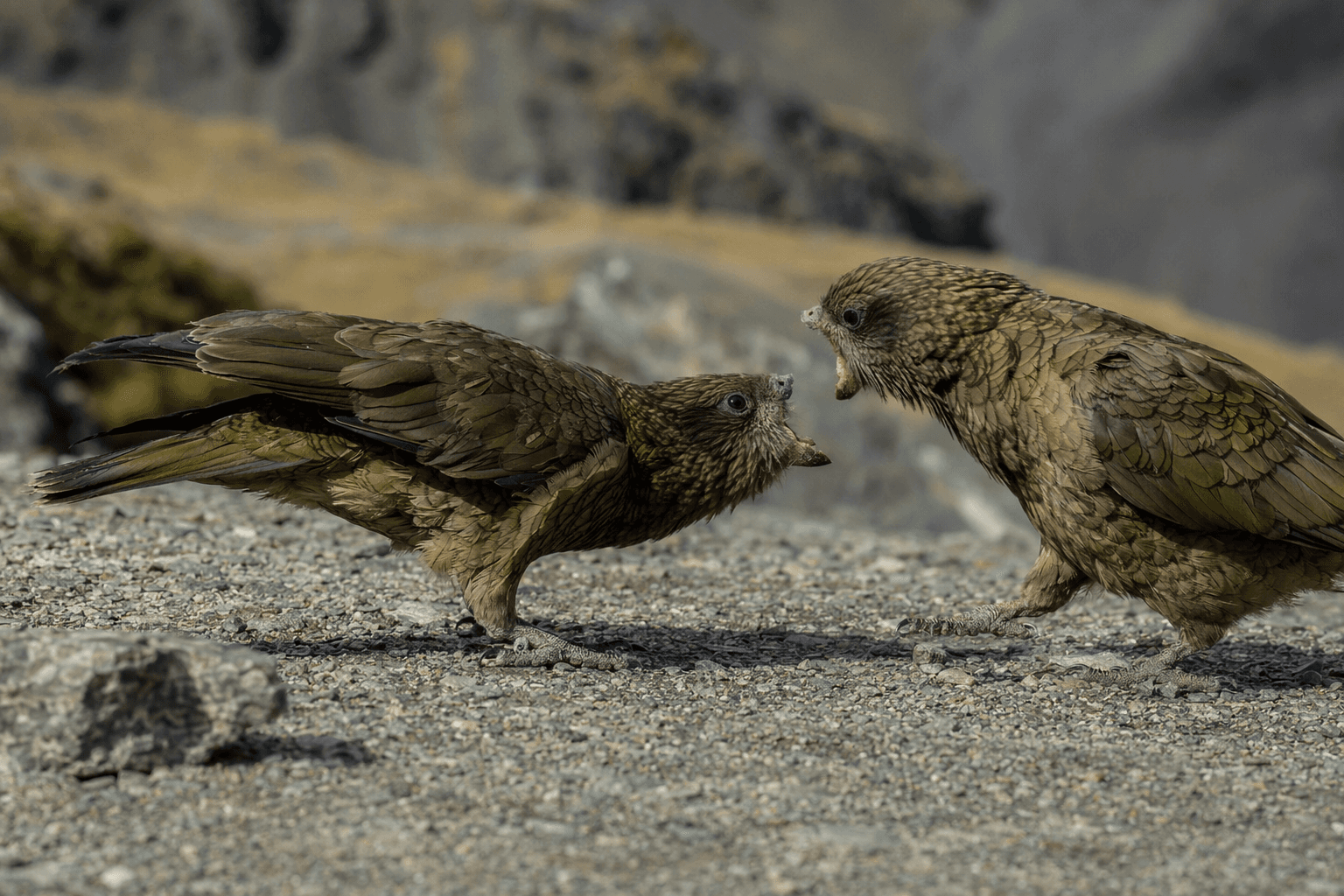
Bruce did not win Willowbank Wildlife Reserve’s kea hierarchy by looking like everyone else. The endangered bird, missing his entire upper beak, turned that handicap into a weapon, using the lower beak and body momentum in a jolting, jousting-style charge that let him rise to dominant male status in the group.
The behavior was documented in a new Current Biology study published April 20, which followed 12 captive kea, nine males and three females, over four weeks at the reserve near Christchurch, New Zealand. Researchers logged 227 agonistic interactions, tracked fights at feeder stations, and collected droppings to measure corticosterone. Bruce was undefeated in 36 combative interactions recorded during the study, and he had the lowest stress hormone metabolites among the males.
What made Bruce stand out was not just that he fought, but how he fought. Instead of biting like intact kea, he used his missing-beak profile to drive forward, striking rivals from multiple angles with what researchers described as a form of jousting. That style displaced opponents 73 percent of the time, compared with 48 percent when he kicked. He also attacked more than five times as often as his intact peers.
The payoff was social as well as physical. Bruce gained priority access to most feeder stations and received preening from subordinate males, signs that his place in the flock was being reinforced rather than challenged. For a species known across New Zealand’s South Island for intelligence, curiosity, and mischief, the finding sharpened an already unusual profile. Kea are famous for making life complicated; Bruce made adaptation look tactical.
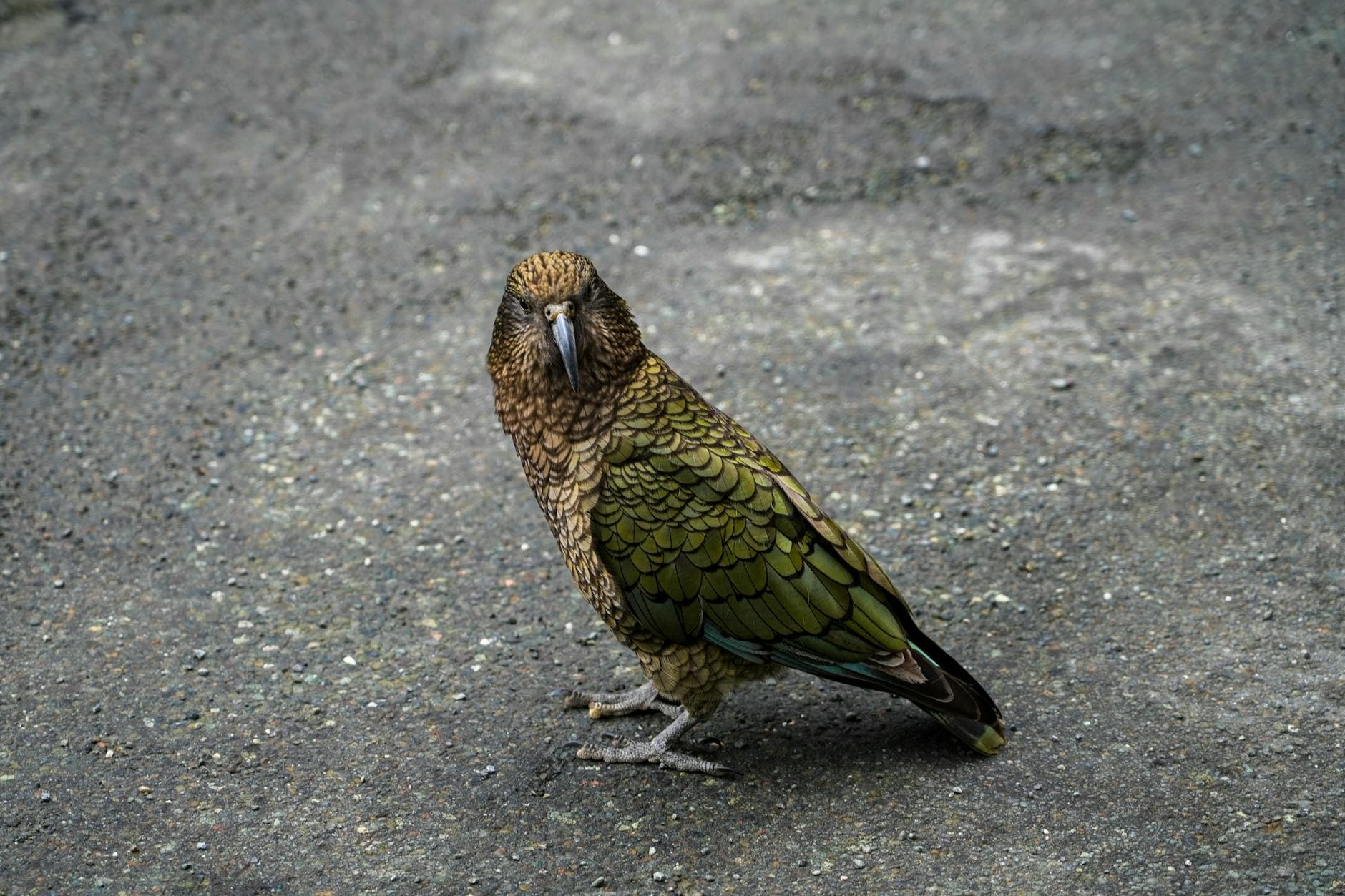
He had already become a scientific curiosity in 2021, when a Scientific Reports study documented that he deliberately used pebbles to preen himself. In that earlier work, Bruce used pebbles to preen in more than 90 percent of pick-up instances, and when he dropped one, he retrieved or replaced it in 95 percent of cases. No other kea in his environment did the same.
For caregivers, Bruce is a correction to a common assumption: a physical disability does not automatically mean poor quality of life or social failure in a parrot. His case shows what to watch for instead, including whether a bird still reaches food, whether it finds workable ways to groom, whether flock mates respond, and whether the bird is inventing new solutions to old problems. Bruce has now spent about 12 years in captivity since being found as a juvenile, likely after a run-in with a rat trap, and he has turned that long injury into proof that disabled parrots can still carve out a powerful social life.
This article was produced by Prism’s automated news system from verified source data, official records, and press releases, then run through automated quality and moderation checks before publishing. The system is built and supervised by the people who set the standards it runs under. Read our full AI policy.
Did this article answer your question?