Parrot enrichment guide shows how toys prevent boredom and damage
If your parrot is screaming, chewing the wrong things, or ignoring old toys, the fix is usually rotation, not more clutter. Match toys to foraging, shredding, and problem-solving, and you change the whole mood of the cage.
Why this matters in your home
The fastest way to spot a parrots-care problem is often the soundscape. A bird that is bored or under-stimulated will usually make its own fun, and that can show up as screaming, feather damage, biting, or destruction that starts at the cage and spreads into the room. The practical payoff is simple: when you treat enrichment as part of daily care, you are not just entertaining a bird, you are preventing the behaviors that make life harder for both of you.
Good welfare is more than a clean bowl and a safe perch. The American Veterinary Medical Association frames animal welfare as a mix of physical and mental wellbeing, and the RSPCA says pet birds should have opportunities to do the things birds naturally do, including flying, climbing, perching, hiding, feeding, and roosting. Toys are one part of that setup, but they work best when they support the whole routine instead of sitting there as decoration.
The real job of an enrichment toy
A useful toy gives a parrot something to do with its brain and its beak. The most effective setups create chances to chew, climb, forage, manipulate objects, and explore, because those activities mirror the work birds would be doing in the wild. A toy that invites a bird to solve a small problem or earn a reward usually has more staying power than a bright object that only looks interesting to people.
That is why the best plans are individualized. Different parrots fear different textures, ignore different materials, and target different parts of a toy. A bird that loves shredding paper may treat hard acrylic as scenery, while another bird may need a puzzle feeder to stay busy long enough to stop pacing and yelling. The point is not to buy more things, but to match the toy to the bird.
Rotation is the easiest behavior fix most owners skip
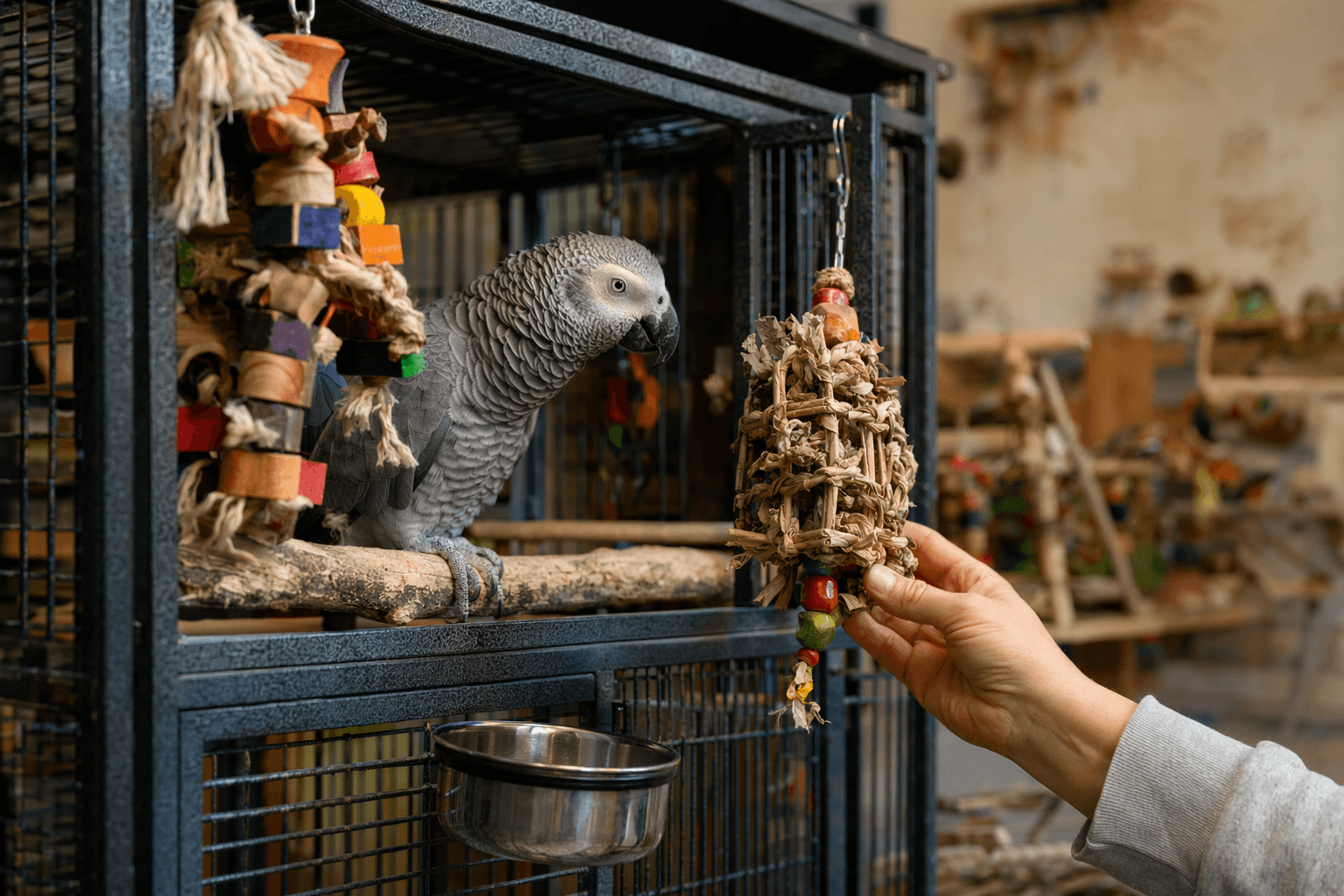
One of the most useful ideas in enrichment is also one of the simplest: rotate toys regularly. Even a favorite item can fade into background noise if it never changes, and a cage that never changes can make a smart bird act like it has nothing to do. Refreshing the environment keeps the bird curious, which is often the difference between a toy that gets ignored and one that becomes part of the daily routine.
This is the week-to-week change that matters most if your parrot seems restless. Swap out a few items, change the location of a hanging toy, introduce a new texture, or bring back an object that was stored for a while. Freshness does not require a full cage makeover; it requires enough novelty to make the bird think again.
Match the toy to the behavior you want to support
The Association of Avian Veterinarians is clear that foraging enrichment should stimulate parrots to search for food, procure it, and then extract or process it. That is a very different goal from handing over a single item and hoping for the best. When you build around foraging, you give the bird a task, and that task can absorb the energy that might otherwise go into screaming or feather picking.
A recent study on grey parrots tested a foraging enrichment designed to increase the diversity and complexity of foraging tasks, which fits a wider pattern in parrot welfare research. Captive parrots face major mismatches from wild environments, especially in social complexity and in chances to forage, make decisions, and solve problems. Species that naturally rely on diets requiring substantial handling were also found to be more prone to feather-damaging behaviors in captivity, which makes the case for giving beak-work and problem-solving a bigger role in everyday care.
Why the learning curve matters
One reason owners give up too early is that parrots may need time to understand a new toy. The AAV cites a study in African grey parrots showing it took an average of 8 days to learn nutritional enrichment items such as puzzle feeders. That is a useful reality check, because a toy that is untouched on day one is not necessarily a failure.
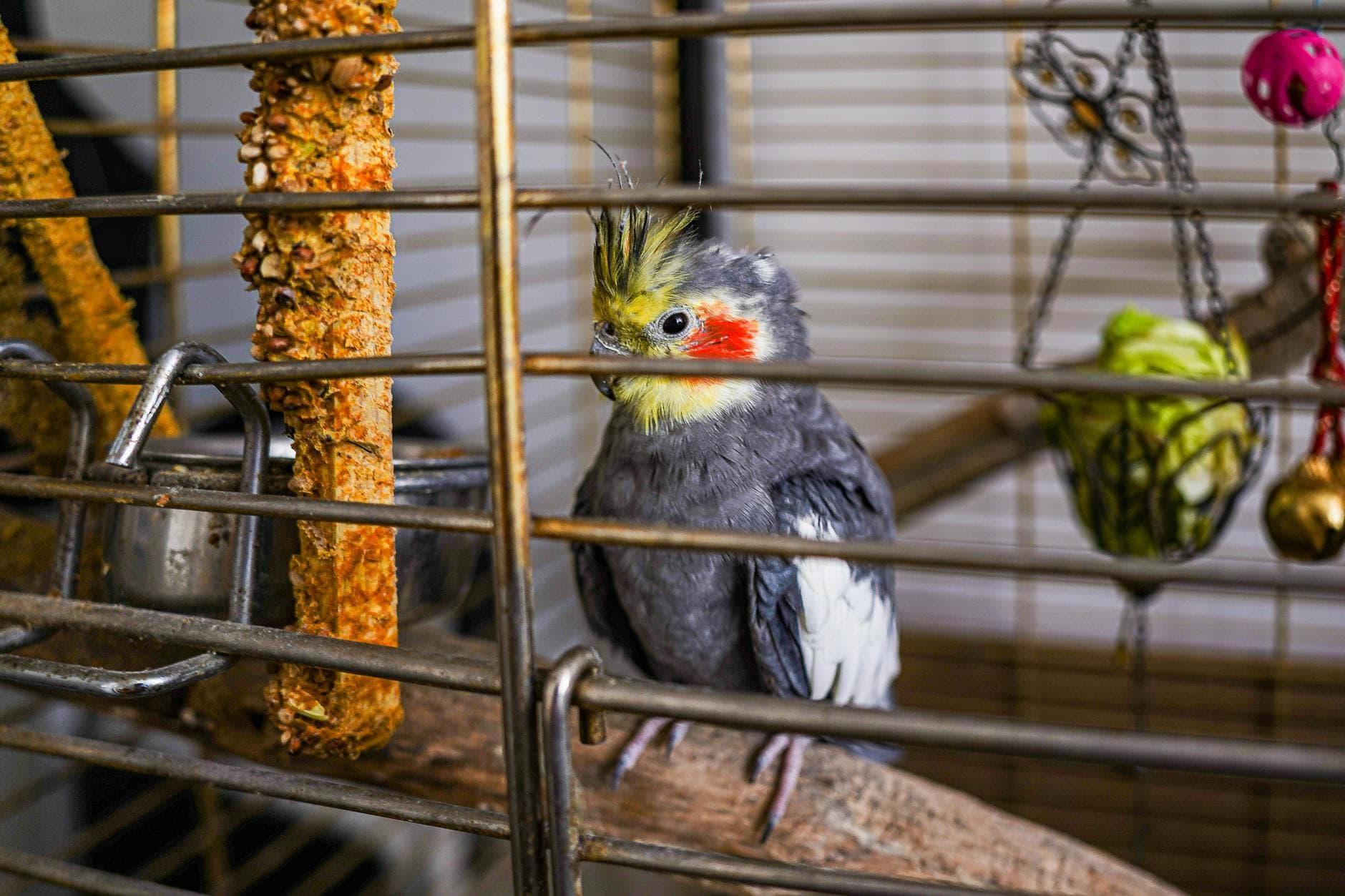
Instead of assuming your bird hates it, look at the learning process. Some parrots need repetition before they understand that food is inside a toy, or that shredding one part of a puzzle reveals a reward in another. If you want enrichment to work, give the bird enough time to figure it out before you judge the item.
Feather damage is often a behavior story before it is a skin story
When feather damage starts, it is easy to think only about the feathers themselves. Merck Veterinary Manual points to a broader set of behavioral causes in captive parrots, including boredom, sexual frustration, territoriality, compulsive behavior, predator stress from household pets, and a lack of parental training for preening. Merck also notes that bored pet birds can develop biting, screaming, or feather pulling, which makes enrichment part of the prevention plan rather than an optional extra.
That is why the housing setup matters just as much as the toy basket. If the bird is constantly exposed to stressors, lacks stimulation, or never gets to work for food, the enrichment will have less impact. A stable environment, social contact, and regular updates to the bird’s surroundings all help keep the behavior picture from sliding into damage.
What to look for when choosing toys
The best toy is not always the flashiest one. It is the one that fits the bird’s size, chewing style, and comfort level, and it should be made from materials and components that are safe for that individual bird. Some toys are too noisy, too fragile, or built with parts that are simply wrong for the bird in front of you, which is why suitability matters more than color.
- Does it invite chewing, shredding, climbing, or foraging?
- Is it sturdy enough for the bird’s bite and play style?
- Does it create a small problem to solve, rather than instant payoff?
- Is it the kind of object the bird can learn to use over time?
- Can it be rotated out before it becomes boring?
A practical shopping checklist looks like this:
That final point matters because a toy is not useful forever just because it was popular once.
Build a home plan, not a toy pile
The birds that do best usually live in environments where enrichment is mixed into the day, not bolted on as an afterthought. That can mean a foraging opportunity with breakfast, a shred toy later in the day, a climbing item in a different spot, and a fresh puzzle to work on after the bird has settled. The broader idea is to keep the bird doing bird things, especially search, manipulate, chew, climb, and solve.
That is also where DIY ideas and commercial options both have a place. A busy household may need durable purchased toys for some tasks and simple homemade options for others. What matters is not whether the toy came from a store or your kitchen table, but whether it gives the bird something meaningful to do and then changes often enough to stay interesting.
The bottom line
If your parrot is restless, screaming, or ignoring the same old toys, the fix is rarely to add more of the same. Rotate the environment, match the toy to the bird’s actual behavior, and build around foraging, chewing, climbing, and problem-solving. When enrichment is intentional and fresh, it does more than fill space in the cage, it helps keep boredom from turning into damage.
This article was produced by Prism’s automated news system from verified source data, official records, and press releases, then run through automated quality and moderation checks before publishing. The system is built and supervised by the people who set the standards it runs under. Read our full AI policy.
Did this article answer your question?