How to Tell Whether a Parrot Bite Comes From Fear or Aggression
A parrot bite is usually a warning, not a verdict. Read the body language fast, and you can change the next 10 seconds before skin gets broken.
What the bite is really saying
A bite is not one story, and it is definitely not always “bad behavior.” The faster you can tell fear from aggression, the faster you can change what happens next, because the bird that feels trapped needs distance, while the bird that is amped up may need structure, enrichment, or a better handling routine.
That is the practical shift Parrot Care Central pushes here: stop treating every bite like rebellion. Start treating it like information. In the home, that changes everything from how you approach the cage to how you move your hands in the final seconds before contact.
Fear bites look defensive, not dominant
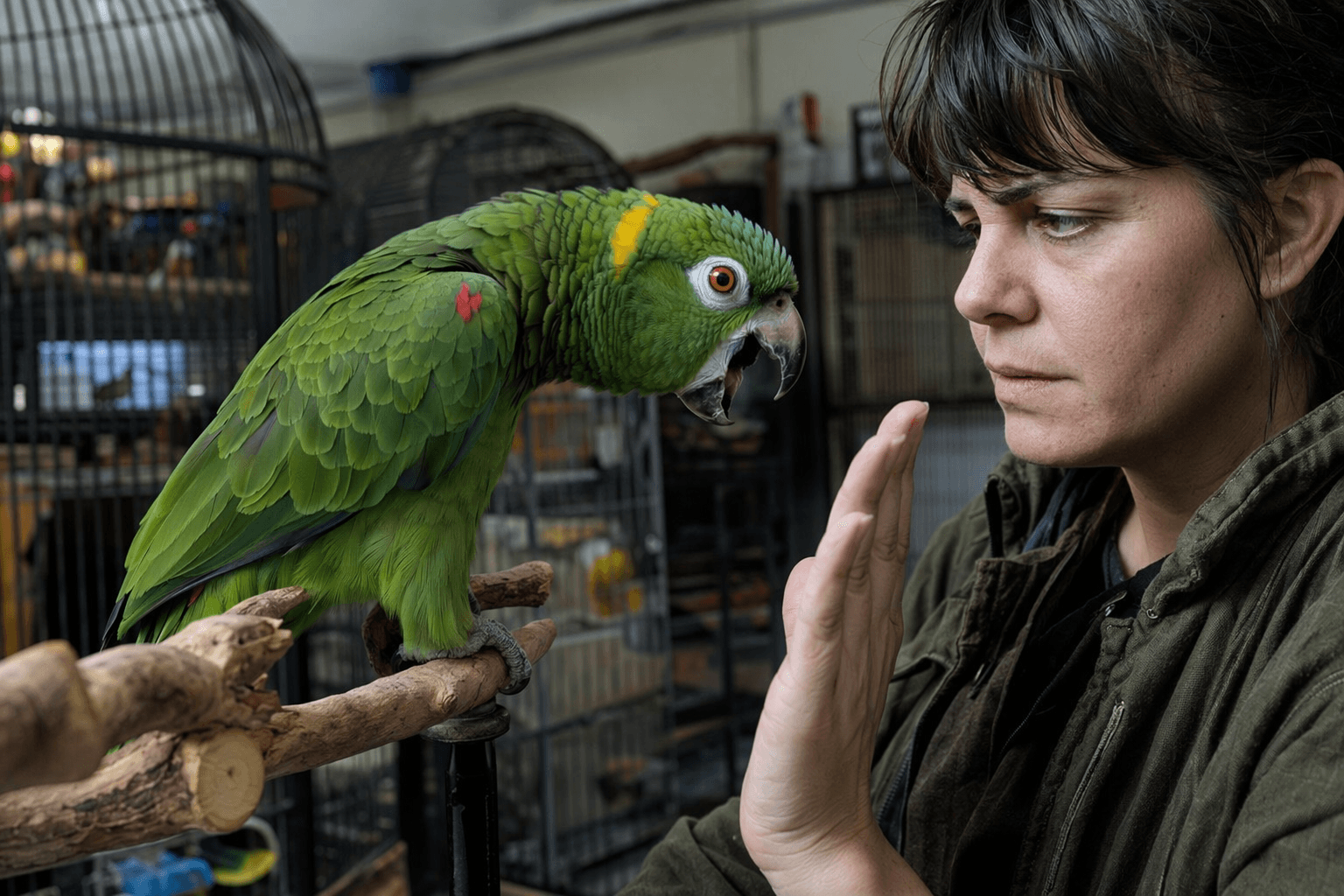
Fear bites are often preceded by a bird trying to increase space. The body usually tells on itself first: leaning away, wide-open eyes, a low crouch, quivering wings, feathers held tight to the body, a raised crest in cockatiels and cockatoos, an open beak, a tall stance, and head-rocking from side to side. Those cues are the bird saying the pressure is too much.
The important part is that fear can show up even in calm birds. The Association of Avian Veterinarians notes that birds can show fear, anxiety, and stress immediately after entering a veterinary hospital, and even restraint or towel handling can trigger it. That means the bird in front of you may not be “acting out” at all. It may be trying to survive a moment it cannot yet control.
Aggression, overstimulation, and territoriality are not the same thing
A bite that looks angry may actually be one of three different problems: territorial behavior, overstimulation, or true aggression. Sudden biting can also be tied to pain, stress, reproductive hormones, or underlying illness, which is why the safest reading is never just “my bird is mean.”
This is where the function of the behavior matters. The bird may be defending a perch, a person, a nest-like corner, or even a favorite toy. It may be over threshold from too much noise, too much handling, or too much excitement. Or it may be communicating discomfort from something medical, which is why behavior and health need to be considered together instead of separately.
What to do in the 10 seconds before a bite
The most useful skill is not hindsight. It is reading the last few seconds before the lunge. Watch the room, the pace, and the hands.
- Slow down your movement instead of reaching faster.
- Keep your hands quiet and predictable.
- Give the bird space if you see leaning away, tight feathers, or an open beak.
- Back off from the cage, perch, toy, or doorway if the bird is guarding that spot.
- Reduce noise, crowding, and sudden motion in the environment.
- Do not grab, corner, or scold the bird in the moment.
Those few seconds matter because many bites are preventable if you respect the warning signal instead of challenging it. A bird that is already telling you “no” does not need a lesson in dominance. It needs the pressure removed before the bite becomes the only remaining option.
The body-language clues to trust first
The clearest clues are often the simplest. Leaning away from a hand or object means the bird wants distance. Wide-open eyes, a low crouch, feathers pulled tight, quivering wings, an open beak, and a tall stance all point to tension rising, not settling. In cockatiels and cockatoos, a raised crest is another obvious sign that arousal is climbing.
Head-rocking from side to side is especially worth respecting because it often shows the bird is trying to assess risk or decide whether to bolt or bite. Once you see a cluster of these signals together, the next move should not be to test the bird. It should be to lower the demand immediately.
How to tell fear from true aggression in real life
Fear bites usually come with retreat signals first. The bird is trying to create distance, brace itself, or get away from a person or object it does not trust. Aggressive or territorial bites are more likely to show up when the bird is trying to control access to a space, a person, or a resource, especially when the same pattern repeats in the same location.
That distinction matters because the fix changes with the cause. A frightened bird needs calmer handling, safer setup, and better spacing around triggers. A territorial or overstimulated bird may need a reset in routine, more enrichment, and clearer limits around the situations that keep setting it off.
Why medical causes have to stay on the table
If biting changes suddenly, assume there may be a health piece before you assume there is a training piece. Veterinary sources note that pain, stress, hormones, and illness can all feed into biting, and behavior problems can then make the bird more stressed, which creates a cycle that keeps repeating.
That is why integrated medical and behavior assessment is so important. If a bird is biting more than usual, guarding itself, or reacting more sharply to touch, a vet visit should not be treated as optional. The earlier you rule out pain or illness, the faster you can stop guessing.
Enrichment helps when the behavior has a job
Captive birds keep the natural behaviors they were born with, and in abnormal captive settings those behaviors can turn into problems. That is not a moral failure, it is a setup problem. The Association of Avian Veterinarians emphasizes that enrichment can help reduce undesirable behavior by replacing it with a more appropriate behavior that still lets the bird achieve the same goal.
That is the real win: not just stopping the bite, but giving the bird something better to do instead. If the bird bites to control space, give it choices and safer distance. If it bites from frustration or boredom, increase enrichment and predictability. If it bites because handling is too abrupt, change the handling itself.
When to bring in an avian specialist
If the biting is sudden, escalating, or paired with other changes in posture, appetite, or energy, get professional help. The Association of Avian Veterinarians describes pet-bird care as a specialist field for a reason, and it backs that up with a Bird Owner Resource Series, a Find-A-Vet function, and species-specific care brochures for budgies, canaries and other finches, cockatiels, cockatoos, conures, eclectus, grey parrots, lories, lovebirds, macaws, and quakers.
That kind of species-specific support matters because a conure’s patterns, a cockatoo’s crest language, and a grey’s stress signals are not interchangeable. The better the match between the bird’s behavior and the care plan, the less often biting becomes the language of last resort.
A bite is easiest to prevent when you treat it as a warning system, not a character flaw. Read the body, slow the hands, lower the pressure, and respond to the cause instead of the noise, because the best bite prevention happens before the beak ever closes.
This article was produced by Prism’s automated news system from verified source data, official records, and press releases, then run through automated quality and moderation checks before publishing. The system is built and supervised by the people who set the standards it runs under. Read our full AI policy.
Did this article answer your question?