Parrot training takes time, trust, and patient positive reinforcement
Training a parrot is a trust project, not a countdown. Start with 5-minute sessions, track milestones, and let the bird set the pace.
How long should parrot training actually take?
Long enough for trust to stick, short enough that your bird still wants to show up tomorrow. That is the real answer, and it is why anyone promising a fixed number of days is overselling the job. Parrot training is shaped by species, age, personality, daily routine, and the difficulty of the behavior you are asking for, so the clock is different for every bird.
The big mindset shift is simple: training is not about forcing compliance. The clearest avian-care guidance keeps coming back to the same point, from Lafeber Company to the Association of Avian Veterinarians and the RSPCA: trust and positive reinforcement are the foundation, and patience is not optional. If the bird does not feel safe, learning slows down fast. If you rush, you are more likely to get biting, screaming, or a bird that shuts down and refuses to participate.
The first milestone is safety, not performance
Before you think about a perfect step-up or a polished recall, you want your bird to stay calm in the training context. That might mean accepting your presence near the cage, leaning toward a hand instead of away from it, or staying engaged for a few seconds without alarm. For some birds, that happens quickly. For others, especially birds with a shaky history or a strong fear response, it takes repetition before the body language changes.
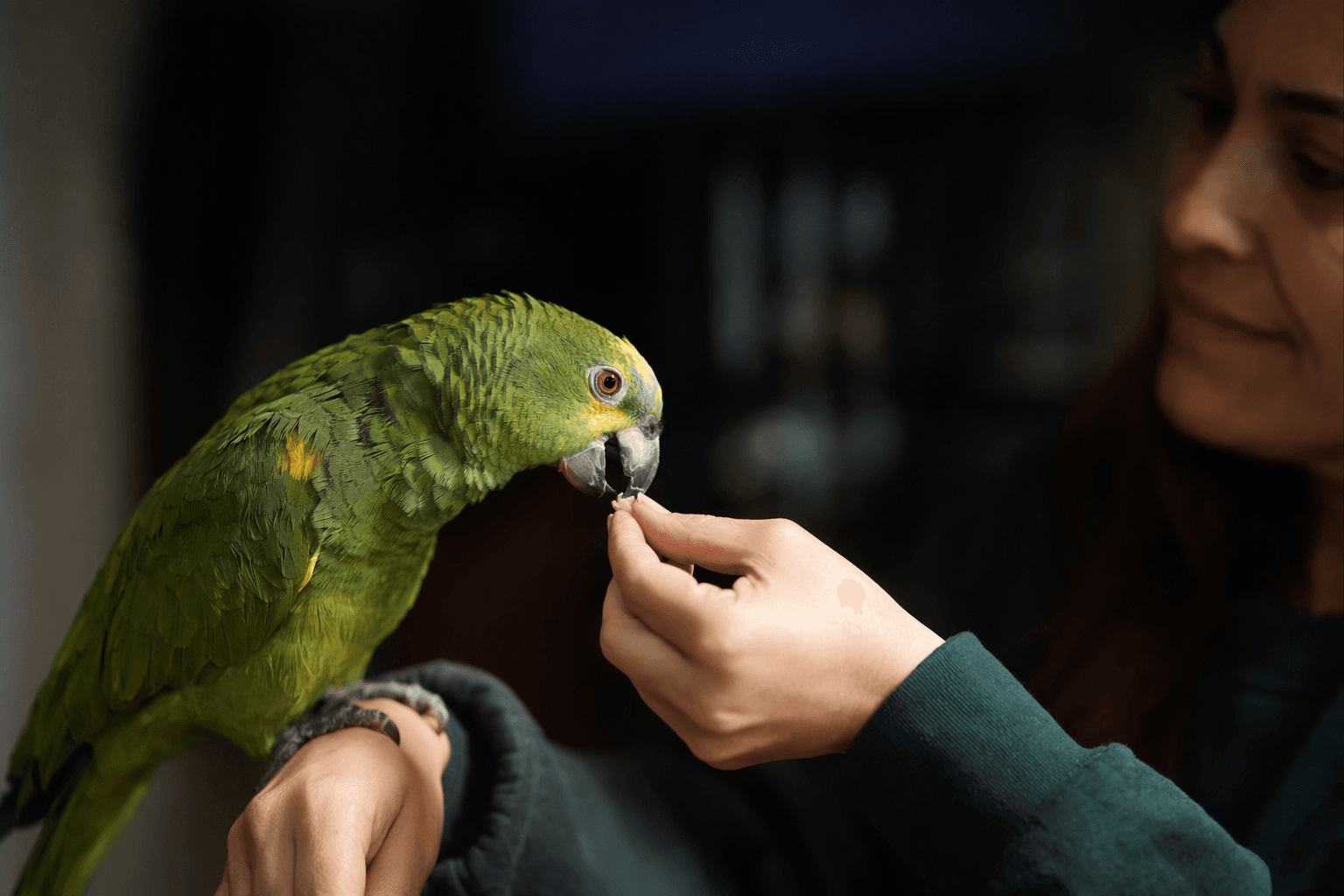
This is where session length matters more than ambition. The BSAVA keeps training brief, saying sessions should not run longer than your parrot’s attention span, often as little as 5 minutes to start with. The Association of Avian Veterinarians is equally direct: positive reinforcement training can begin with just 5-minute sessions per day. That is not a gimmick. Short sessions give you enough time to get a clean win and stop before fatigue turns the lesson into a fight.
What changes the clock
If training seems slow, one of these factors is usually doing the heavy lifting:
- Species and temperament: some parrots are naturally bolder, while others are cautious from the start.
- Trust level: a bird that already sees you as safe will learn faster than one that is still evaluating every move.
- Daily routine: birds do better when training shows up at predictable times.
- Session length: too long, and you lose attention. Too short or too random, and you never build momentum.
- Task difficulty: target touches are one thing; carrier work, medical cooperation, or behavior change under stress takes longer.
That is why milestone-based expectations make more sense than deadlines. A relaxed bird may learn to touch a target fairly quickly. A nervous bird may need weeks of low-pressure repetition before that same behavior feels reliable. More complex behaviors can take much longer because you are not just teaching the action, you are teaching the bird to stay emotionally steady while doing it.
Target training is the workhorse skill
If you want one method that opens doors, target training is it. The Association of Avian Veterinarians describes it as a positive reinforcement method where the bird is asked to touch an item, the target, to earn a reinforcer. That may sound basic, but it is the cleanest way to build a training language your bird can understand.
Once target touch is solid, you can use it to teach useful behaviors like stepping into a carrier, moving onto a perch, or even building toward a spin. The point is not to chase tricks for their own sake. It is to create a bird that can cooperate more safely and more willingly in daily life, including its own medical care. That is a huge quality-of-life win inside the home, because a bird that can be guided without a struggle is easier to handle, easier to transport, and less likely to have every routine turn into a standoff.
A realistic timeline looks like this
Think in milestones, not calendars. Early wins might show up in days if your bird is comfortable and food-motivated. For a more cautious bird, those same wins may take longer because the first job is simply making the session feel predictable and safe.
A practical progression often looks like this:
1. First, the bird tolerates the training setup.
Your bird stays calm enough to notice the reward and the target.
2. Then, the bird makes a simple response.
Touching the target, orienting toward your hand, or holding position for a beat are all useful signs of progress.
3. Next, the bird repeats the behavior on purpose.
This is where consistency starts to matter more than luck. You are no longer hoping for one good moment. You are building a pattern.
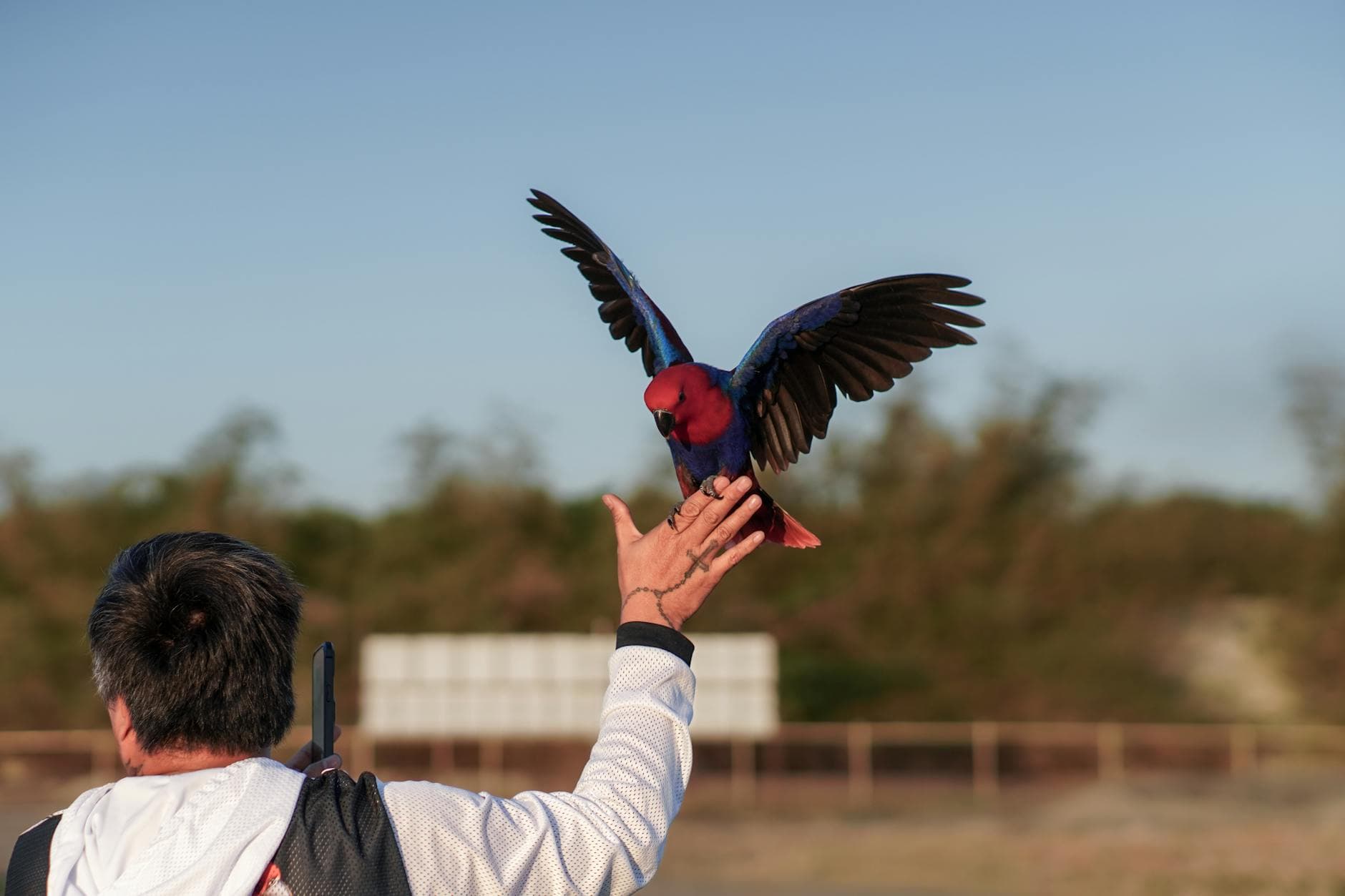
4. After that, you can chain behavior into real-life tasks.
Stepping into a carrier or cooperating with handling only comes after the bird has learned that training is safe and rewarding.
That is the part frustrated owners often miss. A bird that performs once is not trained. A bird that repeats the behavior without escalating stress is.
Why patience is part of welfare, not just manners
The time investment matters because parrots are not low-needs pets. An avian enrichment guidance from the Association of Avian Veterinarians notes that wild parrots may spend 240 to 360 minutes per day foraging, while captive parrots may spend only 30 to 72 minutes. That is a massive gap in daily activity, and it helps explain why training and foraging enrichment are such important parts of care.
Research also makes the housing picture hard to ignore. A peer-reviewed study found that about half of all Psittaciformes live in zoos, breeding centers, or private homes. Another study from 2003 described stereotypies in caged parrots as abnormal repetitive, unvarying, functionless behaviors often linked to barren captive environments. In plain English, a bored or under-stimulated parrot is not just inconvenient. It is at risk of developing behaviors that make life harder for everyone in the room.
That is why training is worth the time even when progress feels slow. It gives the bird structure, mental work, and a predictable way to succeed. It also helps prevent the common trap of punishing a bird for acting like a bird. Positive reinforcement works better because it teaches cooperation without breaking trust.
The bottom line
If you want the honest timeline, here it is: start with 5-minute sessions, expect trust to lead the way, and judge progress by milestones rather than by days on a calendar. The best training is the kind your parrot can keep sustaining, because consistency beats speed every time. When you build that way, you are not just teaching a behavior. You are building a bird that feels safe enough to learn again tomorrow.
This article was produced by Prism’s automated news system from verified source data, official records, and press releases, then run through automated quality and moderation checks before publishing. The system is built and supervised by the people who set the standards it runs under. Read our full AI policy.
Did this article answer your question?