Parrot sexing guide compares visual clues and DNA testing options
Most parrots won’t reveal sex by looks alone, and the wrong guess can skew names, pairings, and care. DNA testing becomes worth it when certainty matters at home.
Why looks can mislead
Most pet birds are not sexually dimorphic, which is the plain-language reason so many parrots are missexed by appearance alone. The Merck Veterinary Manual and a peer-reviewed review of captive birds both point to the same problem: external morphology often does not give a dependable answer, especially in young birds.
That is where the myths start. A bird may look “male” or “female” to a household based on size, feather pattern, or behavior, but those clues can be weak or flat-out wrong. If the bird is still young, growing into maturity, or changing as hormones kick in, a visual guess can turn into a long-term mistake in naming, pairing, and recordkeeping.
When visual clues help, and when they do not
Visual sexing has a narrow lane. It can be useful only in the relatively small group of species that show clear sexual dimorphism, where males and females differ in a visible way. For most companion parrots, though, that lane is too narrow to trust on its own.
The practical takeaway is simple: if the bird’s species is known for obvious external differences, a visual check may be a starting point. If the species is one of the many that are sexually monomorphic, appearance alone should not drive decisions. That matters most in young birds, where plumage and body traits may not yet reflect adult differences, and in household settings where people can easily confuse individual variation with sex-linked traits.
Why DNA testing became the standard backup
DNA sexing matters because it answers a question that appearance often cannot. In modern avian care, that certainty is especially valuable for companion birds, breeding assumptions, and veterinary planning. The shift toward molecular sexing fits a broader change in avian medicine, where wellness care, behavior, and nutrition now sit alongside disease prevention as core parts of management.
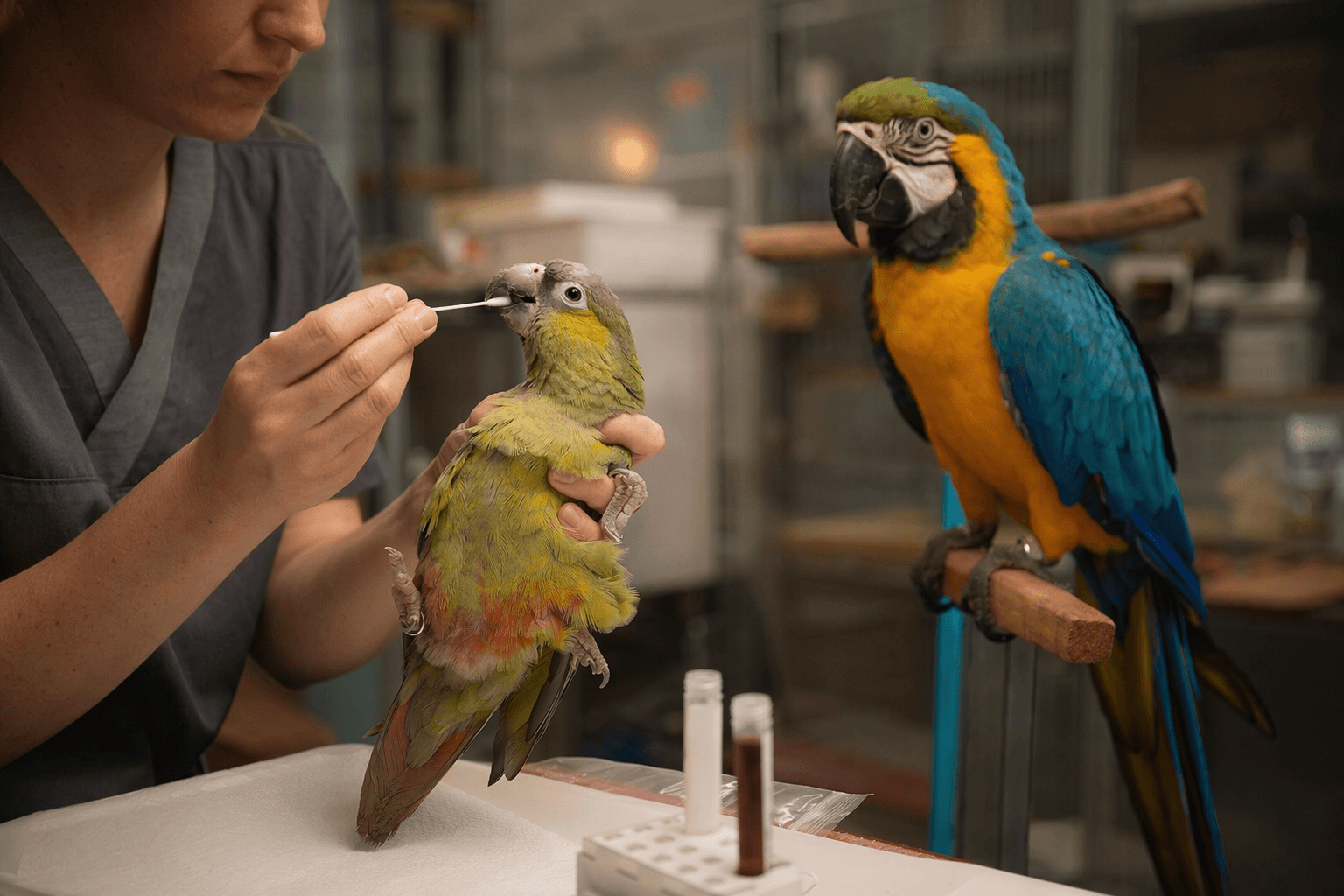
The molecular story has real history behind it. Blood DNA sexing in psittacine birds was pioneered by Joy Halverson, DVM, in 1985. Later work on avian sex chromosomes, including research by Anna-Karin Fridolfsson, Hans Cheng, and Hans Ellegren, helped validate CHD1-based markers as a reliable basis for sex identification. That matters because it is not a casual guess method, it is a tested molecular tool built on known chromosome differences.
What testing options exist beyond a visual guess
The broader avian toolkit includes several approaches, but not all are equally practical for a household bird. A review in the literature notes vent sexing, laparoscopic surgery, steroid sexing, and chromosome inspection as methods used for sex identification in birds. In a pet home, though, DNA testing is often the most approachable route when certainty matters and you want to avoid a more invasive procedure.
That is why a guide that compares cost, accuracy, and practical steps is so useful. Visual checks are fast and cheap, but they can fail exactly when a wrong assumption would be most costly. DNA testing asks for a sample and some patience, yet it offers the more definitive answer when you are trying to make decisions about a single bird or a potential pair.
When DNA testing actually changes daily care
A wrong sex guess is not just a naming problem. It can affect how you interpret behavior over time, especially when a bird matures and starts showing reproductive or hormonal patterns. A bird that seems suddenly territorial, nest-minded, or pair-bonded may not be “acting out” at all. It may be maturing normally, and the sex assumption you made earlier may be making the behavior harder to understand.
Health planning is another reason this matters. The Merck Veterinary Manual lists reproductive problems in pet birds that include behavioral issues, excessive egg production, egg binding, cloacal prolapse, and neoplasia. Those are not small concerns, and they show why sex identification is part of husbandry, not just curiosity. If you are managing a bird that might lay eggs, form a strong pair bond, or show reproductive behaviors, knowing the sex can shape what you watch for and what you avoid.
A practical decision framework for owners
The smartest way to approach sexing is to match the method to the decision in front of you. If the only question is a temporary nickname, a visual guess may be harmless. If the answer will affect pairing, breeding assumptions, medical monitoring, or how you interpret hormonal behavior, DNA testing is the better call.
A simple way to decide looks like this:
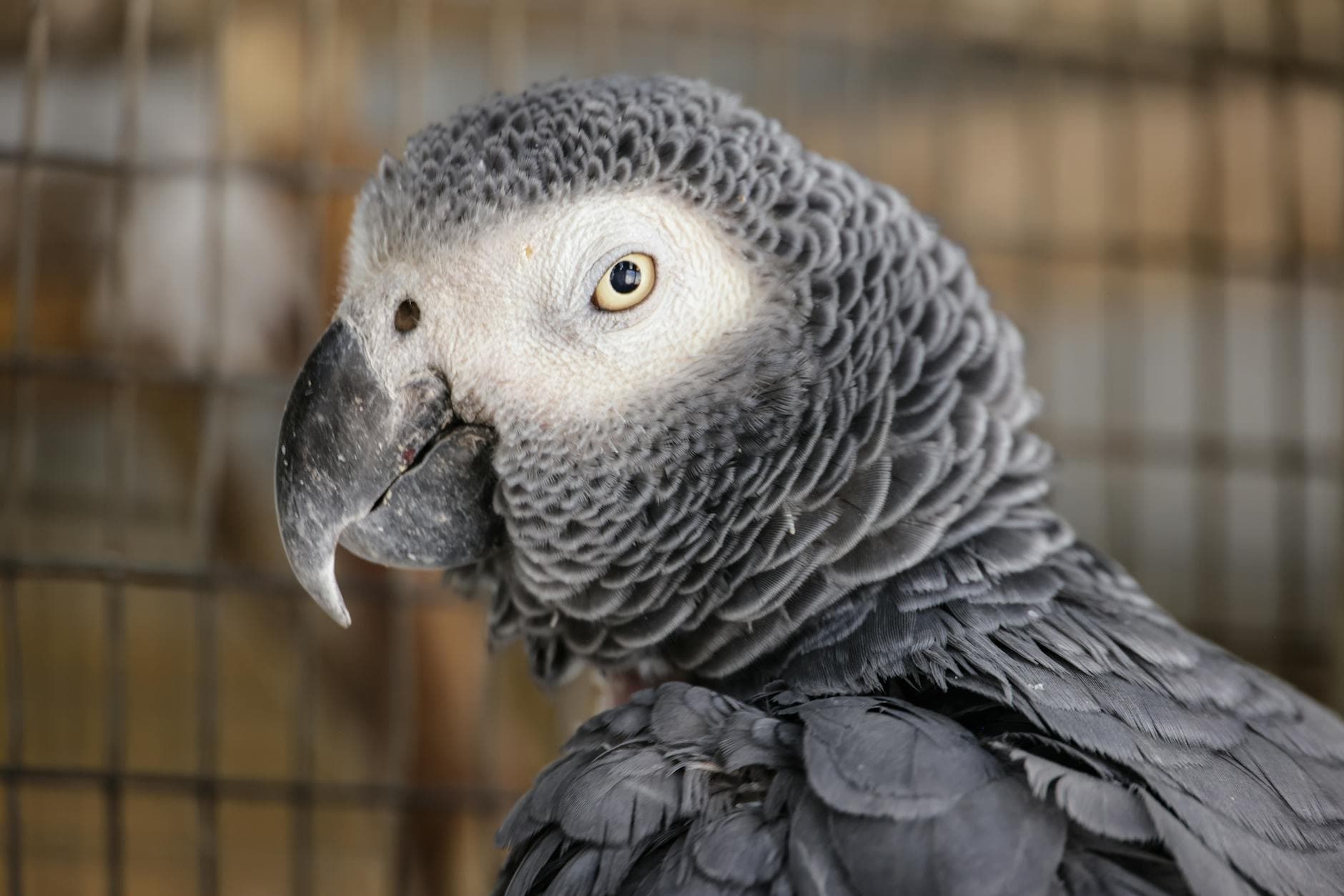
- Use visual clues only when the species is clearly sexually dimorphic and the bird is mature enough for those traits to show.
- Do not trust appearance alone for most pet parrots, especially young birds and species that are sexually monomorphic.
- Choose DNA sexing when you need a reliable result for household management, future pairing, breeding plans, or behavior interpretation.
- Bring an avian veterinarian into the process if the bird has reproductive symptoms, unusual behavior, or a history that makes sex-linked care decisions more urgent.
That last point matters because avian medicine is a specialty, not a generic side note. The Association of Avian Veterinarians offers owner resources and a veterinarian search tool, which is helpful when you want a second opinion or a clinic that understands the difference between normal maturity and reproductive trouble.
Why the right answer prevents bigger mistakes
The real value of sexing is not the label itself. It is the way the label stops bad assumptions from shaping care. Advances in avian medicine have pushed bird keeping toward better wellness management, and sex identification fits right into that shift because it helps owners plan more carefully around nutrition, behavior, and reproductive risk.
In a community where misinformation spreads easily, the cleanest rule is also the most practical one: trust visual clues only when the species truly shows them, and turn to DNA when the answer needs to be right. That one choice can spare a household from years of guesswork, and it can keep a bird’s care anchored in facts instead of folklore.
This article was produced by Prism’s automated news system from verified source data, official records, and press releases, then run through automated quality and moderation checks before publishing. The system is built and supervised by the people who set the standards it runs under. Read our full AI policy.
Did this article answer your question?