Psittacosis warning for parrot owners, subtle signs and cleaning risks
A parrot that looks a little off can be hiding psittacosis, and droppings can expose the whole house if cleaning slips.
A parrot that is just slightly fluffed, quiet, or off its food can be warning you about more than a simple bad day. Psittacosis, also called parrot fever, can start with subtle signs in the bird and turn into a household health issue if you miss the early window.
The first signs are easy to miss
The danger with psittacosis is how ordinary it can look at the start. A bird may only seem a little ruffled, eat less than usual, or act not quite right, and that is exactly how an infection can hide in plain sight. In parrots, the illness can also show up as depression, weight loss, dehydration, diarrhea, sinusitis, conjunctivitis, sneezing, nasal discharge, or respiratory distress.
That is a serious problem because birds are built to mask weakness. By the time the signs become obvious, the infection may already be advanced, and what looked like a mild dip in behavior can become a rapid decline.
How psittacosis spreads inside a home
Psittacosis is caused by Chlamydia psittaci, and it spreads through respiratory droplets and contaminated droppings. The Centers for Disease Control and Prevention says the most common human exposure happens when someone breathes in dust containing dried bird secretions or droppings. That means the risk is not limited to direct handling of a sick bird.
One of the most important details is that both sick birds and infected birds with no visible signs can shed the bacteria. In other words, a bird can look fine and still be part of the chain of exposure. The CDC says psittacosis is uncommon in the United States, but outbreaks do occur, which is why basic precautions still matter in everyday parrot care.
When the bird needs an avian vet immediately
If your bird stops eating, loses condition, becomes dehydrated, or starts showing breathing changes, do not wait to see whether it passes. Psittacosis can become fatal in birds, and delay makes treatment harder and the risk to the rest of the home much higher. A fast exam by an avian veterinarian is the right move when those subtle signs appear.
Prompt treatment matters because psittacosis is not only a bird disease. In people, the infection can cause severe pneumonia, endocarditis, hepatitis, and neurologic problems. With appropriate antibiotic treatment, death is rare in humans, and the CDC says it occurs in less than 1 percent of properly treated patients.
What treatment usually looks like
The treatment plan described in veterinary guidance is not a quick fix. Merck Veterinary Manual says injectable doxycycline can be effective over a 45-day course, and LafeberVet says confirmed or probable psittacosis cases should be isolated and treated for 45 days. That long course matters because stopping too soon can lead to relapse.
Supportive care is part of the picture too. Fluids and temperature control can help a sick bird stay stable while the antibiotic does its work. The key point is that psittacosis treatment is a full commitment, not a few days of medication followed by hope.
Cleaning and quarantine are not optional
This is where many households underestimate the risk. The safest routine starts with quarantine for any new bird, with guidance calling for 30 days or more and some recommendations stretching to 30 to 45 days. That separation gives time for disease to declare itself before a newcomer can expose the rest of the flock.
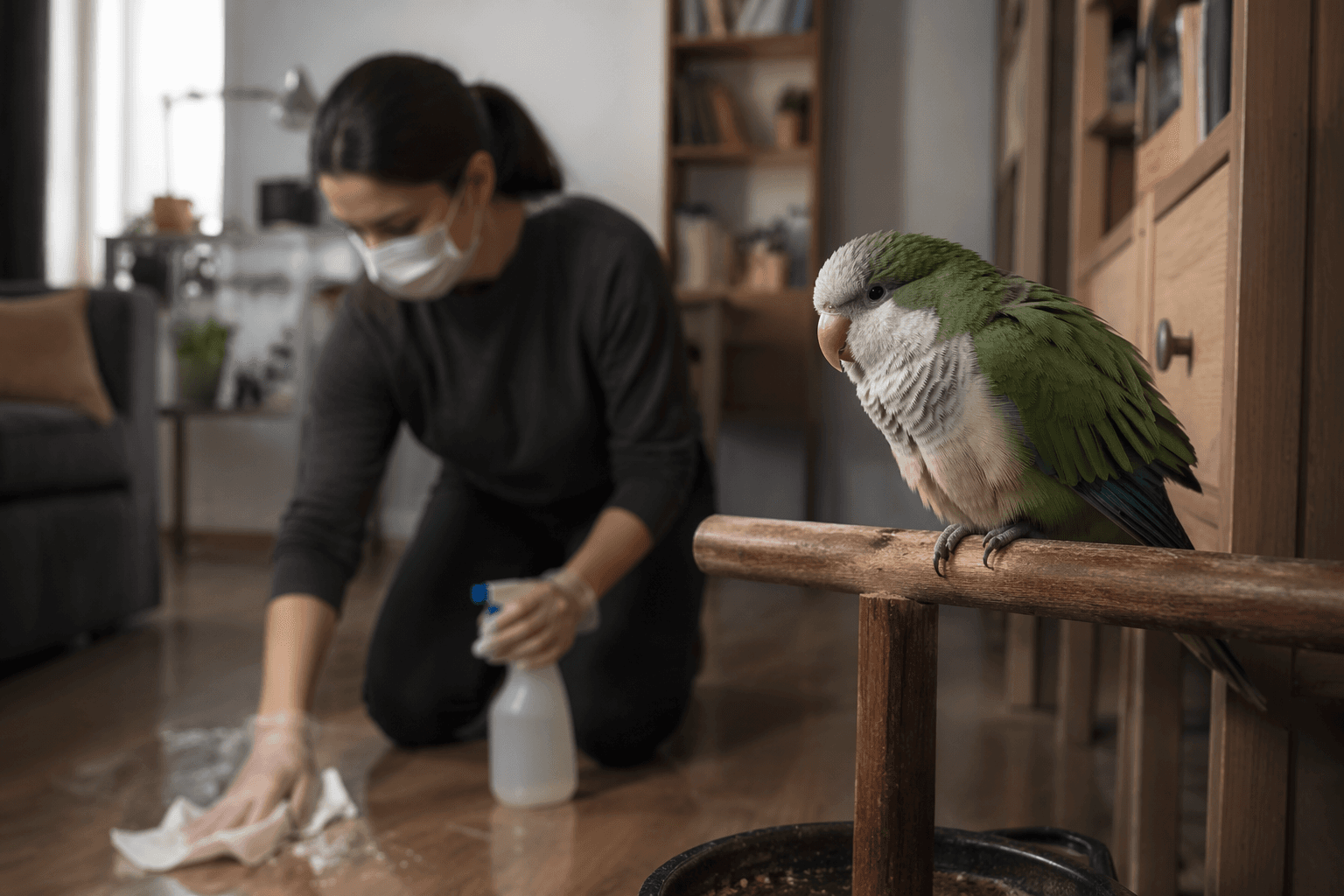
Cleaning also needs to be treated like a biosecurity step, not a casual chore. Proper disinfection with correct contact time is important, and an N95 mask is recommended when cleaning cages or handling contaminated materials. Those precautions matter because the infectious material can hitch a ride in dust and droppings, then spread through the air as you work.
Why this reaches beyond one cage
Psittacosis can move through multi-bird households, and it can also reach the people who care for those birds. Bird owners, aviary and pet shop employees, poultry workers, and veterinarians are all in a higher-risk group, which is why everyday handling practices matter even when no bird looks seriously ill. Washington state guidance also requires written information about psittacosis and avian chlamydiosis to be provided to buyers and recipients of psittacine birds, a sign that this is treated as more than a niche concern.
The risk is not theoretical on the larger stage either. The World Health Organization reported psittacosis investigations in Austria, Denmark, Germany, Sweden, and the Netherlands during late 2023 and 2024, and the outbreak notice included five deaths. WHO assessed the overall risk as low, but the cluster showed how quickly this infection can draw public-health attention when bird exposure and human illness collide.
Psittacosis is exactly the kind of problem that punishes delay. The faint ruffle, the skipped meal, and the cage dust you almost ignore are the moments that matter, because quick action can protect the bird in front of you and the people sharing the room.
This article was produced by Prism’s automated news system from verified source data, official records, and press releases, then run through automated quality and moderation checks before publishing. The system is built and supervised by the people who set the standards it runs under. Read our full AI policy.
Did this article answer your question?