Quaker Parrots Blur Line Between Beloved Pets and Ecological Risk
Quaker parrots win hearts with brains and charm, but the same traits that make them great companions also make them a serious ecological and utility problem.
The bird people love is also the bird communities have to manage
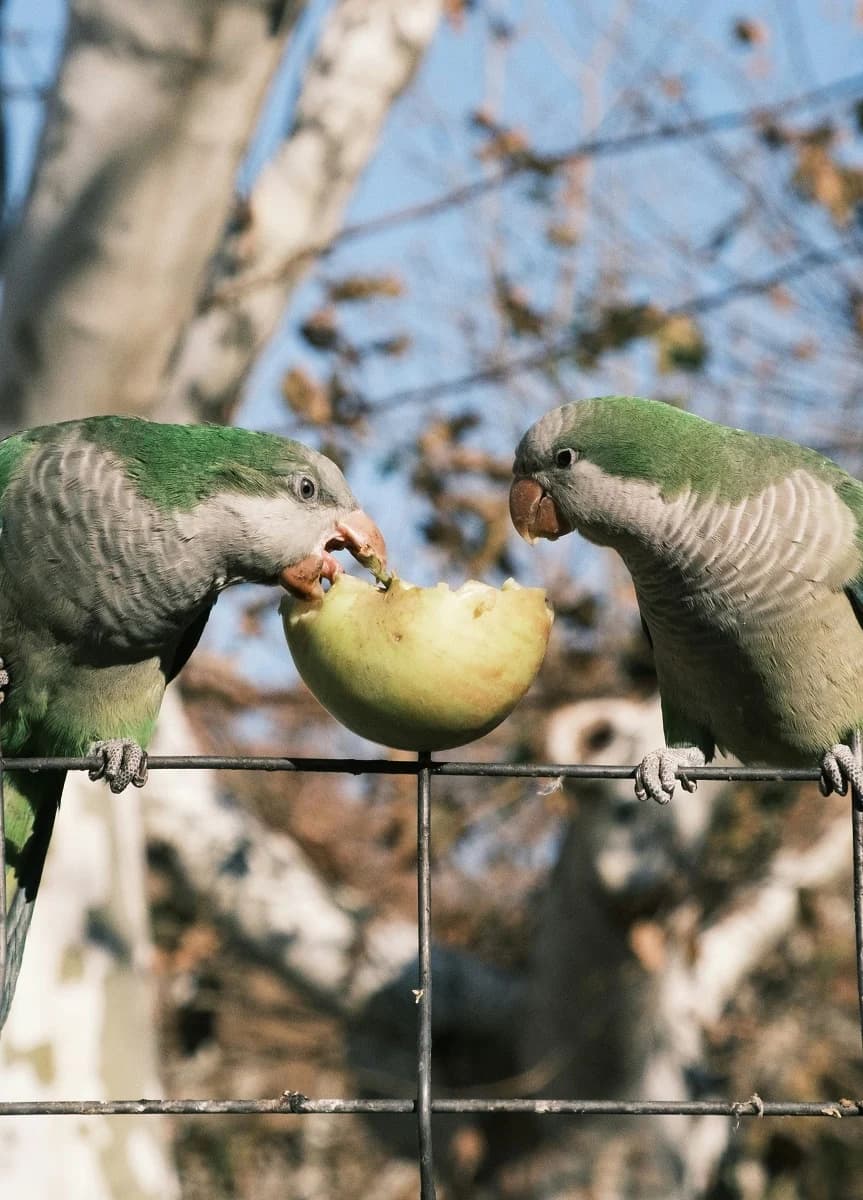
Quaker parrots, also called monk parakeets and scientifically known as *Myiopsitta monachus*, are one of the clearest examples of how a beloved pet can become a public issue. Native to South America and long popular in the pet trade, they are admired for their strong personality, social energy, and ability to settle into home life with an owner who understands what they need. That appeal is real, but so is the complication: the same adaptability that makes Quakers engaging companions also helps them spread, persist, and build colonies where they do not belong.
That tension sits at the center of the species. A bird that is clever enough to thrive in many settings can be delightful in a living room and disruptive in the wrong landscape. For anyone drawn to Quakers, the lesson is simple: this is not just a pet choice. It is a long-term commitment, a housing decision, and in some places an ecological decision too.
Why Quakers stand out in the pet world
Part of the Quaker parrot’s appeal is its personality. These birds are highly social, interactive, and often deeply attached to their surroundings and routines. Owners prize them for being lively companions rather than quiet décor, and that intensity is a big reason they have stayed so popular.
They are also long-lived, intelligent, and adaptable, which makes them rewarding but not easy. A Quaker needs consistent attention, environmental problem-solving, and a plan that accounts for years of noise, activity, and mental stimulation. Their drive to explore and nest is part of what makes them fascinating, but it also means they can quickly outgrow an owner’s expectations if the setup is too casual.
That is why this species tends to attract experienced keepers. A Quaker is not a decorative bird. It is a bird with opinions, habits, and a real appetite for social contact.
The same adaptability that helps at home can cause trouble outside it
The ecological story starts with how well monk parakeets handle conditions that stop other parrots. Cornell Lab of Ornithology notes that they are one of the few parrot species able to survive temperate-zone winters. They do so by building large communal stick nests that can house multiple birds year-round, a nesting style that is unusual among parrots and highly effective in urban and suburban environments.
That resilience has helped wild populations establish themselves far from their native range. Monk parakeets first appeared in New York in 1968 and were first recorded breeding in Florida in 1969. Today, established U.S. populations are documented in states including New York, Connecticut, Illinois, Texas, Louisiana, and Florida.
For communities, that means an escaped or released bird can be more than a one-off sighting. It can become part of a lasting population that needs monitoring and management for years.
Why utilities see the species so differently
In the United States, USDA APHIS identifies electric utility structures as the main conflict tied to monk parakeets because the birds build nests on substations, distribution poles, and transmission towers. Those nests are not just a nuisance. They can interfere with infrastructure, create safety hazards, and require repeated removal or relocation efforts.
The U.S. Fish and Wildlife Service adds another layer to the problem: birds nesting on power lines face electrocution and collision risks, and nest material can create an electrical connection or even catch fire. That makes the issue bigger than bird control. It becomes a public safety and infrastructure concern.
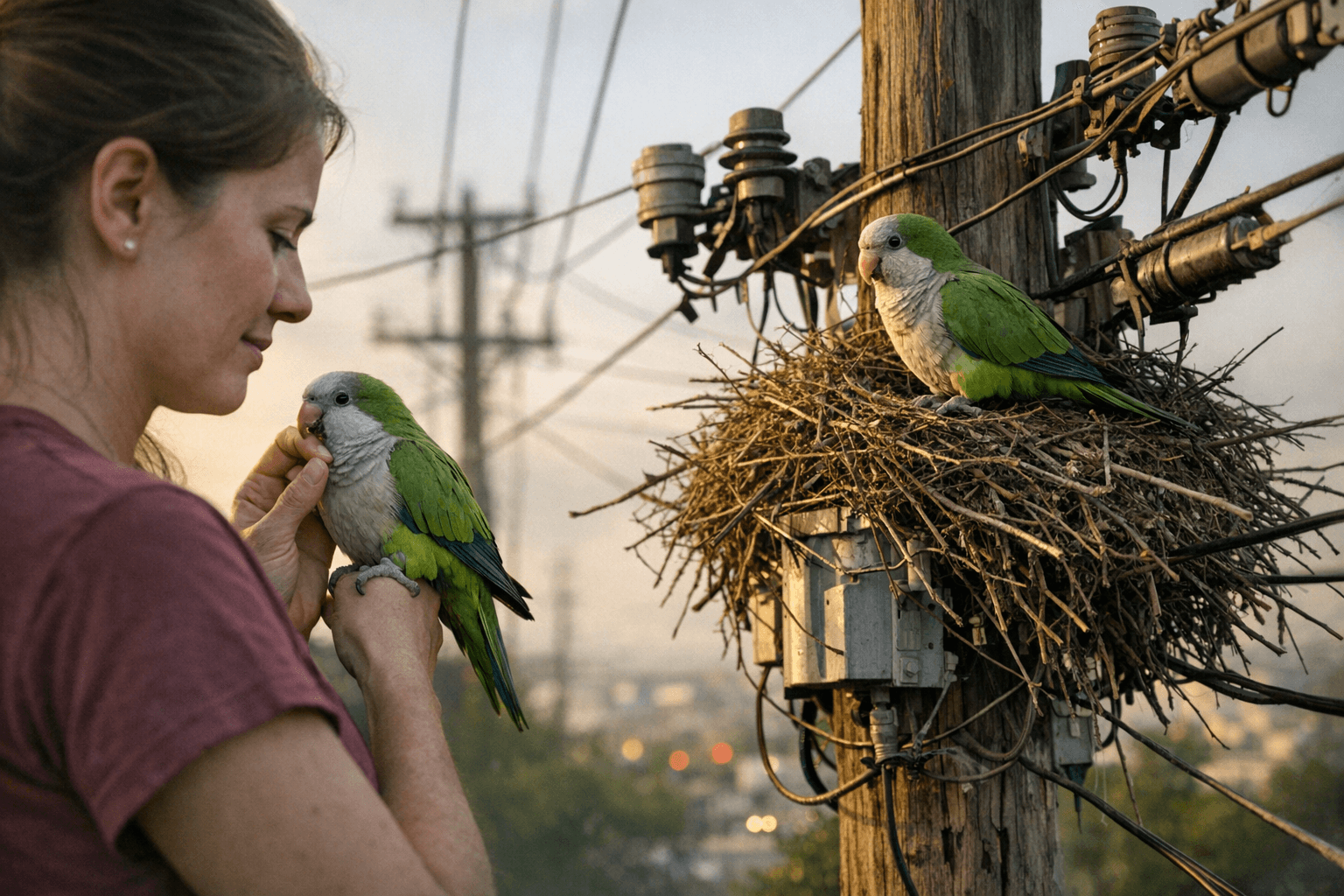
South Florida shows how persistent the problem can be. In one study, 60% of monk parakeet nests were on energized electric utility equipment. USDA APHIS also reported that some substations hosted more than 30 nests and estimated populations greater than 100 birds at a single site. The number of substations with parakeet nests in south Florida rose from 38 in 2001 to 62 in 2007, which shows this is not a short-lived seasonal annoyance. It is a long-running management challenge.
Not threatened overall, but still controversial where they spread
BirdLife International’s IUCN assessment lists *Myiopsitta monachus* as Least Concern, and the population trend appears to be increasing. That creates a striking contradiction for readers and keepers alike: the bird is not globally endangered, yet it can still be a conservation and management concern in places where it has become established outside its native range.
That distinction matters. A species can be secure across its overall range and still create serious local problems in specific habitats, especially when it thrives on human structures. Quaker parrots fit that pattern exactly. Their success is part of the reason they are admired, and also the reason they are watched so carefully.
Removal is not just a technical issue, it is a public one
Efforts to manage monk parakeets have repeatedly run into community resistance. A University of Connecticut article and related reporting note that attempts to remove the birds in Connecticut drew strong pushback from supporters, showing how quickly a wildlife-control decision can become emotional and political.
That reaction is easy to understand. These are charismatic birds, and many people see them as neighborhood characters rather than invasive infrastructure threats. The result is a real split in public perception: one group sees a charming, intelligent parrot; another sees an ongoing utility hazard. Both views can exist at once, which is exactly why the species remains so hard to handle cleanly.
What responsible keepers need to think about
The American Veterinary Medical Association makes an important point that applies directly to Quakers and other exotic birds: ownership may be legally permitted, but it is governed by international, federal, state, and local rules. If you are unsure whether a bird species requires a permit to own or rehabilitate, the AVMA advises checking with state wildlife management agencies.
That legal layer is part of the responsibility that comes with the species. Before bringing a Quaker home, it is smart to think beyond charm and intelligence and into the practical realities of the bird’s life. That means planning for noise, social interaction, enrichment, and long-term housing. It also means understanding local restrictions and transport rules, especially if you live in a state where monk parakeets are established or regulated.
A good Quaker home usually has these basics in place:
- steady daily interaction, because these are social birds
- enrichment that satisfies their need to explore and manipulate objects
- a realistic plan for noise and nesting behavior
- awareness of local laws and permit requirements
- a long-view mindset, because this bird can be part of your life for years
The deeper message is the same one conservation and utility officials have been forced to learn: Quaker parrots are impressive because they adapt so well. That same strength is what makes them such rewarding pets and such persistent ecological headaches. Anyone considering one should respect both sides of the bird before the first cage is ever set up.
This article was produced by Prism’s automated news system from verified source data, official records, and press releases, then run through automated quality and moderation checks before publishing. The system is built and supervised by the people who set the standards it runs under. Read our full AI policy.
Did this article answer your question?