Rescued African Grey Ruby says her first words in new home
Ruby’s first words, “Pretty bird,” marked a breakthrough in a rescued African Grey’s slow recovery and a reminder that safety comes before speech.
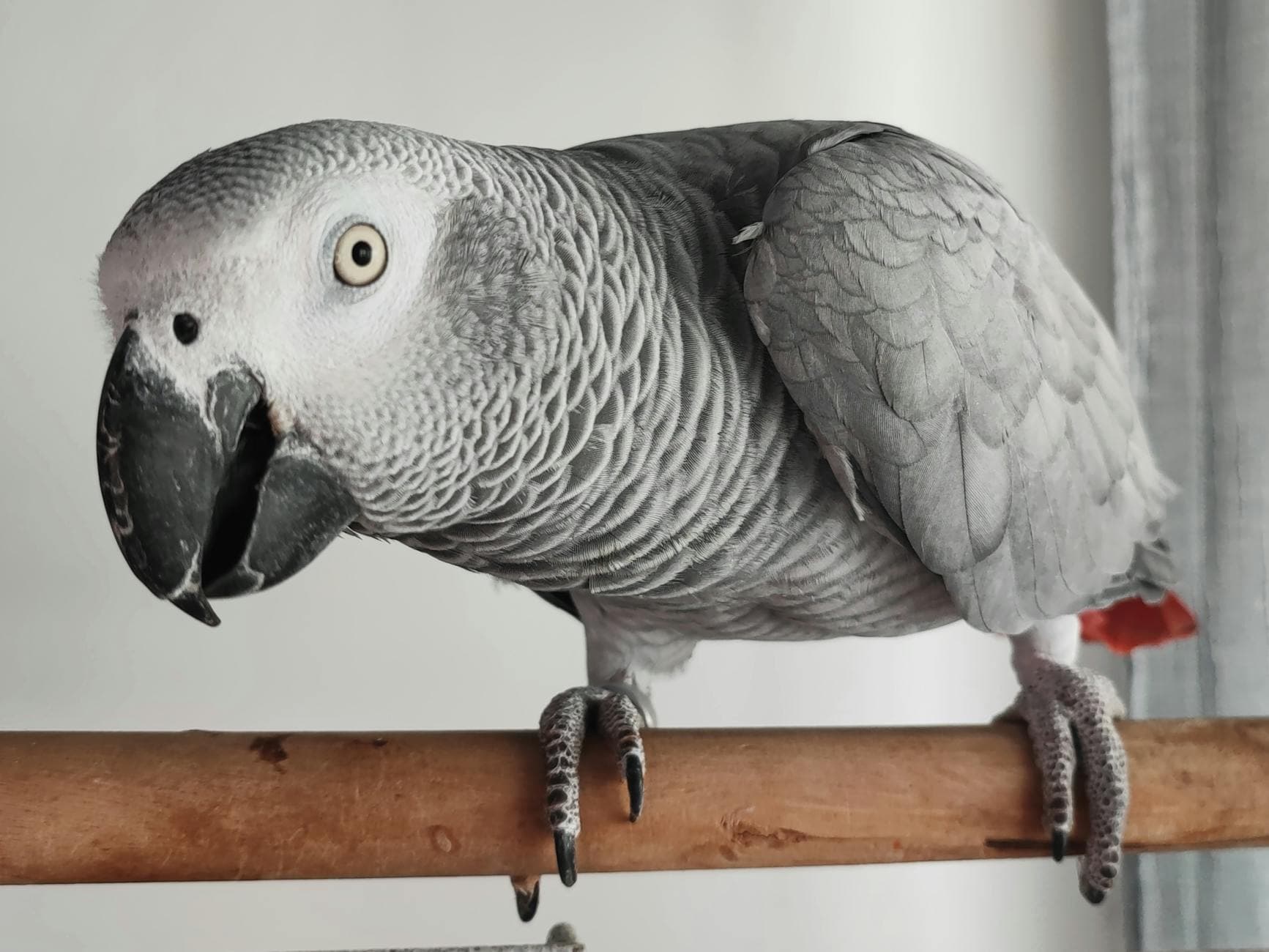
Ruby’s first words came only after she had begun to feel safe enough to try them. In her new forever home, the rescued African Grey finally said “Pretty bird,” a small phrase that carried the weight of a much larger recovery for a parrot whose past included hardship and uncertainty.
Ruby now lives with her brother Max, a bonded cagemate rescued with her from what her family described as a horrific situation. Both birds are still settling in, and Ruby has spent much of her early time in the cage as she adjusts to the new surroundings. The breakthrough did not come from pushing her faster. It came from patience, a steady routine, and a setting that gave her room to decide when to step out and when to stay put.
That slow approach matters for African Greys, a species known for intelligence and emotional sensitivity but also for demanding care. Ruby and Max’s setup reflects that reality: a large shared cage, careful out-of-cage time when they are comfortable, and bath time as part of the routine that helps build trust. Max’s presence may be helping Ruby settle, turning companionship into something more than comfort and making the new home feel less like a threat.
The lesson reaches beyond one bird’s first words. African Grey Parrots are listed as Endangered on the IUCN Red List, and conservation groups warn that habitat loss and trapping for the international pet trade are pushing the species toward extinction. Their native range stretches across parts of West and Central Africa, from southeastern Côte d’Ivoire east through forest regions to Cameroon and into the Congo Basin and beyond. In 2018, the Grey Parrot was uplisted to Endangered in part because of heavy harvest for the pet trade and rapid habitat loss.
That global pressure helps explain why rescue stories like Ruby’s land so hard in parrot circles. It also explains why adoption has to be treated as a long-term commitment, not an impulse. African Greys can live for decades, often 40 to 60 years or longer with proper care, and veterinary sources say they are vulnerable to calcium deficiency, vitamin A deficiency and obesity. Regular avian checkups, a balanced diet and daily mental stimulation are not extras for this species. They are the baseline.
Ruby’s “Pretty bird” was more than a cute milestone. It was proof that a rescued African Grey can begin to heal when the cage door, the routine and the human hands around it all say the same thing: you are safe here.
This article was produced by Prism’s automated news system from verified source data, official records, and press releases, then run through automated quality and moderation checks before publishing. The system is built and supervised by the people who set the standards it runs under. Read our full AI policy.
Did this article answer your question?