Rescued Yellow-Headed Amazon Parrots Recover After Smuggling Bust in Florida
Papaya and Fig, two yellow-headed Amazons seized with 25 other parrots, are recovering in North Florida after a border smuggling bust.
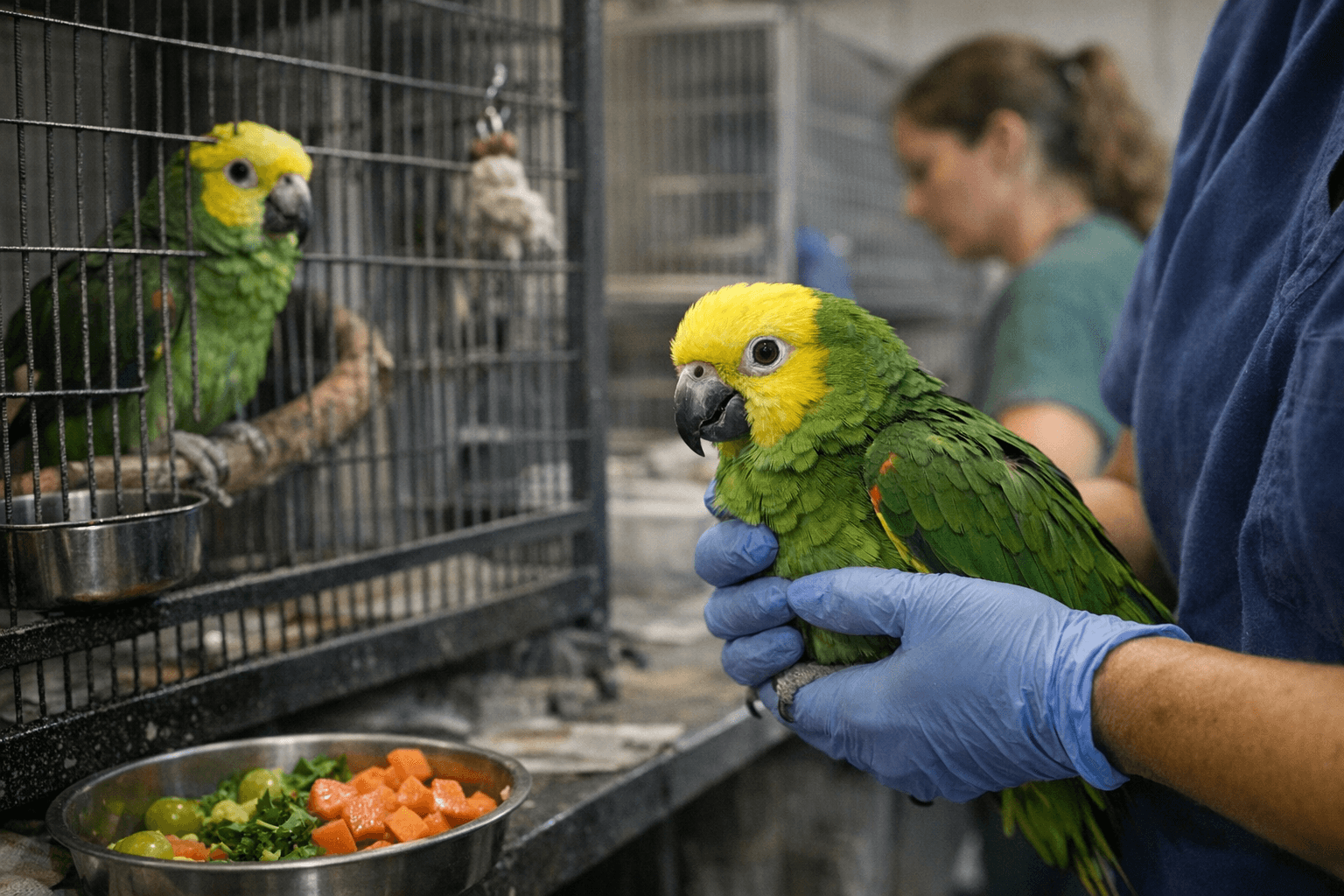
Papaya and Fig are learning how to be parrots again at the North Florida Wildlife Center in Lamont, Florida, after U.S. Border Patrol agents found them last year crammed into a cage with 25 other parrots during an attempted smuggling operation at a Texas border checkpoint. The two yellow-headed Amazon parrots were first taken to Gladys Porter Zoo in Brownsville for care, then transferred to Jefferson County, where their recovery now centers on undoing the stress of a trip that treated living birds like cargo.
The story lands hard for Amazon owners because these are exactly the birds traffickers chase. Yellow-headed Amazons are prized for their intelligence and their ability to mimic human speech, and that makes them valuable on the black market. The species is listed as Endangered by the IUCN Red List. BirdLife International says the population is decreasing and estimates about 4,700 mature birds remain, while Audubon says the species has fallen by about 90 percent in its native range. The U.S. Fish and Wildlife Service calls wildlife trafficking an international crisis, and the U.S. Department of Justice says all Amazon parrot species are listed on either Appendix I or Appendix II of CITES.
For birds that come through a smuggling case, recovery is not a quick reset. Quarantine comes first, then medical stabilization, then the slower work of behavior and trust. Birds that have been packed tightly, moved illegally and handled on the run often need time to settle, feed normally and relearn safe flock behavior. Darian Dowse of the North Florida Wildlife Center has said that when animals are removed from their natural habitat, rescuers want to take the opportunity to help them. That is the work now facing Papaya and Fig.
The red flags for buyers and adopters are plain once you know them. A legal Amazon should come with a clear origin story, full paperwork and a seller who can explain the bird’s history without hesitation. Be wary of any bird with no veterinary record, no captive-breeding documentation or a price that seems far below what a rare Amazon should command. Colette Adams of Gladys Porter Zoo has noted that some of these birds can sell for thousands of dollars, which is exactly why traffickers keep trying to move them through border checkpoints. For yellow-headed Amazons, the rescue is only the beginning; the real fight is stopping the next bird from ever reaching a cage.
This article was produced by Prism’s automated news system from verified source data, official records, and press releases, then run through automated quality and moderation checks before publishing. The system is built and supervised by the people who set the standards it runs under. Read our full AI policy.
Did this article answer your question?