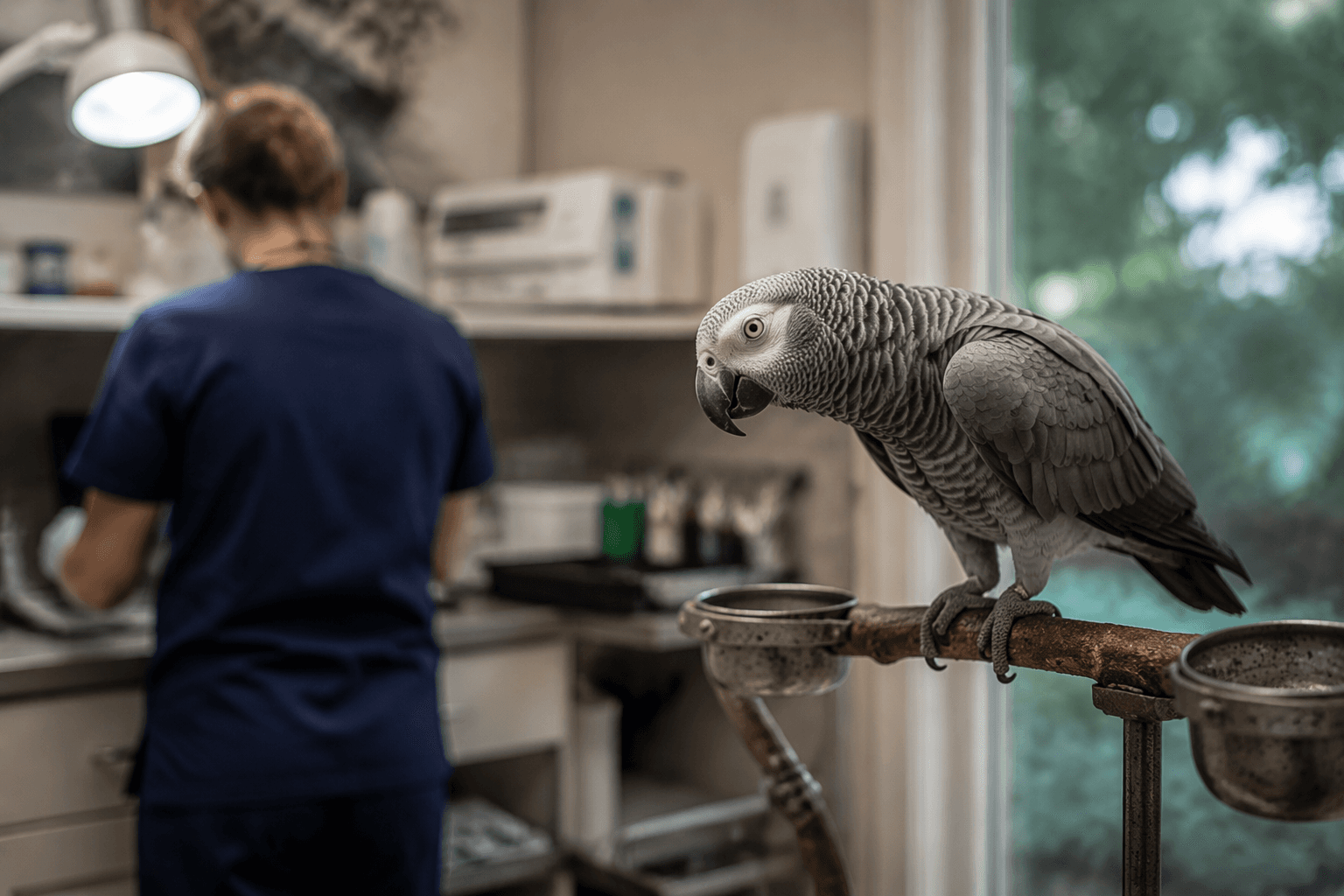
Varied perches help parrots prevent sore feet and bumblefoot
A single dowel can load the same pressure points all day. Mixing perch diameters, textures, and heights is a simple way to help prevent sore feet and bumblefoot.
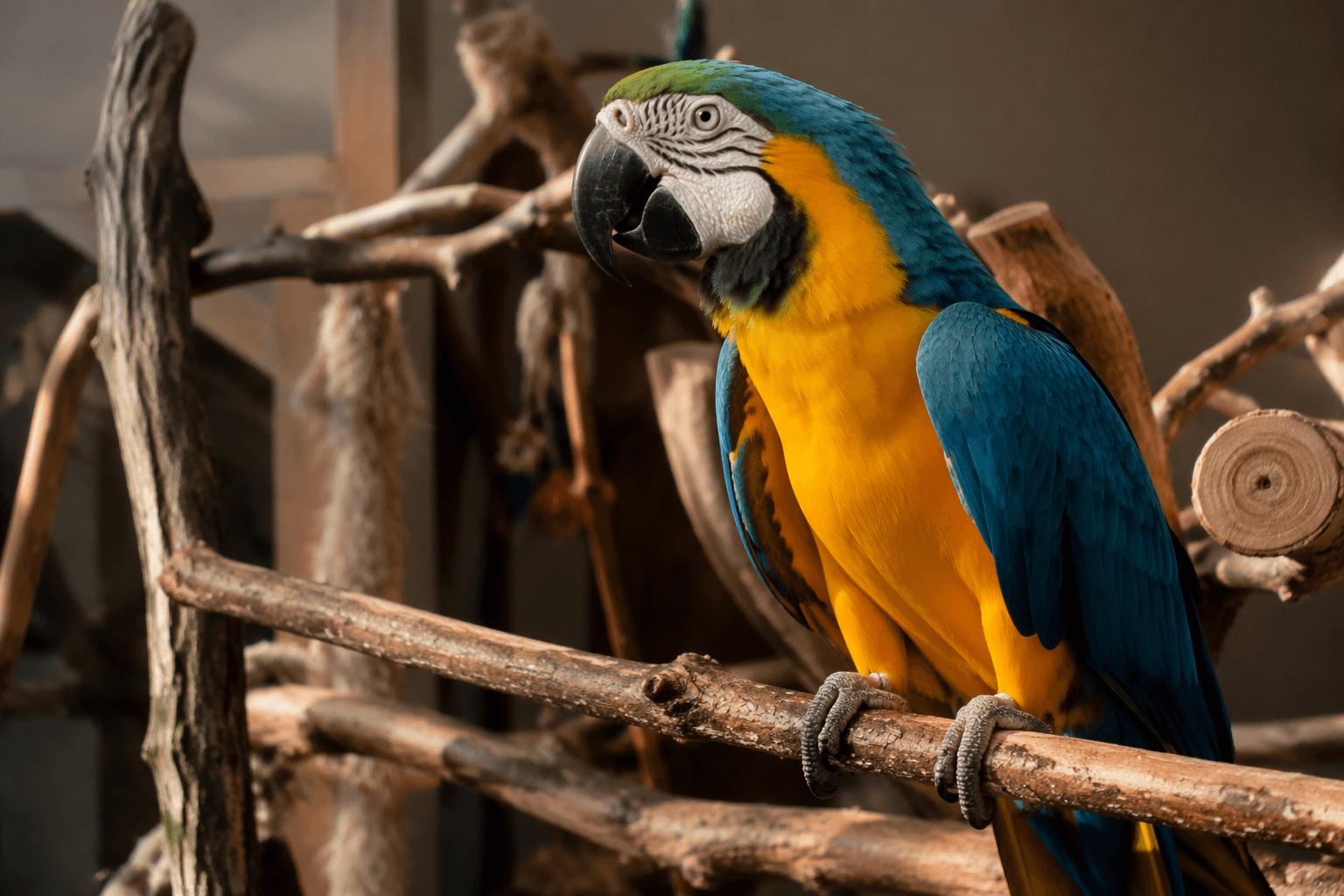
A bird that stands on one uniform rod all day loads the same pressure points again and again. That is how sore feet and bumblefoot, also called pododermatitis, begin to creep in.
Why one perch is a problem
Birds spend most of their lives on their feet, so a static perch setup is a daily pressure problem. Inappropriate perches or substrates can cause pododermatitis, and USDA APHIS identifies perch diameter that is too small or too large as part of the problem.
That is why a cage lined with one standard dowel is such a common setup error. It may look neat, and it may be easy to clean, but it keeps the same part of the foot loaded in the same way for hours. Over time, that repetitive pressure can lead to tenderness, redness, and the deeper sores that make bumblefoot hard to ignore.
What a foot-friendly perch mix looks like
The best cage layouts do not chase one perfect perch. They build variety on purpose. Different diameters, textures, shapes, and materials ask the foot to flex in different ways, which spreads out the load and gives the toes more natural work during the day.
Natural wood perches are useful because they feel more like branches and often have irregular surfaces. Rope perches add a softer, more forgiving texture. Concrete-style perches can have a role as well, especially when used thoughtfully rather than everywhere in the cage. Smooth perches still belong in the mix, but they should not be the entire environment. Perch sizing and surface type should not be one-size-fits-all.
The goal is to make the bird shift grip, adjust balance, and use different parts of the foot over the course of a normal day. A cage built around variety keeps any single pressure point from carrying the whole workload.
Placement matters as much as material
Even a smart perch mix can fail if the perches are all clustered in a way that lets the bird sit in one spot from morning to night. Perches should be arranged at different heights so the bird has to step and climb between them instead of parking on one favorite bar all day. That movement is part of foot exercise.
Placement also needs to respect the rest of the cage. Perches should be positioned so droppings do not foul food and water, and so the bird has clear routes around the enclosure. When the layout makes movement easy, the feet do more than hold position. They change angle, change grip, and share the work across the day.
How bumblefoot shows up
Bumblefoot is not a vague annoyance. It is the common name for pododermatitis, a pressure-related foot problem that can become painful and serious if ignored. Gregory Rich, DVM, in VCA Animal Hospitals’ *Bumblefoot in Avian Species*, and USDA APHIS both identify husbandry as a common starting point for foot trouble.
The signs are worth knowing because they usually show up before the problem becomes severe. Watch for redness, swelling, scabs, limping, shifting weight from foot to foot, or reluctance to perch normally. Those changes mean the feet are telling you the current setup is not working.
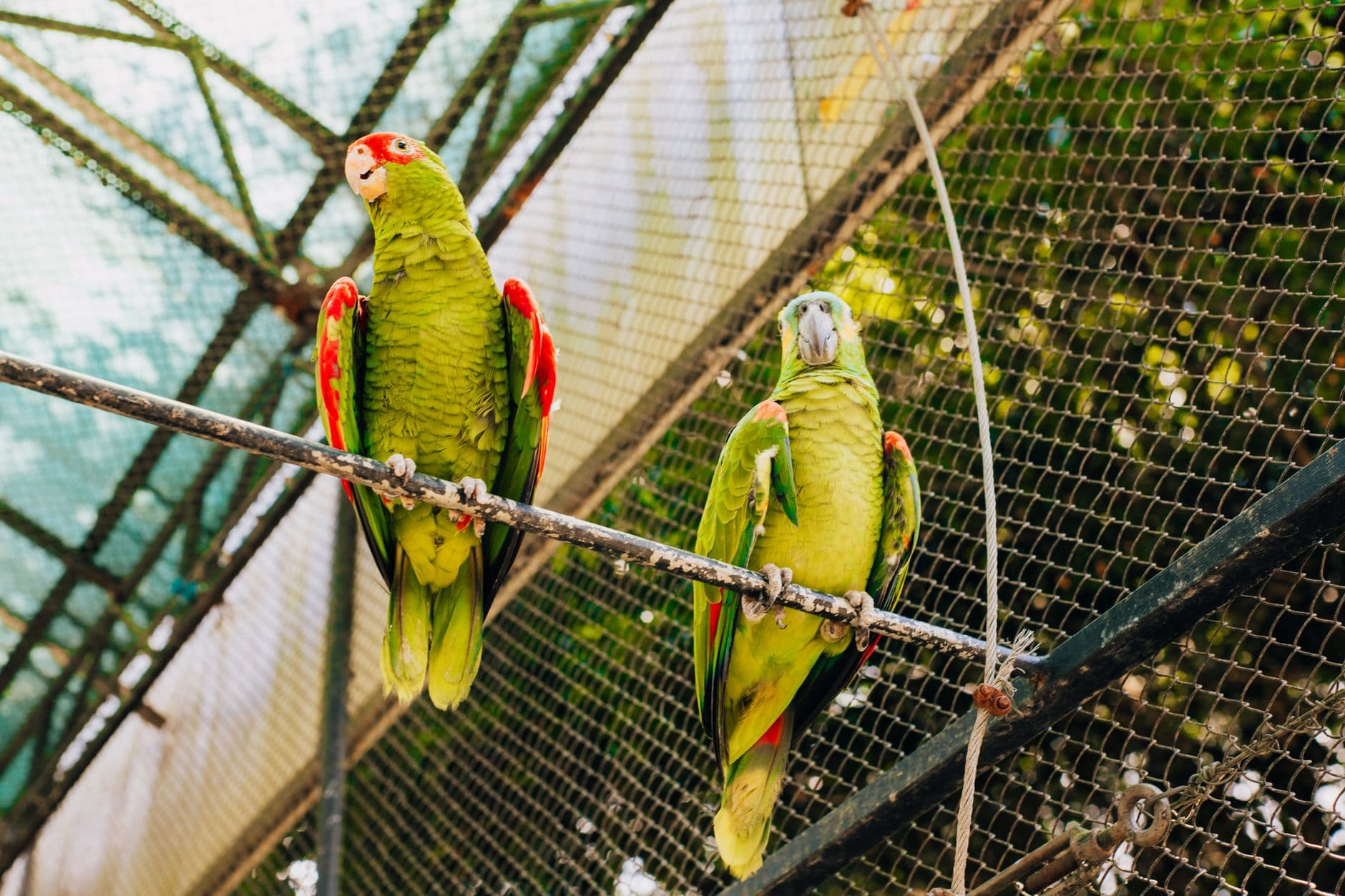
In serious cases, the problem can progress beyond the skin. Secondary infection and even septicemia can follow.
The evidence has been around for years
This is not a niche worry invented by one modern care trend. A 1997 PubMed study on bumblefoot in raptors found an incidence rate of 52 cases per 100 bird-years at risk.
VCA Animal Hospitals addresses perch design in *Perches for Birds* and foot disease in *Bumblefoot in Avian Species*. USDA APHIS names inappropriate perches and substrates as causes.
Make the perch plan do real work
A good perch setup should make the bird use the feet in different ways over the course of the day. That means mixing diameters so the toes do not wrap the same way every time, mixing textures so grip changes, and mixing heights so stepping and climbing become part of the routine. It also means avoiding the easy mistake of building a cage that is tidy for the human but static for the bird.
This article was produced by Prism’s automated news system from verified source data, official records, and press releases, then run through automated quality and moderation checks before publishing. The system is built and supervised by the people who set the standards it runs under. Read our full AI policy.
Did this article answer your question?