Veterinary Practice News spotlights avian anesthesia basics for parrot safety
Avian anesthesia is far more complex than a routine dog or cat procedure. Dr. Emi Knafo’s session turns it into a practical checklist for safer parrot surgery and diagnostics.
A parrot headed for a dental trim, imaging, or an emergency procedure is not just going in for a quick sleep. For guardians, the most reassuring takeaway from Dr. Emi Knafo’s avian anesthesia session is simple: the safest plan starts long before the bird ever reaches the procedure table.
Why avian anesthesia deserves special attention
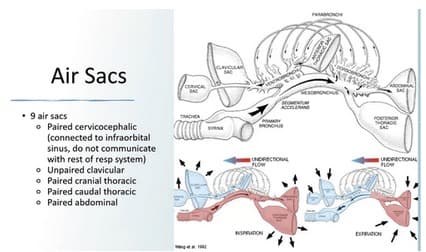
Veterinary Practice News put avian anesthesia front and center with “Avian Anesthesia Basics,” presented by Emi Knafo, DVM, Dipl. ACZM. The session focused on avian respiratory anatomy, basic anesthesia equipment, principles of safe anesthesia, and anesthetic and analgesic protocols. That mix matters because birds are not small dogs with feathers. Their airway, respiratory anatomy, and metabolic responses are fundamentally different, and those differences change how anesthesia has to be planned.
A 2025 review in PubMed notes that avian anesthesia is more challenging than anesthesia in mammals, and one review puts the anesthesia-related death risk in birds at up to 20 times higher than in dogs and cats. That is not meant to alarm parrot owners into avoiding care. It is the reason avian expertise matters so much when a bird needs a procedure.
What this means for your parrot before surgery
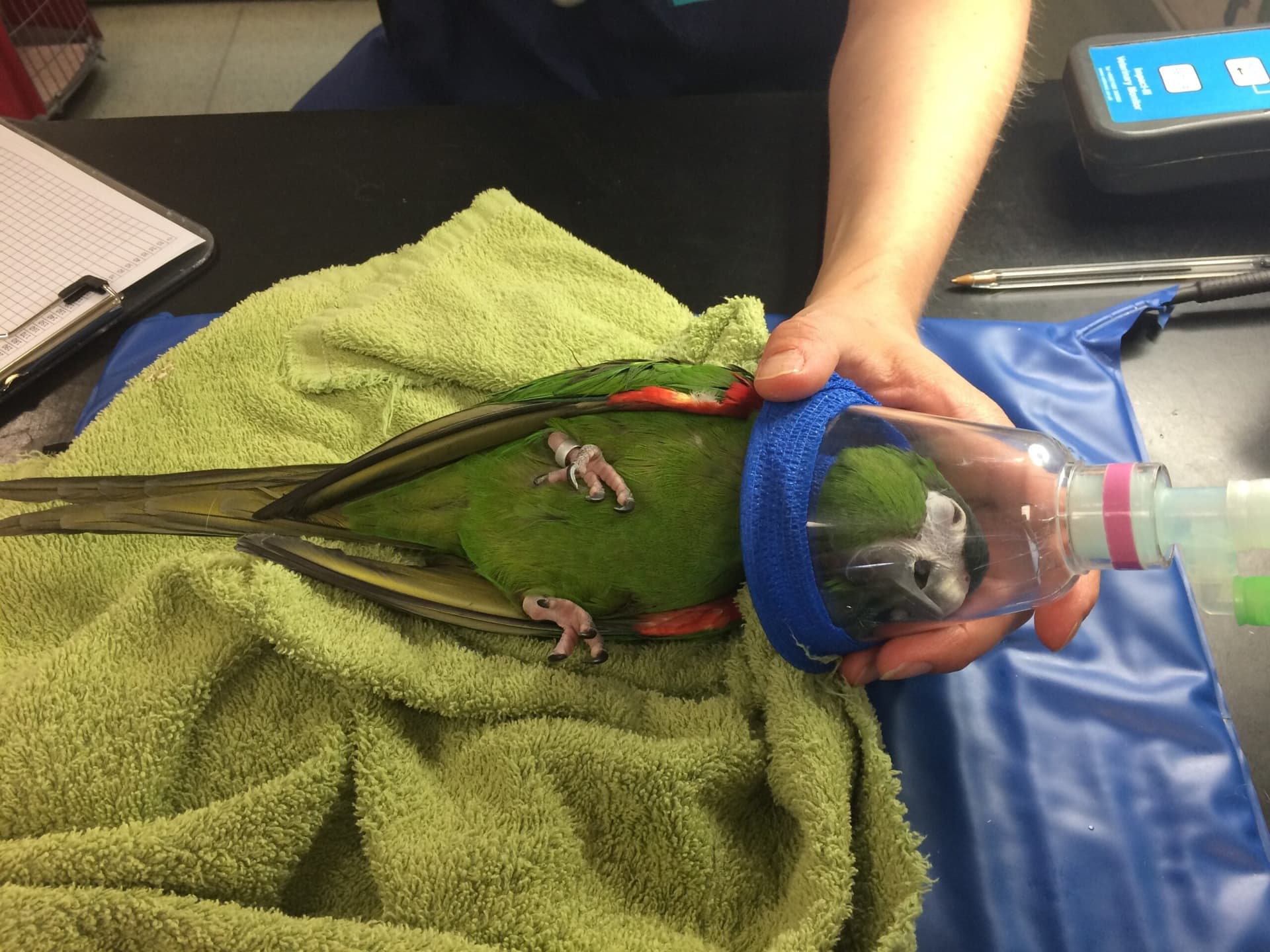
The best news for owners is that birds can be anesthetized safely when the veterinarian builds the plan around avian anatomy, physiology, and anesthetic response. That means the clinic should not be improvising with a one-size-fits-all approach. It should be using a patient-specific plan that accounts for the bird’s species, condition, and why the procedure is needed.
That matters whether the bird is in for something relatively simple or a more invasive surgery. A JAVMA study of 352 birds undergoing inhalation anesthesia found that birds have a higher anesthesia-related mortality rate than dogs and cats. The same paper reported previously published 48-hour mortality rates of 3.95% in parrots and 1.76% in other birds, compared with 0.24% in cats and 0.17% in dogs. Those numbers explain why an avian-competent team is not a luxury, but a safety standard.
Questions worth asking your avian vet
Before your bird is scheduled, ask the clinic how it handles avian anesthesia from start to finish. You want answers that make it clear the team understands birds as a separate patient category, not just another exotic add-on.
- What monitoring is used during anesthesia, especially for the heart and breathing
- How the clinic protects body temperature and recovery quality
- What anesthetic and analgesic protocol is planned for your bird specifically
- Who will be watching your parrot during induction, the procedure, and recovery
- Whether the team regularly handles psittacines and other birds, not just mammals
Ask about:
A psittacine anesthesia review emphasizes that successful management depends on detailed knowledge of anatomy, physiology, pharmacology, and cardiovascular and respiratory monitoring. That is the level of preparation you should expect behind the scenes. If the answers are vague, generic, or focused only on the procedure itself, that is a signal to slow down and ask more questions.
Red flags and best practices you can spot right away
One practical red flag is a clinic that cannot explain how it will monitor your parrot’s breathing and circulation throughout the procedure. Another is any suggestion that bird anesthesia is basically the same as dog or cat anesthesia. The literature says the opposite: birds require species-specific planning because their physiology is different and their anesthetic risk is higher.
- The clinic treats your bird as an avian patient first, not a scaled-down mammal
- The team can discuss respiratory anatomy and monitoring in plain language
- Pain control is part of the plan, not an afterthought
- Recovery is supervised as closely as induction and the procedure itself
A few best practices to look for:
Those details are not trivia. They are part of the safety net that keeps a routine trim or diagnostic visit from becoming a crisis.
Why subtle illness can make anesthesia riskier
Parrots are notorious for hiding illness, which is why birds often arrive for care later than they should. The MSD Veterinary Manual notes that owners may only notice subtle changes such as altered droppings, vocalizations, or sleeping habits. By the time a bird looks obviously sick, it may already be much more vulnerable under anesthesia.
That is also why sedation may be warranted when a bird is extremely stressed, in pain, or not used to handling. A bird that is panicked on the exam table is not just difficult to manage. It may also be more fragile, harder to assess, and less safe to transport into the next stage of care. In those cases, calming the patient safely can be part of responsible medicine rather than a sign of overuse.
Why the veterinary profession is paying attention now
The avian page on Veterinary Practice News did not stop with anesthesia. It also listed an April 22 educational item on cardiovascular disease in zoological companion animals, including parrots, which points to a broader pattern: more species-specific medicine, not more generalized small-animal shortcuts. That focus is exactly what parrot caregivers want from the professionals handling a bird with a hidden heart issue, a painful beak problem, or an urgent diagnostic need.
For owners, the lesson is direct and practical. If your parrot may need a procedure, ask whether the clinic has avian experience, what monitoring it uses, and how it plans for respiratory and cardiovascular risks. Dr. Knafo’s session reinforces a message that every parrot household should keep in mind: the safest anesthesia is never an afterthought, and in birds, preparation is part of the treatment itself.
This article was produced by Prism’s automated news system from verified source data, official records, and press releases, then run through automated quality and moderation checks before publishing. The system is built and supervised by the people who set the standards it runs under. Read our full AI policy.
Did this article answer your question?