Why Parrots Can Look Healthy but Still Suffer Nutrient Deficiencies
A good-looking diet can still hide a calcium or vitamin A problem. The clue is often in feathers, weight, or behavior, not the food bowl.
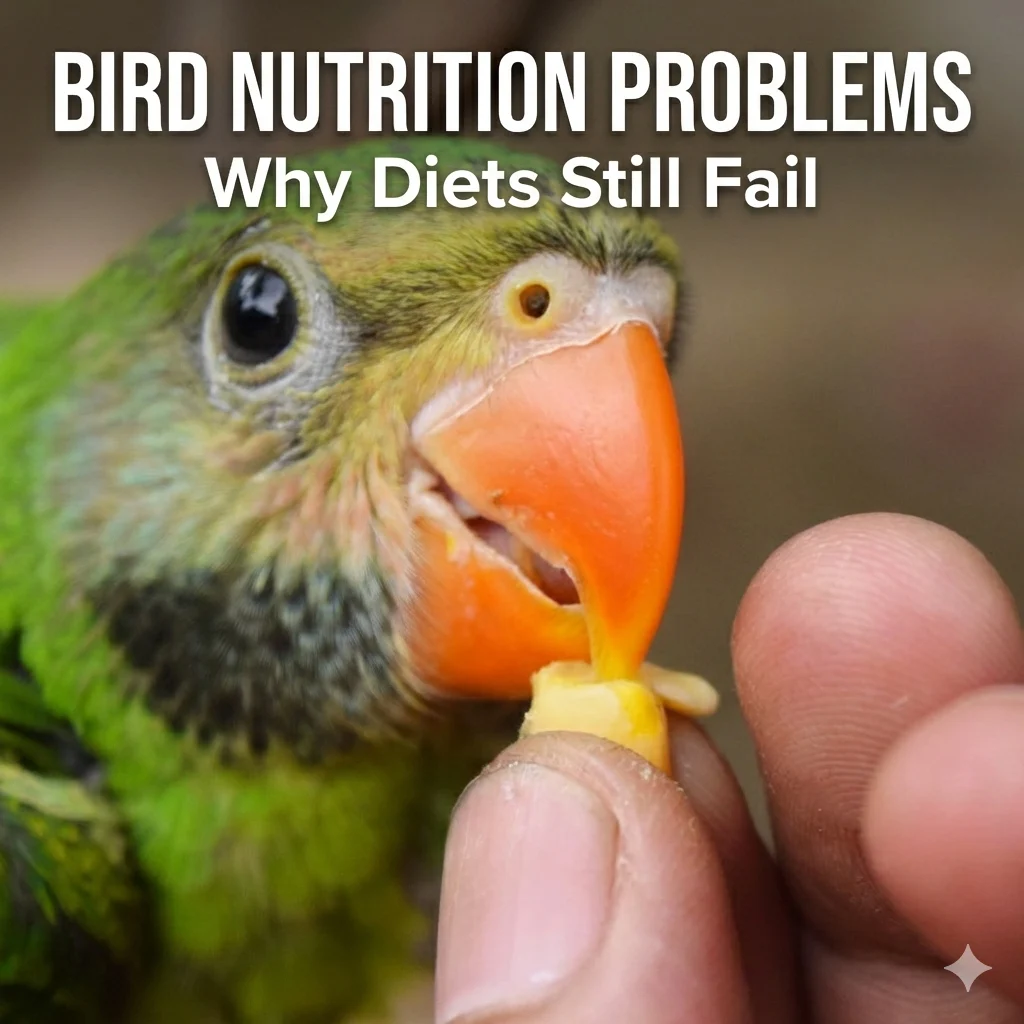
I fed a good diet, so why does my bird still look unwell? That frustration is exactly where the real lesson begins. A parrot can be eating pellets, a mixed menu, or a bowl that looks balanced on paper and still develop weakness, dull plumage, or subtle behavior changes if the body cannot absorb, activate, or use those nutrients properly.
Why the food bowl is only the starting point
Avian nutrition has improved a lot in recent decades, and pelleted and extruded diets made for parrots have clearly helped many birds eat better and live better. But nutritional disease still remains common in pet birds, and that gap matters. A bird may appear to be on a respectable diet while the actual problem sits deeper, in digestion, absorption, metabolism, or light exposure.
One of the biggest traps is thinking that “varied” automatically means “adequate.” Veterinary references note that many owners offer a varied diet, but the birds actually consume mostly seeds. That difference is where deficiencies and imbalances often begin. The bowl may look diverse; the bird’s real intake may not be.
Calcium is about much more than bones
Calcium gets treated like a skeleton issue, but in parrots it reaches much further than that. It is essential for nerve impulse transmission, muscle contraction, blood clotting, and eggshell formation in hens. Even a mild shortfall can ripple through several body systems at once, which is why a bird with a calcium problem may look tired, weak, or just not quite right long before the issue becomes obvious.
Vitamin D sits at the center of that process. In psittacine birds, its primary job is to increase absorption of dietary calcium and phosphorus. Vitamin D can come directly from the diet, but birds also make it in the skin in response to ultraviolet light exposure. For that to work properly, UVB light in the range of about 290 to 315 nm is required for vitamin D3 activation in birds.
That means diet and environment have to cooperate. A bird can be eating calcium-rich food and still struggle if vitamin D status is off, UVB exposure is insufficient, or the digestive system is not handling nutrients well.
What a nutrient problem can look like at home
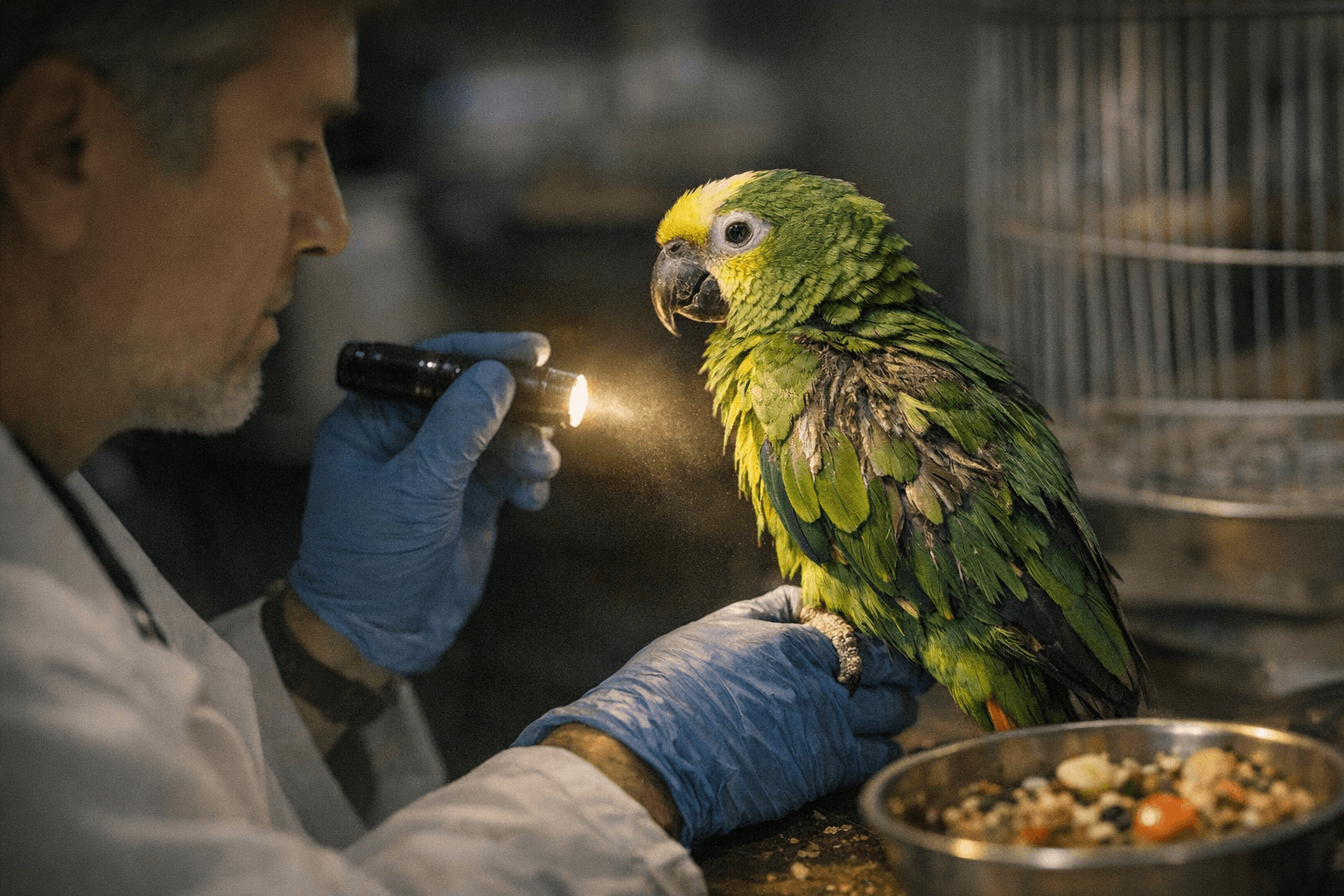
The warning signs are often easy to dismiss because they do not always look dramatic at first. Weakness, faded feathers, and behavior changes are classic red flags that a bird may not be processing food effectively, even when the menu seems respectable. Poor feather quality and feather picking also matter, especially when vitamin A deficiency is involved.
Vitamin A deficiency can show up in all-seed diets and even some mixed diets, which is why a bird that eats “something different every day” is not necessarily protected. In pet birds, poor feathers and feather picking are among the signs that should push you to look beyond the recipe and toward the bird’s actual physiology.
If a bird is losing weight, sitting differently, tiring easily, or acting off, that is not a cue to keep tweaking the food bowl forever. It is a cue to track body condition, watch for subtle changes, and involve an avian veterinarian.
Species-specific risk still matters
Not every parrot group carries the same nutritional risk. African grey parrots are more prone to calcium deficiency when fed a predominantly seed-based diet than other large psittacines. Cockatoos are described as vulnerable to insufficient dietary calcium, while macaws are vulnerable to both vitamin A deficiency and insufficient dietary calcium.
That species-specific risk is one reason broad advice can only go so far. The exact nutritional requirements for most species of birds are still unknown, and many avian diets are still extrapolated from poultry nutrient requirements because species-specific requirements are not fully known. In other words, a diet that seems “good enough” by general standards may still miss the mark for a particular bird.
Why supplements are not a free pass
It is tempting to solve every concern with a supplement, but that approach can create its own problems. Birds on predominantly formulated diets generally do not need extra vitamin or mineral supplements unless a veterinarian prescribes them. The better path is to verify what the bird is eating, how much of it is actually consumed, whether the body is using it, and whether the lighting and housing setup support normal metabolism.
This is also where pelleted and extruded diets deserve credit. They have improved nutritional intake and quality of life for many parrots, especially compared with seed-heavy feeding. But even a better base diet does not eliminate the need to watch the bird itself. A parrot can still fall short if it is not eating enough, is absorbing poorly, or has an underlying health issue.
When to stop adjusting food and call the vet
The clearest warning sign is the one many owners try hardest to explain away: the bird still looks unwell despite “doing everything right” with food. That is the moment to stop guessing. Feather loss, poor feather quality, feather picking, weakness, dull plumage, and other nonspecific signs deserve an avian-veterinary evaluation.
A proper workup may include blood tests, fecal tests, X-rays, and feather or skin analysis. Those tools help separate a true nutritional issue from absorption trouble, metabolic disease, or another medical problem that looks like a feeding mistake from the outside.
The practical takeaway is simple: do not assume that a healthy-looking diet equals healthy nutrition. The bowl matters, but so do the bird’s body condition, feathers, behavior, and environment. When those clues do not match the food you are offering, that is not a reason to keep experimenting at home. It is a reason to get an avian vet involved before a hidden deficiency becomes a bigger problem.
This article was produced by Prism’s automated news system from verified source data, official records, and press releases, then run through automated quality and moderation checks before publishing. The system is built and supervised by the people who set the standards it runs under. Read our full AI policy.
Did this article answer your question?