Why perch choice matters for parrot health and comfort
The wrong perch can quietly set off foot sores, joint pain, and bad habits. A smarter mix of diameters and textures turns the cage into real foot care.
Why perch choice matters more than it looks
A perch is not cage decor. It is the surface your parrot stands on for hours a day, and that makes it one of the most important husbandry choices in the whole setup. Birds are rarely sitting or lying down when they are not flying; they are standing, climbing, playing, rubbing, cleaning their beaks, chewing, and using perches for entertainment. That means every inch of perch design affects comfort, balance, and long-term health.
The danger is easy to miss because the damage builds slowly. A cage with identical perches can look tidy and convenient while quietly putting the same pressure on the same parts of the foot day after day. Over time, that can turn into sore spots, then inflammation, then the kind of foot disease that changes how a bird moves.
The body is built around the perch
Parrot feet are not passive supports. Recent avian foot research describes the plantar foot as the interface between bird and substrate, and a 2024 PubMed-indexed study notes that birds have diverse muscle systems tied to different locomotor and manipulative tasks. A 2021 study on climbing parrots showed that parrots ascend using the beak and feet together, stabilizing themselves with coordinated force between the beak, tail, and feet.
That is why perch choice matters beyond the toes alone. The feet, legs, joints, and surrounding musculature all work together every time a bird shifts weight, climbs, or settles in for the night. When the standing surface is poor, the strain is not isolated to one spot. It spreads through the whole system.
What a good perch does
The clearest rule from avian veterinarians is simple: the bird’s toes should wrap about three-quarters of the way around the perch. That grip gives the feet enough contact to feel secure without forcing them into a cramped or flattened position. Perch diameter should match the bird’s foot size closely enough that the grip feels natural, not strained.
Variety matters just as much as fit. In nature, birds perch on branches of varying sizes, and that changing geometry spreads pressure across different parts of the foot. A cage that offers only one uniform size does the opposite. It fixes the pressure in one pattern and gives the tissue no chance to rest.
Why identical perches create problems
Uniform wooden dowel perches may be common, but they are not ideal as the only standing option. VCA Animal Hospitals warns that identical perches create constant pressure on the underside of the foot, which can produce pressure sores. If those sores worsen, they can progress to bumblefoot, a serious infection of one or both feet.
That clinical picture is not just a pet-bird issue. Veterinary literature describes pododermatitis, the medical term commonly called bumblefoot, as a prevalent disease of captivity and generally not found in wild birds. A proceeding from Wildlife Reserves Singapore points to housing, climate, perches, substrate, diet, nutrition, and activity as environmental and husbandry-related causes. In other words, this is not bad luck. It is often a setup problem.
VCA also notes that bumblefoot is common in chickens and well-known in raptors, while it is somewhat uncommon in parrots. That should not lull you into complacency. Parrots can still develop the condition when perching materials are wrong or when they are kept on hard ground without soft or padded standing surfaces.
The materials that actually help
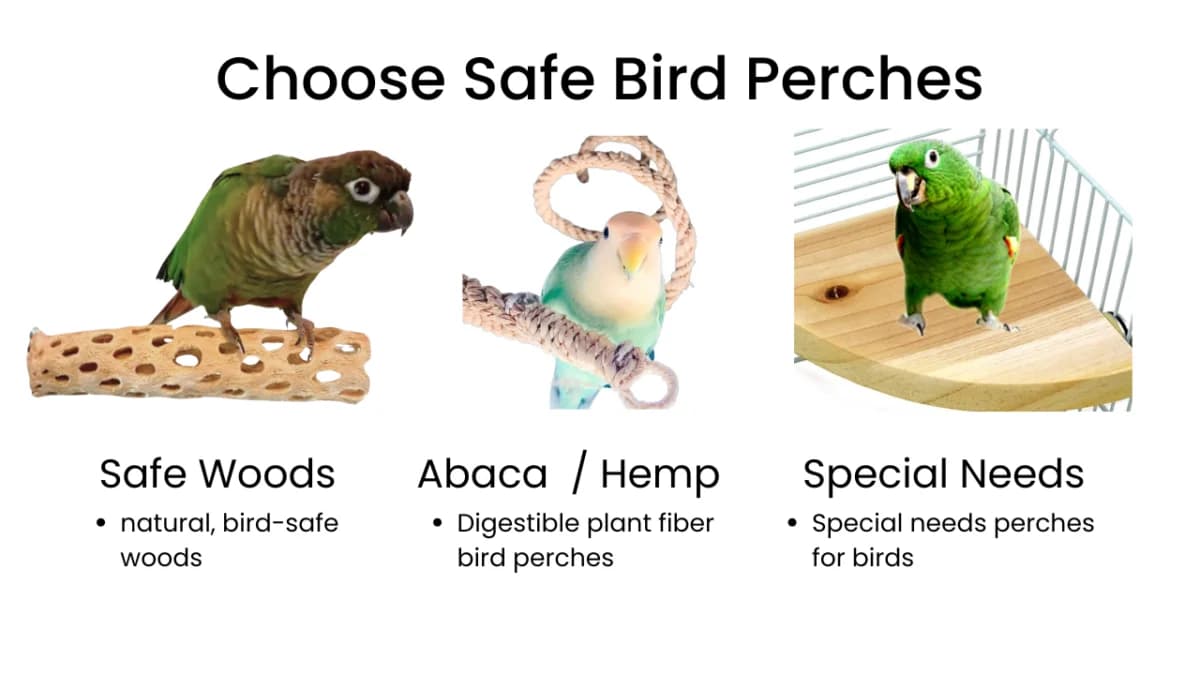
Wood branches are often the best perch option because their varying diameters redistribute pressure across the feet. That uneven surface gives different parts of the foot a turn at bearing weight, which is exactly what a healthy perch system should do. Natural wood also better resembles the branches parrots would encounter in the wild.
Rope perches made of hemp or untreated cotton can be a useful softer option, especially for older birds with arthritic joints. They are not a replacement for all other perch types, and they need to be monitored carefully, but they can reduce strain for birds that struggle with harder surfaces. The key is to think in combinations, not single solutions.
Sandpaper perch covers are not recommended. They often irritate the feet and can cause sores, which is the opposite of what people usually hope they will do. If a perch is already creating friction or pressure, adding an abrasive layer only increases the risk.
The perch audit you can do at home
A useful perch audit starts with looking at the cage as a foot-health environment, not a decorative display. Walk through each perch and ask whether it gives a different feel, different diameter, or different texture from the one next to it. A good setup should let the bird move from hard to softer surfaces, from thin to thicker branches, and from straight to more natural shapes.
Here is the practical test:
- Check whether the toes wrap about three-quarters around each perch.
- Look for repeated pressure points on the same part of the foot.
- Replace setups that use only one uniform diameter.
- Mix natural wood branches with at least one softer option if your bird needs it.
- Remove sandpaper covers that irritate the feet.
- Watch nail growth, because varied perches help wear nails down naturally.
- Make sure nothing in the cage encourages snagging if nails become too long.
That last point matters more than many people realize. VCA’s beak and nail guidance notes that, in captivity, smooth perches of the same diameter can contribute to nail overgrowth, and long nails can snag on cage items and cause injury. Perch variety helps with both foot loading and nail wear, so it works like a daily maintenance tool instead of a one-time accessory.
When the bird needs more than a better perch
Perch design is a husbandry issue, but it is also a medical one. The Association of Avian Veterinarians recommends regular checkups for companion birds and offers a Find-a-Vet resource for locating avian veterinarians. That kind of routine care matters because foot problems are easier to address early, before soreness turns into infection or altered movement.
The AAV also frames enrichment as sensory, nutritional, manipulative, environmental, and behavioral. That broader lens fits perches perfectly. A well-chosen perch is enrichment because it supports movement, chewing, balance, and daily comfort all at once. It is not extra. It is part of the bird’s physical world.
The smartest perch setups look less polished and more lived-in, with branches of different sizes, a mix of textures, and enough variation to keep pressure moving around the foot. That is what protects the feet, eases strain on the joints, and supports better behavior in the long run. The hidden mistake is assuming a tidy cage is a healthy one; the better habit is auditing the perches as carefully as you would audit food, sleep, or vet care.
This article was produced by Prism’s automated news system from verified source data, official records, and press releases, then run through automated quality and moderation checks before publishing. The system is built and supervised by the people who set the standards it runs under. Read our full AI policy.
Did this article answer your question?