Wild Bird Rescue Hosts Baby Bird Shower to Aid Orphaned Spring Arrivals
Jeff Bryant's Wild Bird Rescue handles up to 2,500 birds a spring; a single hatchling needs feeding every 15 to 30 minutes during daylight hours. Here's what to donate.
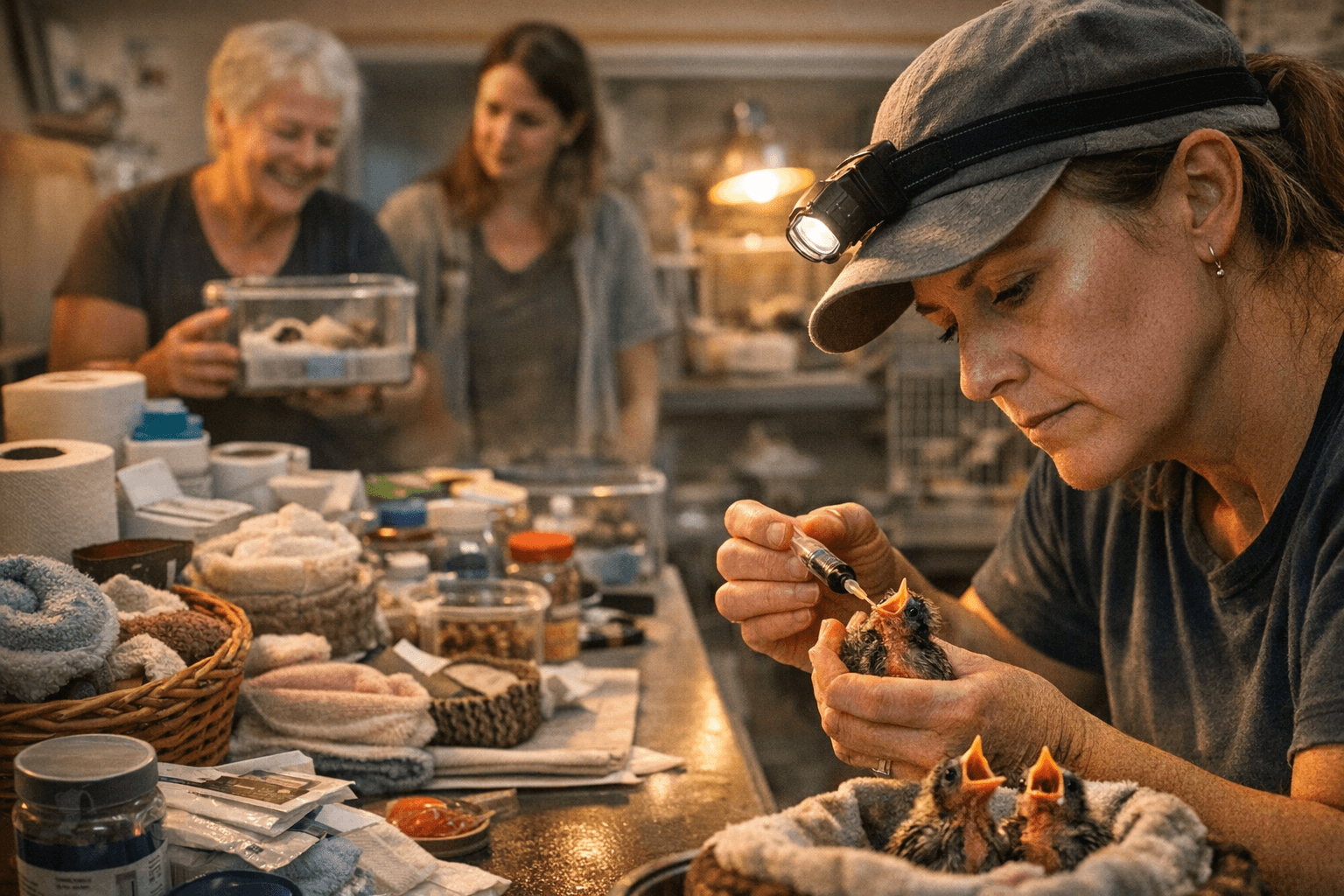
Jeff Bryant, Executive Director of Wild Bird Rescue in Wichita Falls, Texas, is blunt about what baby bird season looks like from the inside: cages scrubbed, incubators running, and the clock already moving. A single hatchling songbird needs to be fed every 15 to 30 minutes during daylight hours, according to wildlife rehabilitators. WBR will handle somewhere between 1,500 and 2,500 of them before spring is over. To close the supply gap before it yawns wide open, the rescue held its annual Baby Bird Shower on Saturday, April 4, and invited the Texoma community to help.
The event ran from 11 a.m. to 1 p.m. at WBR's 4611 Lake Shore Drive facility. Families arrived for a bounce house and Easter egg hunt. Ambassador birds made the rounds for meet-and-greets. Light refreshments were on hand. But the real draw was the donation table, stocked with a wish list that reads like a parrot nursery's weekly order: bleach, laundry soap, facial tissues without lotion, paper towels, small towels, fleece scraps, and formula-related supplies including syringes. The demand is relentless. Multiply that every-30-minutes feeding schedule by thousands of simultaneous patients and the scale of what WBR burns through each spring becomes clear. Admission was free, and as Bryant confirmed in prior-year coverage, "donations are always accepted."
Bryant has spoken candidly about what it costs to run the rescue through its busiest season. "It's hard to operate," he told local media. "It cost quite a bit to operate, not only the food but in manpower and stuff. We really look for our volunteers to come out and help." WBR runs entirely on donations and volunteer labor, a model it has sustained since its founding in 2003. In that time, the organization has helped more than 30,000 birds and raptors, drawing intake referrals from Animal Control, the Humane Society, Texas Parks and Wildlife, veterinarians, and members of the public who find injured or orphaned birds in their yards.
WBR is listed by the Texas Parks and Wildlife Department as an official licensed rehabilitator for Wichita County. Birds requiring veterinary care are evaluated by Dr. Sultemeier, a local veterinarian who examines each intake bird and advises on prognosis. Bryant described the relationship in a January 2026 interview: "We will run them through the rehab process, and we will take them to a vet here in town, Dr. Sultemeier. We take them to her, and she examines them and tells them what her prognosis is."
Geography amplifies every case that arrives at the facility. Wichita Falls sits within the Central Flyway, one of North America's busiest migration corridors, meaning spring intake includes not just local nesting species but migratory birds passing through by the millions. The Baby Bird Shower is timed to match that peak, and WBR has run the event long enough that it has become a spring fixture; a prior edition was held on March 22 from 11 a.m. to 2:30 p.m. at the same location.
Donations can be dropped off at the rescue center at 4611 Lake Shore Drive, Wichita Falls, TX 76310, open Monday through Friday from 8 a.m. to 5 p.m. and Saturday from 10 a.m. to 3 p.m. Saturday visits also offer the chance to meet WBR's Educational Avian Ambassadors. The rescue can be reached by phone at 940-691-0828 or online at WildBirdRescueWF.org.
Thirty thousand birds over twenty-plus years, all on volunteer hours and donated paper towels. The spring season is the one that tests whether that network holds.
Know something we missed? Have a correction or additional information?
Submit a Tip