World Parrot Trust hub offers expert parrot care, enrichment, nutrition tips
A parrot shredding toys, eating better, and moving more starts with three fixes: enrichment, diet, and a cage built for action.
Three daily fixes that make the biggest difference
A parrot that chews the bars, screams for attention, or picks at the same toy all day is usually sending a simple message: the home setup is not doing enough. The World Parrot Trust hub cuts straight to the most useful first moves for overwhelmed guardians, with guidance on enrichment, nutrition, and cage setup that can improve daily life fast.
The strongest part of the hub is how practical it is. Instead of treating care as a pile of separate topics, it pulls together the routines that shape a bird’s whole day: what goes in the cage, what goes in the bowl, and how the bird stays busy when no one is standing beside it. That is why the page works so well for new owners, but also for experienced keepers who want a cleaner way to reset the basics.
Start with enrichment, because boredom is a welfare issue
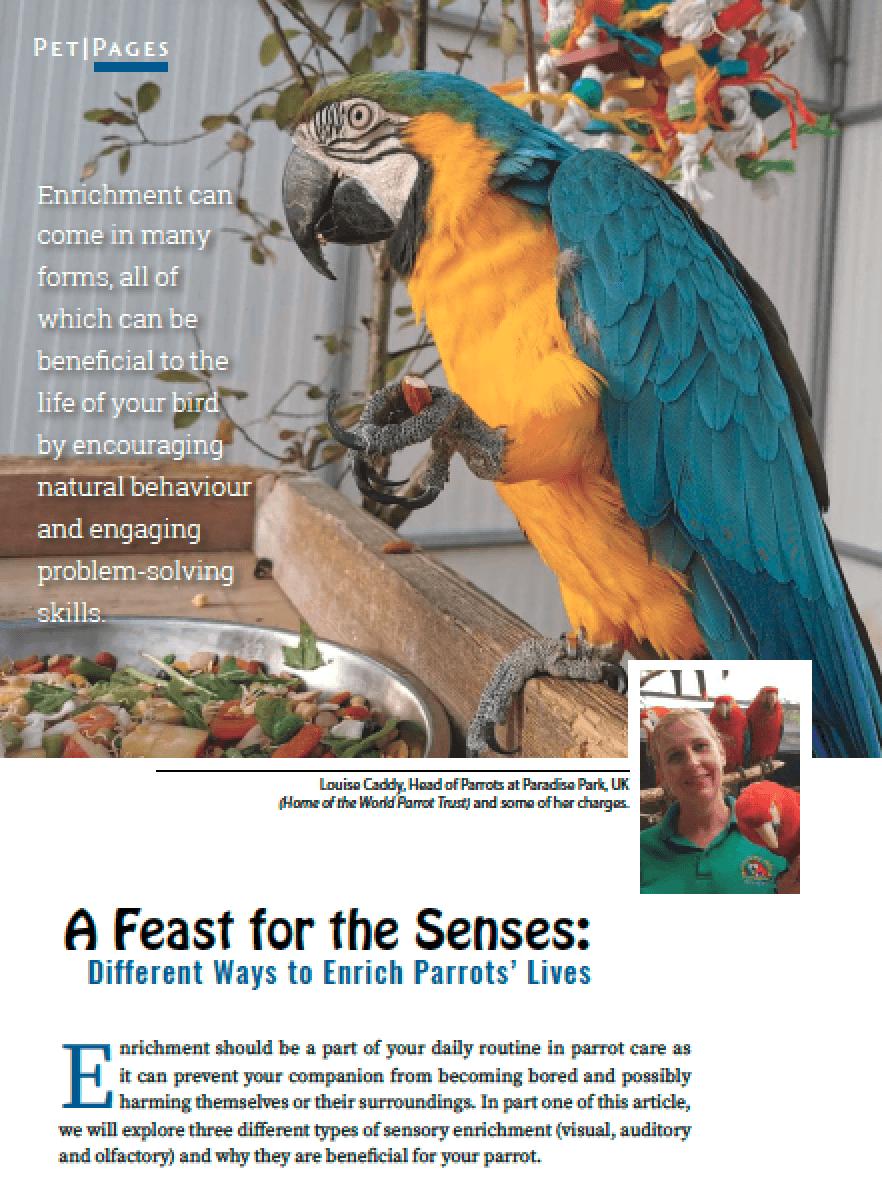
The hub is blunt about enrichment: it can make a huge difference to a parrot’s mental and physical well-being. That matters because companion parrots still carry wild instincts, and when they do not have enough to explore, chew, problem-solve, and manipulate, boredom quickly becomes part of the behavior picture.
The video sequence on the page is organized in a smart order. It begins with why enrichment matters, then moves into occupational enrichment, then plants for parrots, and finally nutrition essentials. That progression reflects the real way birds experience their environment: first the need to stay engaged, then the need to use beak and feet, then the need to interact with safe natural materials, and only after that the need to fuel the body properly.
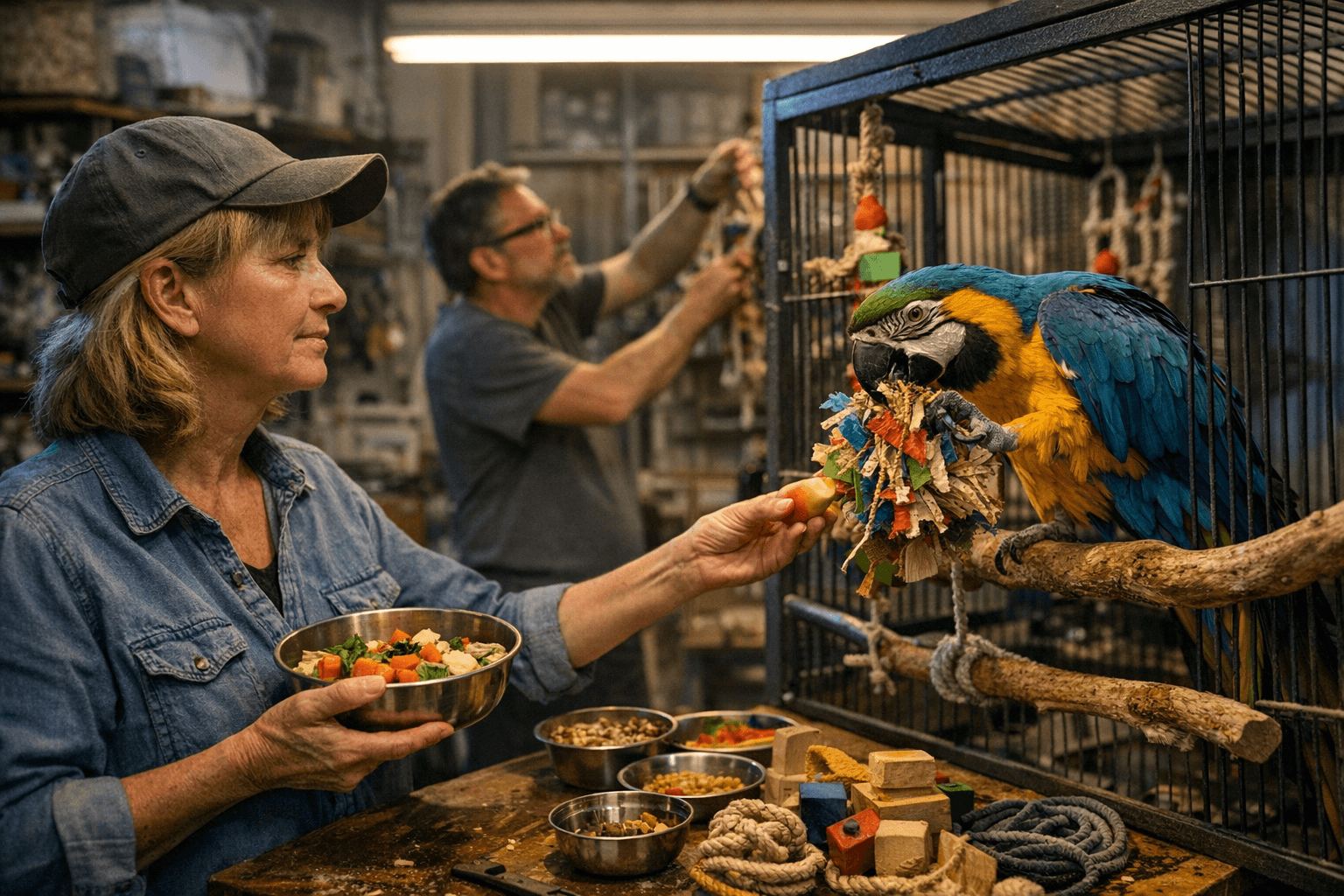
Occupational enrichment is especially useful because it gives a parrot jobs to do with the tools nature gave it. Beaks and feet are not decorative features; they are part of how parrots investigate, manipulate, and stay mentally occupied. If your bird spends too much time sitting with nothing to work on, adding shreddable items, foraging opportunities, and safe puzzle toys can change the tone of the whole cage.
The plants content is another smart inclusion because it broadens enrichment beyond toys alone. Plants can add nutritional, occupational, and sensory variety, which is helpful in a setup that has started to feel stale. The point is not decoration for its own sake, but a richer environment that asks more of the bird in a healthy way.
Diet is not an upgrade, it is the foundation
The Happy Healthy Parrot handout makes the diet message plain: a varied diet is part of the basics, not a bonus. It specifically points owners toward fruit and vegetables, which sits alongside the broader reminder that parrots need more than a seed-heavy routine or a bowl that never changes.
That matters because the handout also reminds readers just how varied parrot needs can be. Of more than 400 known parrot species, about 200 have been seen in captivity, and their physical and behavioral needs differ greatly by species. In other words, there is no one-size-fits-all menu, and good feeding means paying attention to species, age, activity level, and any health issues that call for a vet’s input.
The World Parrot Trust’s nutrition essentials video fits neatly into that reality. It does not treat food as a side issue. It places diet beside enrichment and housing, which is exactly where it belongs for a bird that depends on daily choices made by a human.
A better cage is not just bigger, it is more interesting
Phoenix Landing’s cage guidance turns the housing question into something concrete. A good cage should offer “places to go and things to do,” and that means a mix of perch textures and sizes, things to shred, items to rattle or bounce on, and puzzle pieces that make the bird work a little to get a result. The group also recommends adding a new foraging toy every day, which gives the cage a rhythm instead of letting it become scenery.
Space matters too. Phoenix Landing says bigger is always better, and it requires a cage that meets its minimum size for a bird’s species before adoption is finalized. That is a useful reminder for anyone trying to make a cage do the work of a room. Too little space, combined with too little to do, can contribute to behavioral issues, especially when the cage is set up more for human convenience than bird movement.
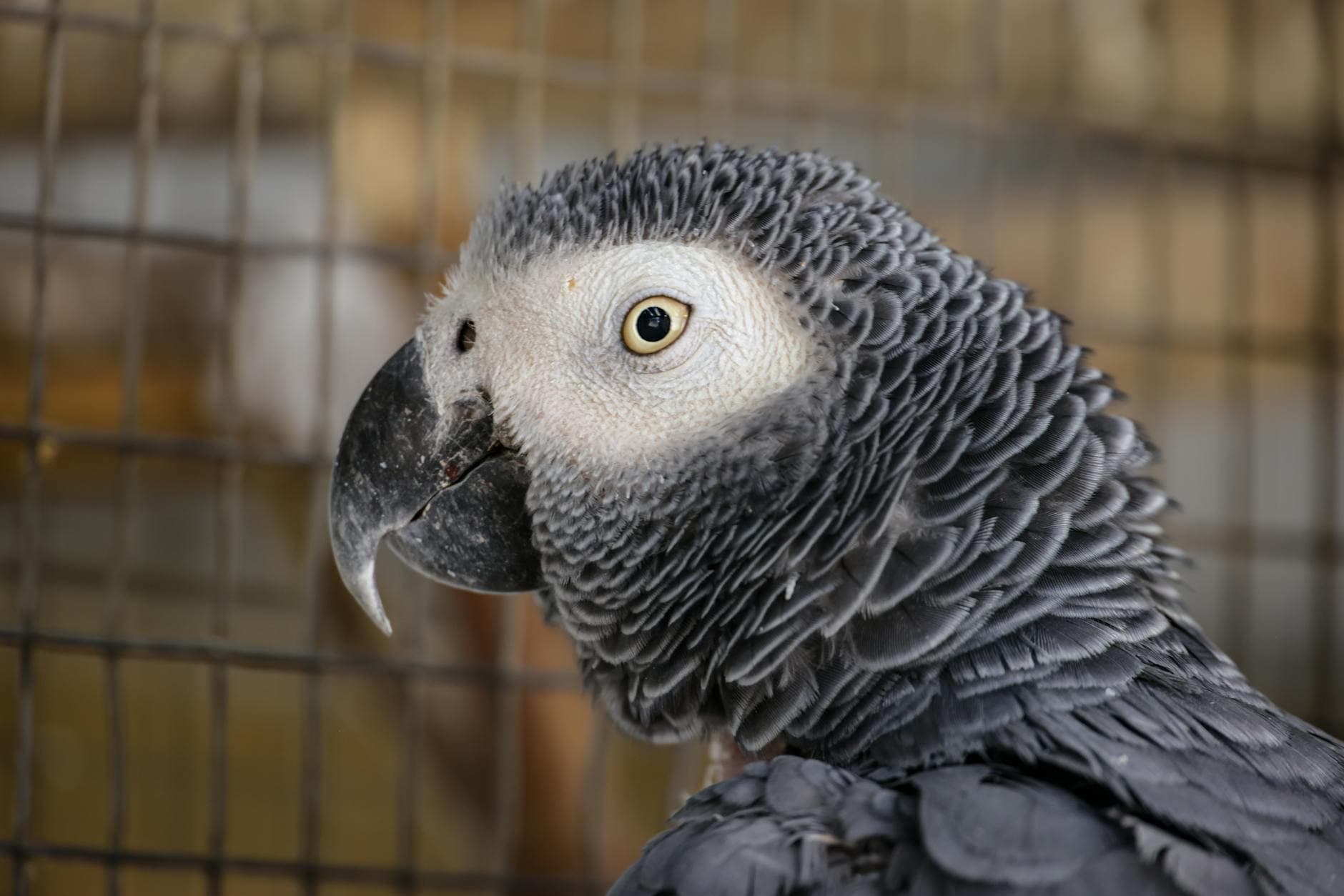
The placement of the cage matters as much as the cage itself. Phoenix Landing recommends a safe-feeling area away from heavy traffic and vents, which helps the bird stay calmer and more settled. A cage is not just a container; it is the bird’s main living space, and the layout should invite movement, exploration, and rest without forcing the bird to endure a stressful location.
Use the hub as a starting point, not a substitute for tailored care
The most helpful thing about this World Parrot Trust hub is that it gives owners a sensible first pass at better care without pretending every problem can be solved by a video. The Happy Healthy Parrot handout goes beyond the basics to list a big home, safe flight space if possible, bird-safe branches once or twice a week, water for feather condition, toys for the brain, claws, and beak, and companionship from a human or another bird. Those are practical day-to-day markers, not abstract ideals.
That said, some issues still need a veterinarian or behavior professional. If a parrot is losing feathers, refusing food, showing persistent aggression, or struggling despite better enrichment and housing, the next step is individualized help. The handout’s reminder that every bird has its own doctor is the right way to think about it: the hub can strengthen the foundation, but it cannot replace species-specific medical or behavior advice.
There is also one safety note worth keeping front and center. The Association of Avian Veterinarians points out that kitchens can be enriching because many birds like to watch family meals, but the same space also contains hazards such as nonstick cookware, cleaners, boiling food, and hot surfaces. That is the real takeaway from this whole care package: stimulation is essential, but it has to be safe, species-aware, and built around the bird’s needs.
For overwhelmed guardians, that makes the hub genuinely useful. It gives a clear first move on three fronts that shape every day: enrich the mind, improve the diet, and redesign the cage so the bird has room and reasons to move. When those three pieces work together, the difference shows up quickly in behavior, comfort, and the quality of life inside the home.
This article was produced by Prism’s automated news system from verified source data, official records, and press releases, then run through automated quality and moderation checks before publishing. The system is built and supervised by the people who set the standards it runs under. Read our full AI policy.
Did this article answer your question?